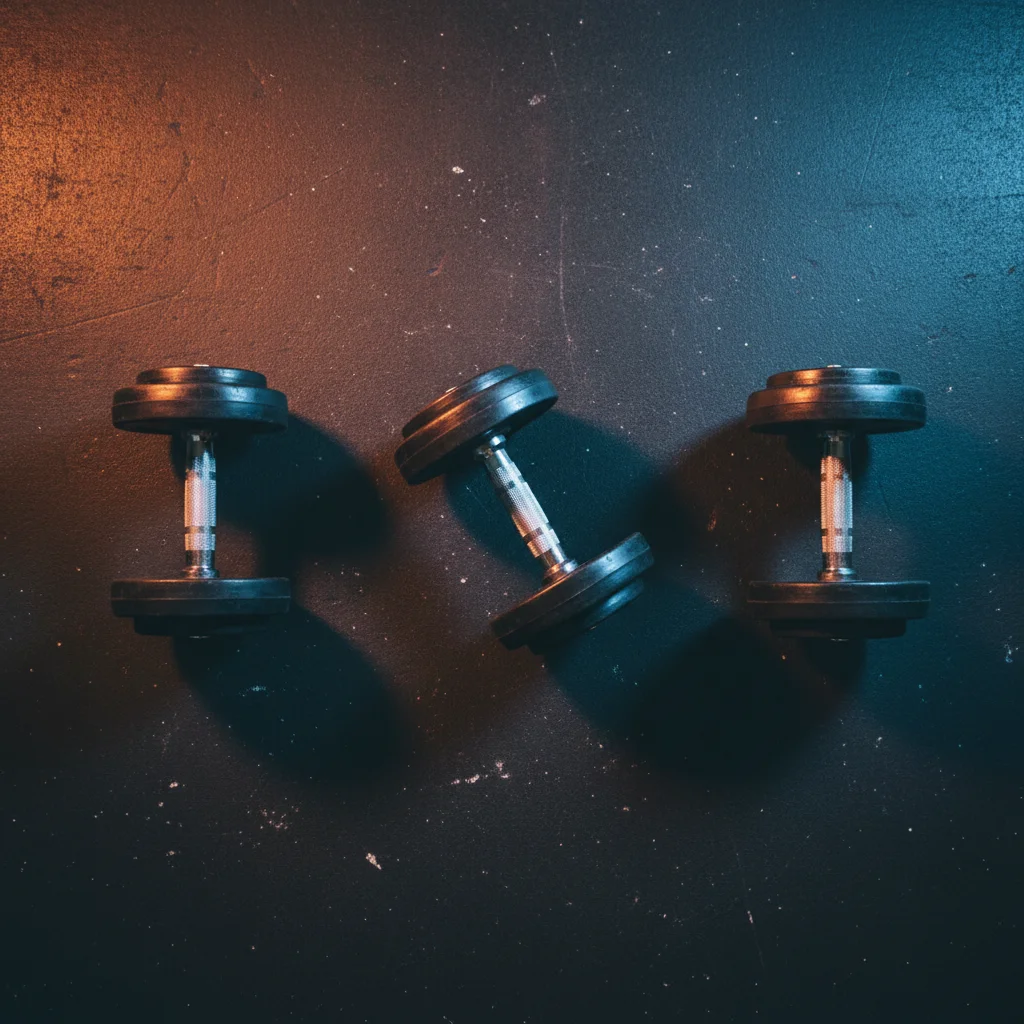
If you only do one curl variation besides the standard bicep curl, make it the hammer curl. This neutral-grip movement targets muscles that regular curls largely miss, and it's the fastest path to arms that look thick from every angle — not just when you flex.
The hammer curl isn't complicated, but most people do it wrong in subtle ways that limit their gains. Here's everything you need to know to get it right.
What Makes Hammer Curls Different
The key difference is grip orientation. In a standard bicep curl, your palms face up (supinated). In a hammer curl, your palms face each other (neutral), like you're holding a hammer — hence the name.
This small grip change shifts the workload significantly. While standard curls primarily target the biceps brachii, hammer curls shift emphasis to two muscles that are critical for arm thickness:
The brachialis sits underneath the biceps. When developed, it pushes the bicep up from below, making your entire upper arm look bigger. It's the muscle most responsible for the "3D" look of well-developed arms.
The brachioradialis is the thick muscle running along the top of your forearm. It creates that tapered look from elbow to wrist and is heavily involved in any pulling movement you do.
The biceps brachii still works during hammer curls — it's an elbow flexor regardless of grip — but it shares the load with these two often-neglected muscles.
How to Do Hammer Curls With Perfect Form
Stand with your feet roughly shoulder-width apart, holding a dumbbell in each hand at your sides. Your palms should face your thighs — this is the neutral grip that defines the movement.
Keeping your upper arms locked at your sides, curl both dumbbells up simultaneously. Don't rotate your wrists at any point during the movement. Your palms should face each other at the bottom, middle, and top of every rep.
Squeeze at the top when your forearms are roughly vertical, then lower the weights under control. The lowering phase should take about 2 seconds — don't let gravity do the work.
The Elbow Test: If your elbows drift forward as you curl, the weight is too heavy. Your upper arm should stay nearly vertical throughout the movement. A small amount of forward movement at the very top is fine, but if your elbows are swinging, drop the weight.
Common Hammer Curl Mistakes
Swinging the body. This is the number one problem. If you need momentum to start the curl, the weight is too heavy. Stand against a wall if you can't stop the swaying — it removes the option entirely.
Curling too fast. Speed kills gains on this exercise. The brachialis responds well to time under tension, so a controlled 2-second up, brief pause, 2-second down tempo works much better than cranking out fast reps.
Letting the wrists bend. Your wrists should stay straight and locked throughout the movement. If the dumbbell droops forward or backward, you're wasting energy stabilizing instead of curling. Think of your forearm and hand as one rigid unit.
Lifting both arms when alternating. If you do alternating hammer curls, make sure one arm is fully lowered before the other starts. Some people end up doing a weird simultaneous half-curl on both sides.
Hammer Curl Variations Worth Trying
Cross-body hammer curls involve curling the dumbbell across your torso toward the opposite shoulder rather than straight up. This shifts more emphasis to the brachialis and the long head of the biceps. It's a subtle change that you'll feel immediately in a different part of your arm.
Incline hammer curls are performed on an incline bench set to about 45-60 degrees. The incline stretches the biceps and brachialis at the bottom of the movement, which may enhance the growth stimulus. Start lighter than standing hammer curls — the stretch makes the movement significantly harder.
Rope cable hammer curls use a rope attachment on a cable machine. The advantage is constant tension throughout the entire range of motion, including the top where dumbbells become easiest. Spread the rope ends apart at the top for an extra contraction.
Seated hammer curls simply remove the temptation to use body English. Sit on a bench with back support and perform the same movement. You'll probably need to drop the weight by 10-15%, but the isolation is worth it.
How Heavy Should You Go?
Most people can hammer curl about 70-80% of what they standard curl. If you're curling 30-pound dumbbells on regular bicep curls, expect to use 20-25 pounds for hammer curls with strict form.
For hypertrophy, 3-4 sets of 8-12 reps works well. If you're chasing strength, go heavier with 4-6 reps, but be extra vigilant about form — the tendency to swing increases dramatically with heavier loads.
For forearm development specifically, lighter sets of 15-20 reps with a slow tempo create a tremendous pump in the brachioradialis and are worth including occasionally.
Where Hammer Curls Fit in Your Program
Hammer curls work well as a second or third exercise on arm day or as part of a back and bicep workout. Since they hit the brachialis and forearms harder than standard curls, they complement rather than duplicate your other curl work.
A solid approach is to pair a supinated curl (like preacher curls or EZ bar curls) with hammer curls. The first targets the biceps brachii directly, the second fills in the brachialis and forearm.
For a complete arm session, try: barbell or EZ bar curls (3x8-10), hammer curls (3x10-12), then a finishing isolation movement like isolation curls (2x12-15). That covers all the major elbow flexors with appropriate volume.
What We Recommend
REP Fitness AB-3000 Adjustable Bench
Incline curls need a bench that holds its angle under load. A wobbly bench ruins the stretch position.
Bowflex SelectTech 552 Adjustable Dumbbells
Adjustable dumbbells let you dial in the exact weight for incline curls — where small increments matter more than any other curl variation.
The Bottom Line
Hammer curls build the muscles that standard curls miss. They're the reason some people's arms look impressive from the front and the side, while others only look good in a double bicep pose. Add them to your routine, keep the form strict, and watch your arms fill out in ways regular curls never accomplished.