The barbell curl is the oldest biceps exercise in the gym — and the most abused. Walk into any weight room and you'll see people swinging a barbell up with their entire body, arching their back like they're doing a standing hip thrust, and calling it a curl. They're training their ego, not their biceps.
Done right, the standing barbell curl is one of the best exercises for building arm size and strength. It lets you move more weight than any other curl variation because both arms work together — and heavier loads mean more muscle growth over time.
Here's how to do barbell curls with proper form, the muscles they work, the best variations, common mistakes, and how to program them into your training.
What Is a Barbell Curl?
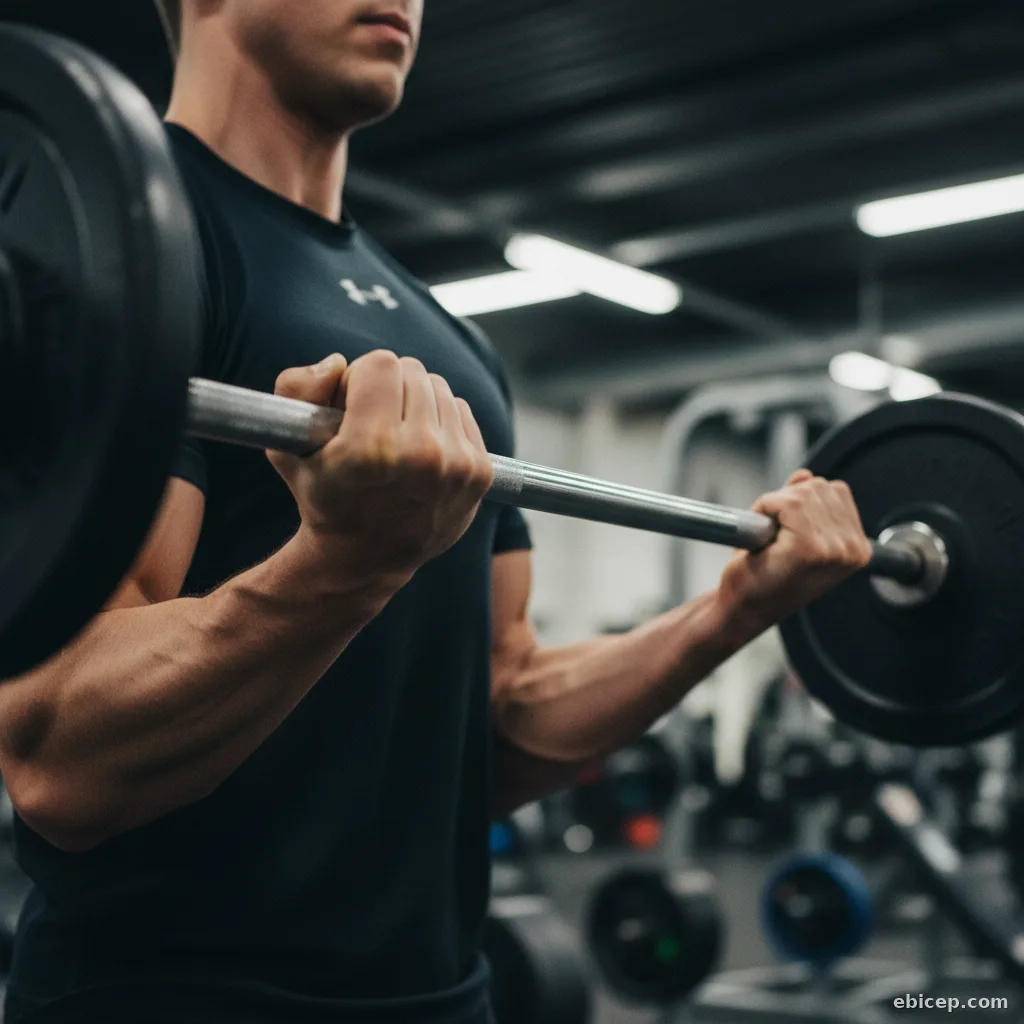
A barbell curl is a standing bicep curl performed with a straight bar or EZ curl bar. You grip the bar with an underhand grip (palms facing up), stand with your feet shoulder-width apart, and curl the bar from your thighs to your shoulders by flexing at the elbow.
It's a bilateral exercise — both arms work simultaneously — which allows you to handle more weight than dumbbell curls or cable curls. That's the barbell curl's biggest advantage: raw loading potential.
Barbell Curl Muscles Worked
Biceps brachii (both heads). The primary mover. The long head and short head both contract hard during barbell curls. Grip width shifts the emphasis slightly — narrow grip favors the long head, wider grip favors the short head.
Brachialis. The muscle underneath the biceps assists with elbow flexion throughout the movement. It doesn't get the stretch or isolation it would from hammer curls, but it's working.
Brachioradialis. The big forearm muscle on the thumb side assists during the curl, especially in the lower portion of the movement.
Forearm flexors. Your grip has to hold the bar under load for every rep. Heavy barbell curls build forearm strength as a side effect — you don't need separate grip work if you're curling heavy with a straight bar.
How to Do Barbell Curls With Proper Form
Step 1: Set Your Grip
Grab the bar with an underhand grip, hands roughly shoulder-width apart. For most people, this means your pinkies are just outside your hips. Going wider shifts more work to the short head. Going narrower shifts more to the long head. Shoulder-width is the most balanced starting point.
Step 2: Set Your Stance
Stand with your feet shoulder-width apart, knees slightly bent. Brace your core — imagine someone is about to poke you in the stomach. This prevents your lower back from arching as the weight gets heavy.
Step 3: Curl
Without moving your upper arms, curl the bar up by flexing at the elbows. Bring the bar to roughly chest height — until your forearms are nearly vertical. Squeeze your biceps hard at the top for a full second.
Your elbows should stay at your sides. If they drift forward, you're shortcutting the range of motion. If they drift backward, you're swinging.
Step 4: Lower Under Control
Slowly lower the bar back to the starting position — 2-3 seconds on the way down. Don't let the bar drop. The eccentric is where a significant amount of the training stimulus occurs, and skipping it means leaving gains behind.
Full range of motion at the bottom. Arms fully extended but elbows not locked — a slight bend protects the joint.
Sets and Reps
For muscle growth: 3-4 sets of 8-12 reps. Use a weight where the last 2-3 reps are genuinely hard with good form.
For strength: 4-5 sets of 5-6 reps. Heavier weight, lower reps, longer rest between sets.
Coach's Note: The barbell curl is not a power exercise. You don't need to max out. If you're curling with so much weight that your back arches, your hips thrust forward, and the bar barely makes it to your chest — strip the plates off and start over. A strict 65 lb barbell curl builds more muscle than a swinging 95 lb ego curl. Every time.
Common Barbell Curl Mistakes
Swinging the weight up. The most common mistake by far. If your torso is rocking back and forth, you're using momentum — not your biceps. Plant your feet, brace your core, and make the biceps do the work. If you can't, the weight is too heavy.
Elbows drifting forward. When your elbows move in front of your torso during the curl, you shift tension from the biceps to the front delts. Keep your elbows pinned to your sides throughout the entire rep.
Cutting range of motion short. Not going all the way down, not coming all the way up. Partial reps have their place in advanced training, but beginners should use full range of motion on every rep to maximize muscle recruitment and build proper movement patterns.
Using the wrong grip width. Too narrow strains the wrists. Too wide feels awkward on the elbows. Shoulder-width is the default. Adjust from there based on comfort.
Rushing the negative. Dropping the bar back down instead of controlling it. The lowering phase is half the exercise. Two to three seconds down, every rep.
Barbell Curl Variations
EZ bar curl. Same movement, angled grip. The EZ bar is easier on the wrists than a straight bar and allows a slightly more natural grip angle. If straight bar curls bother your wrists or forearms, switch to an EZ bar — you won't lose any bicep activation.
Wide-grip barbell curl. Hands wider than shoulder-width. Shifts emphasis to the short head of the biceps. Effective for building width, but can feel uncomfortable on the wrists at heavy loads.
Close-grip barbell curl. Hands narrower than shoulder-width. Shifts emphasis to the long head. Good for building peak. Uses slightly less weight than standard width.
Drag curl. Instead of curling in an arc, drag the bar straight up your body by pulling your elbows backward. This removes the front delt from the movement and keeps constant tension on the biceps throughout the rep. Lighter weight, harder contraction.
Reverse barbell curl. Overhand grip. Targets the brachialis and brachioradialis more than the biceps. Excellent for forearm development and overall arm thickness.
Seated barbell curl. Sit on the end of a bench with the bar in your lap. Curl from there. Removes all lower-body momentum, making the exercise stricter. Less weight, more isolation.
21s. Seven reps from bottom to midpoint, seven from midpoint to top, seven full reps. Twenty-one total. Brutal. Great as a finisher once your working sets are done.
Barbell Curl vs. Dumbbell Curl
Both build biceps. The difference is in how they do it.
Barbell curls let you use more weight because both arms share the load. More weight means more mechanical tension, which drives hypertrophy. They're also faster to set up — one bar, one weight, done.
Dumbbell curls allow each arm to work independently, which prevents your stronger arm from compensating for the weaker one. They also allow wrist rotation during the curl, which engages the biceps differently at different points in the range of motion.
Use both. Barbell curls as your primary heavy curl. Dumbbells for supplemental work and fixing imbalances. That's the standard approach for a reason — it works.
How to Program Barbell Curls
The barbell curl works best as the first or second exercise in your bicep training — when your arms are fresh and you can handle the most weight with good form.
In an arm day: Start with barbell curls for 3-4 heavy sets, then move to isolation work like incline curls, spider curls, or concentration curls.
In a pull day: Do your back work first (rows, pulldowns), then finish with barbell curls and one other curl variation. Your biceps are pre-fatigued from pulling, so you won't need as much volume.
Frequency: 1-2 times per week. Barbell curls are taxing on the elbows and forearms at heavy loads. Give your connective tissue time to recover.
Frequently Asked Questions
Is the barbell curl the best biceps exercise?
It's one of the best for raw overload — you can move more weight with a barbell than any other curl variation. For pure isolation and targeted muscle work, exercises like incline curls and spider curls may be more effective. The best approach uses barbell curls as the foundation with isolation curls as supplemental work.
What's the difference between an EZ bar curl and a barbell curl?
The EZ bar has an angled grip that reduces wrist strain. Muscle activation is very similar — studies show no meaningful difference in biceps recruitment between the two. Use whichever feels better on your wrists and elbows. If both feel fine, either works.
How much should I barbell curl?
It depends on your training experience. Most beginner men start with 30-40 lbs. Intermediate lifters typically curl 60-80 lbs. Advanced lifters may curl 100+ lbs with strict form. The weight matters less than the form — a controlled, strict curl with moderate weight builds more muscle than a heavy, swinging mess.
How often should I do barbell curls?
1-2 times per week is plenty for most lifters. Your biceps also get worked during every pulling exercise (rows, pulldowns, chin-ups), so direct curling doesn't need to be daily. Overtraining the biceps leads to elbow tendinitis faster than any other overuse pattern.
Should I use a straight bar or EZ bar?
Use whatever feels comfortable on your wrists. An EZ bar is generally easier on the wrists and elbows while providing nearly identical bicep activation. If you have no wrist issues, a straight bar offers a slightly more supinated grip which can increase short head involvement. Both are excellent.
What We Recommend
CAP Barbell Olympic EZ Curl Bar
If straight bar curls bother your wrists, an EZ curl bar is the fix. The angled grip reduces wrist strain while providing nearly identical bicep activation. This one handles Olympic plates, has solid knurling, and is built to last. Works for curls, skull crushers, and rows.
The Bottom Line
The barbell curl is a foundational biceps exercise — load it heavy, keep your form strict, and let the biceps do the work. Stand with your feet planted, elbows at your sides, and curl the bar with control on the way up and the way down. Use it as your primary mass builder, then follow it with isolation curls that target specific heads and angles. If you can't do it without swinging, the weight is too heavy. Drop it down, clean up your form, and start building the kind of arms that actually came from curling — not from cheating.