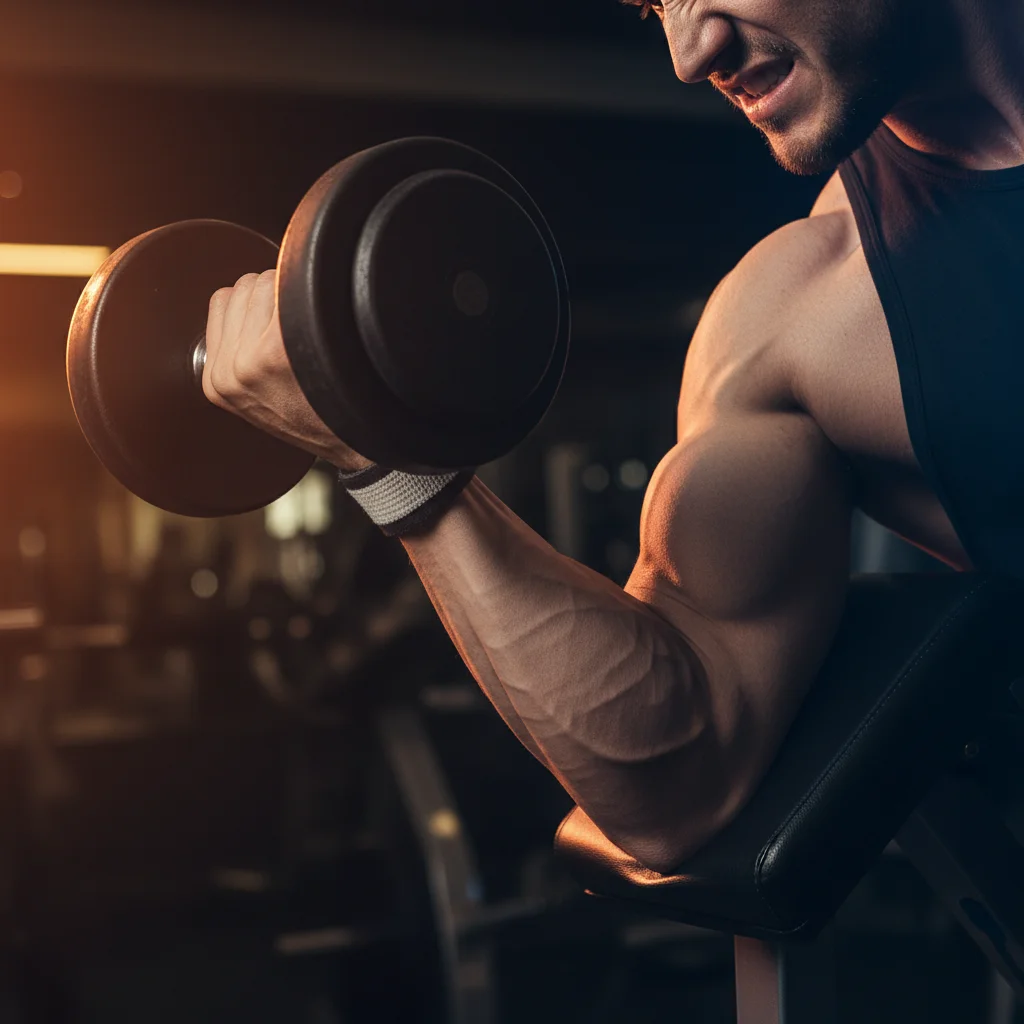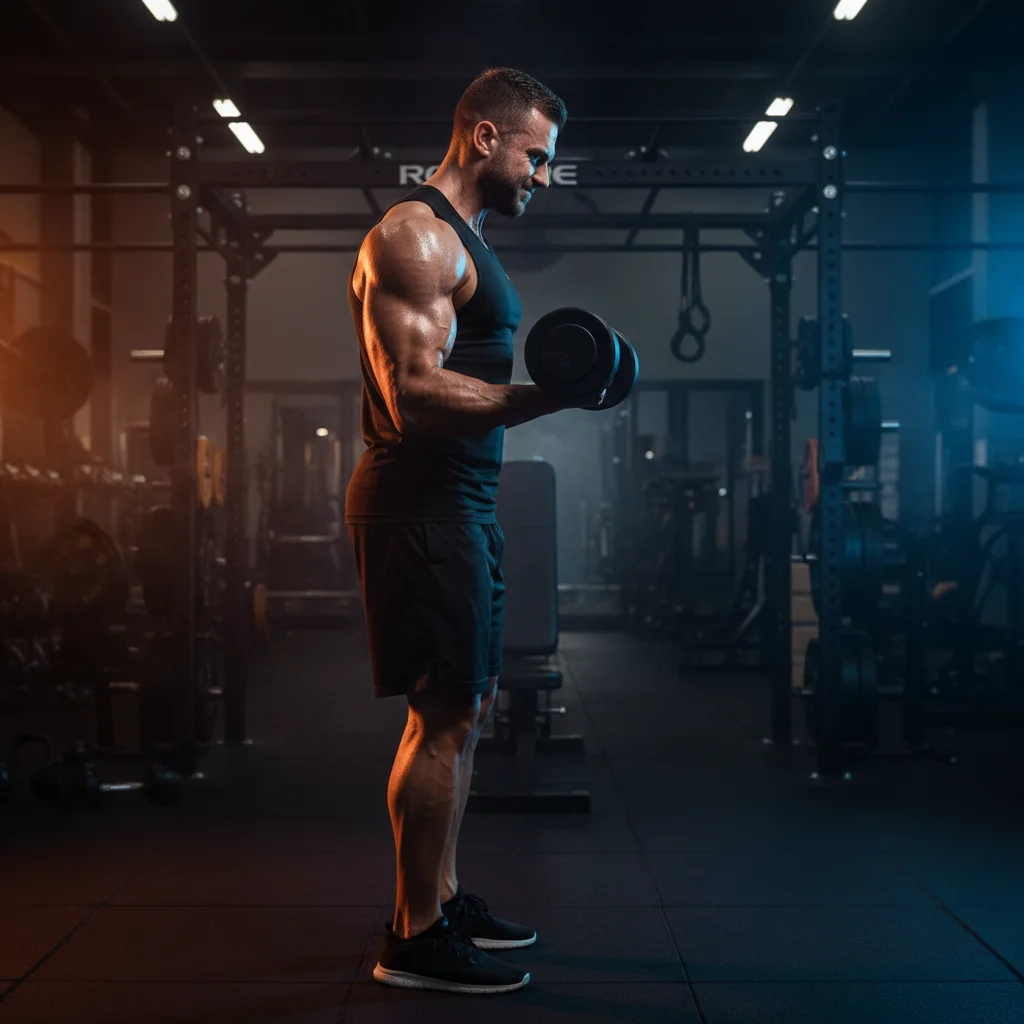
An often-cited ACE (American Council on Exercise) study compared bicep activation across eight popular exercises using electromyography. The concentration curl produced the highest bicep activation of any exercise tested — higher than barbell curls, preacher curls, and even cable curls.
The reason is simple: the concentration curl makes cheating nearly impossible. When your elbow is braced against your inner thigh, there's nowhere to hide. Every rep is pure bicep contraction.
Why Concentration Curls Work So Well
Three factors combine to make this exercise uniquely effective:
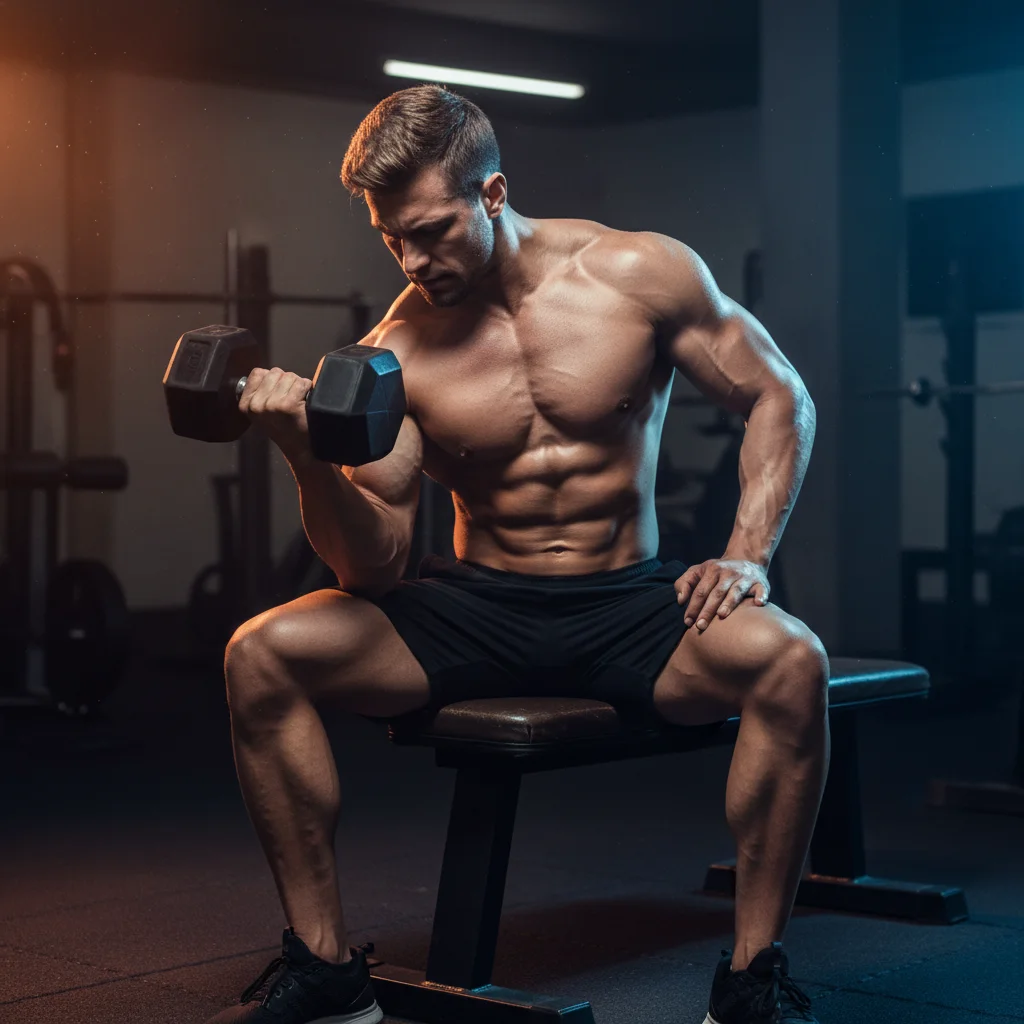
The braced elbow eliminates momentum. With your elbow locked against your thigh, your upper arm can't swing. The bicep has to do 100% of the work — no deltoid assistance, no back involvement, no body English.
The unilateral setup forces focus. Working one arm at a time creates a powerful mind-muscle connection. You can watch your bicep contract, feel it working, and identify exactly when you're approaching failure.
The seated position removes standing instability. When you're seated with your elbow braced, there are no balance demands. All your neural drive goes to contracting the bicep, not to stabilizing your body.
How to Do Concentration Curls
Sit on a bench with your feet wider than shoulder-width apart. Lean forward slightly and press the back of your upper arm (just above the elbow) against your inner thigh. Your arm should hang straight down, holding a dumbbell with your palm facing away from your thigh.
Curl the dumbbell up toward your shoulder. Your upper arm stays locked against your thigh — only your forearm should move. Squeeze hard at the top for a full second, then lower the weight slowly until your arm is fully extended again.
Complete all reps on one side before switching. Don't alternate — the continuous tension on one arm is part of what makes the exercise effective.
Thigh Position Matters: Press your arm against the inner thigh, not on top of your knee. The knee position doesn't provide the same stability and can cause your elbow to slip. Inner thigh creates a solid shelf for your tricep to press against.
Form Details That Make the Difference
Don't curl toward your chest. A common mistake is curling the dumbbell inward toward the center of your body. Instead, curl straight up toward your shoulder on the same side. This keeps the bicep in optimal alignment.
Start with your arm fully straight. Many people start with a slight bend, cutting off the bottom portion of the range of motion. Let the dumbbell hang with a fully extended arm at the bottom of each rep. The stretch under load at the bottom contributes to the growth stimulus.
Supinate hard at the top. As you reach the top of the curl, actively twist your pinky toward the ceiling. This supination recruits the short head of the biceps more intensely and creates a harder contraction.
Control the descent. The eccentric (lowering) phase should take 3 seconds minimum. If the weight is swinging or dropping, it's too heavy for this exercise. Concentration curls are about quality, never quantity of weight.
Common Mistakes to Avoid
Using your shoulder. If you're lifting your elbow off your thigh to complete the rep, your deltoid is taking over. Keep the upper arm firmly braced and accept the rep is done when the bicep can't lift it anymore.
Going too heavy. This is an isolation finisher, not a strength exercise. If you can't do at least 8 clean reps with a full contraction at the top of each one, the weight is too heavy. Most people use 15-25 pound dumbbells for this exercise regardless of how much they barbell curl.
Rushing the reps. Speed defeats the purpose. The concentration curl is about maximizing the quality of each contraction. If you're banging out fast reps, you're better off doing a different exercise.
Where It Fits in Your Workout
Concentration curls are best as a finishing exercise. After your heavier compound curls — EZ bar curls, hammer curls, or cable curls — use concentration curls to fully exhaust the biceps with perfect isolation.
Two to three sets of 10-15 reps at the end of your arm workout is plenty. The high quality of each rep means you don't need as many total reps to get a powerful stimulus.
They also work well on lighter training days when you don't have access to heavy weights. Since the exercise is effective with modest dumbbells, you can get a great bicep workout at home with a single dumbbell and a chair.
The Bottom Line
The concentration curl isn't the flashiest exercise in the gym. You won't be moving impressive weight, and nobody will be watching. But the research is clear — nothing activates the bicep more effectively per rep. When every other exercise in your routine is about load and volume, the concentration curl is about precision. That precision is often the difference between good arms and great ones.