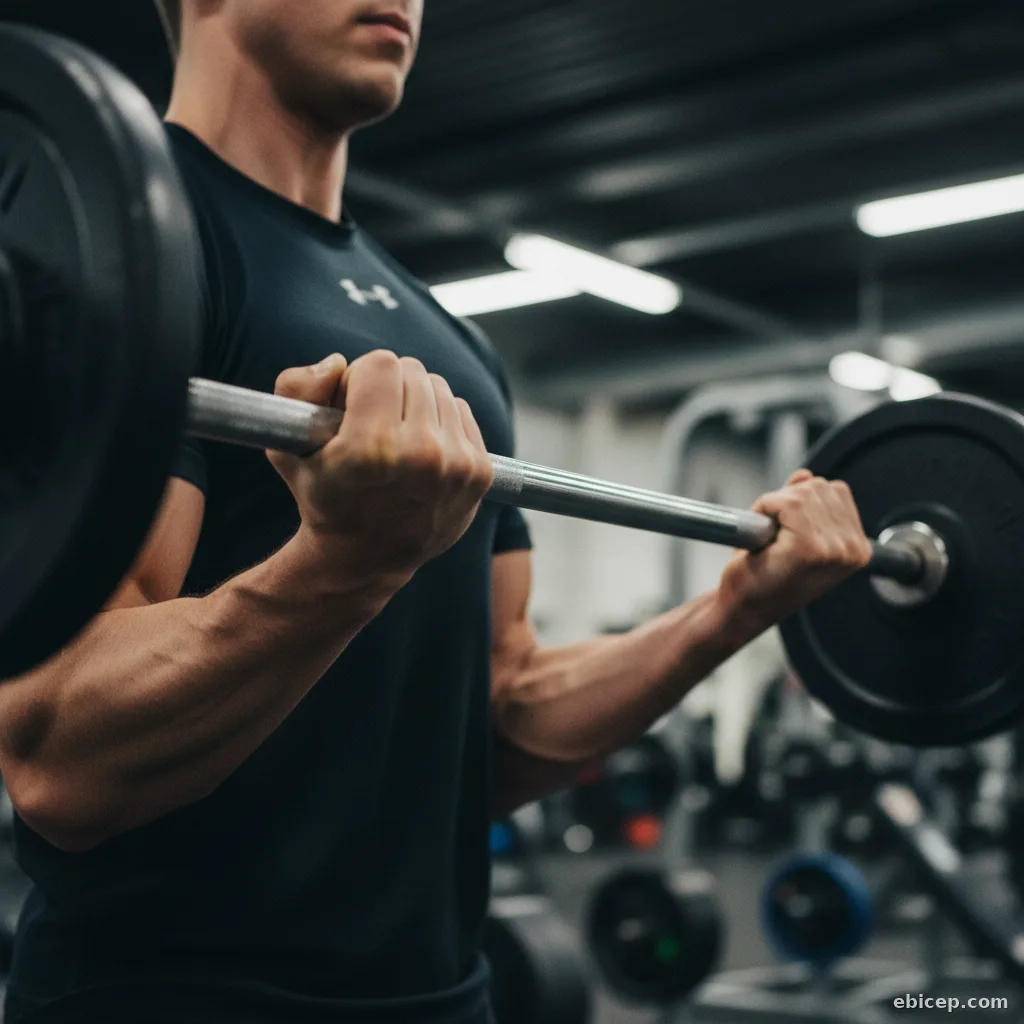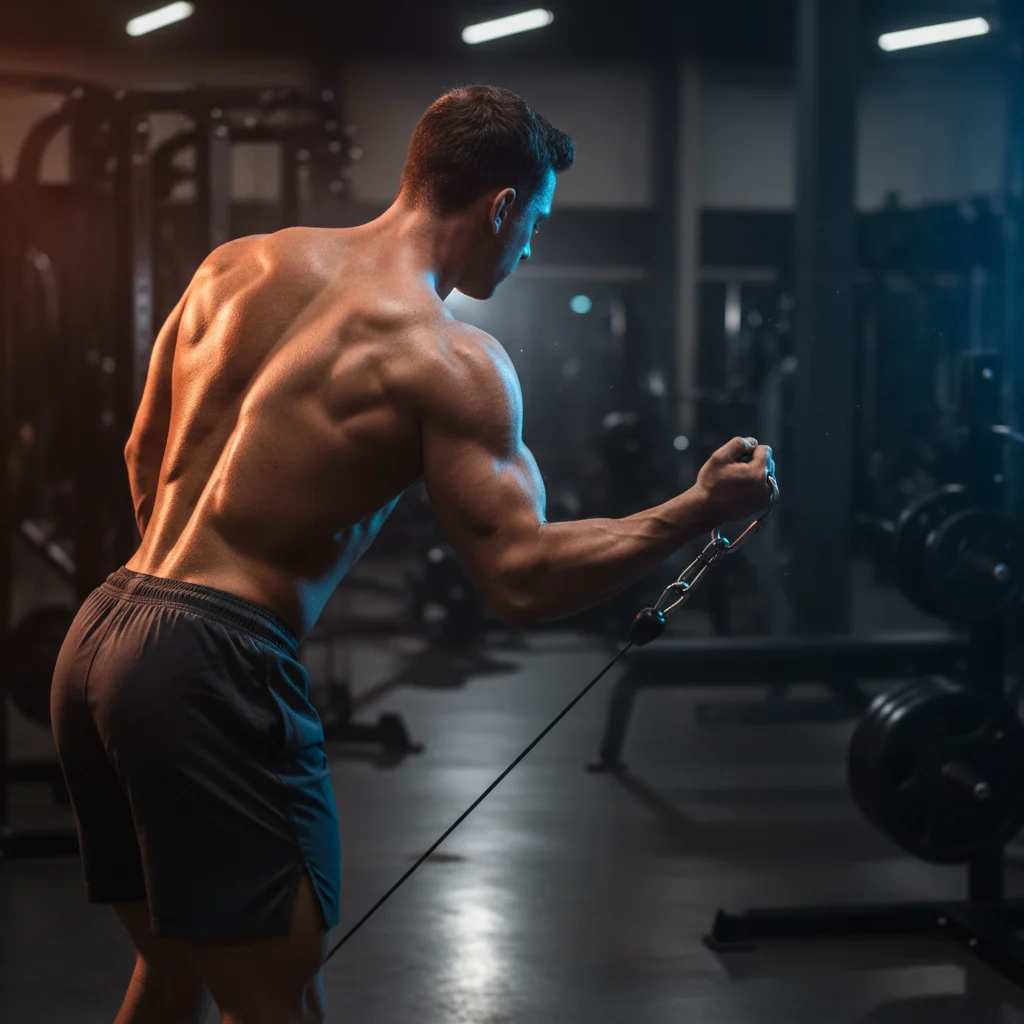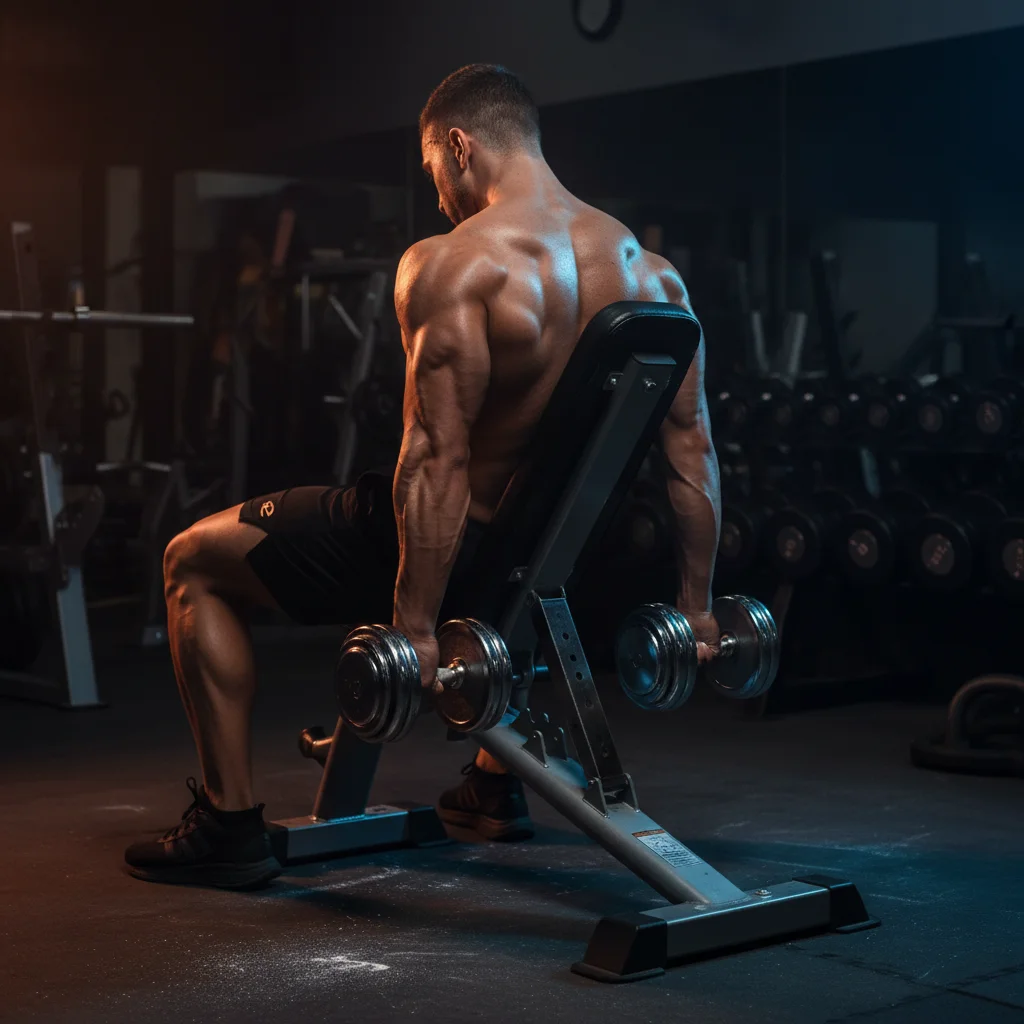
The incline dumbbell curl puts your arms behind your body, stretches the long head of the biceps under load, and forces a range of motion that standing curls can't touch. It's one of the most effective exercises for building bigger biceps — and one of the most butchered.
Most people set the bench angle wrong, use too much weight, and turn it into a shoulder exercise. Fix those three things and the incline curl becomes the best isolation movement in your arm training arsenal.
This guide covers the proper incline dumbbell curl angle, step-by-step form, muscles worked, common mistakes, and the best alternatives when you don't have a bench.
What Is the Incline Dumbbell Curl?
The incline dumbbell curl is a seated bicep curl performed on an adjustable bench set to an incline — typically between 30 and 60 degrees. You sit back against the pad, let your arms hang straight down behind your torso, and curl the dumbbells up by flexing at the elbow.
What makes it different from a regular curl is the starting position. With your arms hanging behind your body, the long head of the biceps starts in a fully stretched position. That stretch under load is what makes this exercise so effective for hypertrophy — your biceps have to work harder when they're starting from a fully lengthened state.
In real gym terms: a standing curl lets your biceps coast through part of the range of motion. The incline curl doesn't give you anywhere to hide.
Incline Dumbbell Curl: Muscles Worked
The incline dumbbell curl primarily targets the biceps brachii — both heads — with a strong emphasis on the long head due to the stretched position.
Biceps brachii (long head). This is the main target. The long head runs along the outer arm and is responsible for the peaked look when you flex. Because the incline position places your arms behind your body, the long head starts fully stretched at the bottom of every rep. That's the key advantage over standing curls — more tension on the muscle in its most vulnerable position.
Biceps brachii (short head). The inner head still works during incline curls, but it doesn't get the same stretch advantage. If you want to emphasize the short head specifically, preacher curls or concentration curls are better choices.
Brachialis. The muscle underneath your biceps assists during the curl, especially in the lower portion of the movement. It contributes to overall arm thickness but isn't the primary mover here.
Brachioradialis and forearm muscles. Your forearms work to grip the dumbbell and stabilize the wrist throughout the movement. You won't build massive forearms from incline curls alone, but they get worked.
Anterior deltoid. Your front shoulder stabilizes during the curl. It shouldn't be a prime mover — if your shoulders are burning, your form needs work.
What Angle Should Incline Dumbbell Curls Be?
This is the most searched question about this exercise, and the answer matters more than most people realize.
45 degrees is the sweet spot for most lifters. It provides enough incline to place your arms behind your body and stretch the long head, without going so low that you compromise your shoulder joint. Set your adjustable bench to roughly 45 degrees — that's two notches up from flat on most benches.
30 degrees gives a deeper stretch but higher injury risk. The lower you go, the more your arms hang behind your torso, and the more the long head stretches. Sounds great in theory. In practice, 30 degrees puts significant stress on the front of your shoulder, especially if you're using any real weight. Unless you have healthy, mobile shoulders and use light weight, skip this angle.
60 degrees is safer but reduces the stretch. At 60 degrees, you're getting close to a standard seated incline curl where the stretch on the long head is minimal. It's more comfortable but less effective. If 45 degrees bothers your shoulders, 60 is a reasonable compromise — but you're losing much of what makes this exercise special.
The bottom line on angle: Start at 45 degrees. If that feels fine on your shoulders after a few sessions, stick with it. If it bothers you, bump up to 55-60 degrees. Never sacrifice joint health for a slightly better stretch.
Coach's Note: Set the bench angle before you sit down and check it with your body. Sit back, let your arms hang, and see where your elbows end up. They should be slightly behind your torso — not directly under your shoulders and not way behind your back. That visual check is more reliable than whatever number is printed on the bench.
How to Perform a Proper Incline Dumbbell Curl
Here's the step-by-step instruction for getting this right.
Step 1: Set the bench. Adjust your incline bench to 45 degrees. Grab a pair of dumbbells lighter than what you'd normally curl standing — most people need to drop 20-30% on this exercise.
Step 2: Get seated. Sit back against the pad with your feet flat on the floor. Let your arms hang straight down at your sides with a dumbbell in each hand, palms facing forward. Your upper back and head should be fully against the pad. Don't lean forward.
Step 3: Curl with control. Without moving your upper arms, curl the dumbbells up by flexing at the elbow. Squeeze your biceps hard at the top. The motion should be smooth — no swinging, no jerking.
Step 4: Lower slowly. This is where most people mess up. Lower the dumbbells under control back to the fully stretched position. The eccentric (lowering) phase should take 2-3 seconds. If the weights are dropping fast, they're too heavy.
Step 5: Full range of motion. At the bottom, let your arms fully extend. Don't stop short. That full stretch at the bottom is the entire point of the incline position. Cutting it short turns this into an expensive seated curl.
Reps and sets
For most people, 3-4 sets of 8-12 reps works best. This isn't a heavy power exercise — it's an isolation movement. Use a weight that challenges you in the 8-12 range with strict form. If you have to swing the weight up, go lighter.
Common Incline Dumbbell Curl Mistakes
Using too much weight. This is mistake number one. The incline position makes curls significantly harder than standing because you can't use momentum. Most people grab their usual curl weight and immediately start compensating with their shoulders and back. Drop the ego, drop the weight.
Elbows drifting forward. Your upper arms should stay pinned in position — slightly behind your torso. The moment your elbows drift forward, you shift tension from the biceps to the front delts. If you can't keep your elbows back, the weight is too heavy.
Not using full range of motion. The deep stretch at the bottom is what makes incline dumbbell curls special. If you're only curling through the top half, you're doing a harder version of a regular curl for no extra benefit. Let those arms hang straight at the bottom of every rep.
Lifting your back off the pad. Your upper back and head should stay pressed against the bench throughout every rep. If you're arching off the pad to finish a rep, that's your body cheating. You're not doing incline curls at that point — you're doing some kind of standing hip thrust with dumbbells in your hands.
Going too fast on the way down. The negative portion of the incline curl is where a huge amount of muscle damage happens — the good kind that triggers growth. Dropping the weight back down wastes half the exercise. Control the eccentric. Two to three seconds down, minimum.
Wrong bench angle. Setting the bench too low (under 30 degrees) puts excessive strain on the shoulder joint. Setting it too high (over 60 degrees) removes the stretch that makes this exercise worth doing. Check your angle before every set.
Incline Dumbbell Curl vs. Standing Curls
Standing dumbbell curls are easier because you can use body English — slight lean, hip drive, momentum. The incline bench removes all of that. Your back is locked against the pad and gravity works against you through a longer range of motion.
The incline curl also keeps tension) on the biceps longer. In a standing curl, the resistance drops off at the top when the dumbbell is directly over your elbow. In an incline curl, the angle of pull means your biceps are loaded deeper into the contraction.
Are incline dumbbell curls harder than standing? Yes. Noticeably. Expect to use 20-30% less weight. That's normal and doesn't mean you're weak — it means you're actually isolating the muscle instead of compensating with momentum.
Incline Dumbbell Curl Alternatives
Not everyone has an adjustable bench. Here are the best alternatives that target the long head similarly.
Bayesian curls. Stand facing away from a cable machine with the handle behind you. This replicates the behind-the-body arm position of the incline curl using cable resistance. It's arguably the closest cable alternative.
Drag curls. Instead of curling in an arc, you drag the barbell or dumbbells straight up your body by pulling your elbows backward. This shifts emphasis to the long head without needing an incline bench.
Behind-the-back cable curls. Set a cable low, stand slightly in front of the pulley, and curl with your arm slightly behind you. Single-arm version of the same stretched-position principle.
Overhead cable curls. High pulley, arms extended out to the sides, curl toward your ears. Different angle but still emphasizes the long head under stretch.
Incline hammer curls. Same bench setup but with a neutral grip. Shifts more work to the brachialis and brachioradialis while still getting the stretch benefit. Good for overall arm thickness.
How to Add the Incline Dumbbell Curl to Your Workouts
The incline curl works best as a secondary or tertiary exercise in your arm day or pull day routine — not as your first movement.
In a bicep-focused workout: Start with a heavy compound or standing curl variation for strength, then move to incline curls for isolation and stretch. For example: barbell curls → incline dumbbell curls → concentration curls.
In a pull day: Place incline curls after your back work. Your biceps are already pre-fatigued from rows and pulldowns, so the incline curl finishes them off with deep isolation.
Frequency: 1-2 times per week is plenty. The stretched position creates significant muscle damage, so your biceps need recovery time. Don't do incline curls every session thinking more is better — it's not.
Frequently Asked Questions
Should incline curls be 45 or 60 degrees?
45 degrees for most people. It gives the best balance of long head stretch and shoulder safety. Use 60 degrees only if 45 causes shoulder discomfort.
Is the incline dumbbell curl for long head or short head?
Primarily long head. The incline position places your arms behind your body, which stretches the long head more than any other curl variation. The short head still works, but it's not the main target.
Are incline dumbbell curls harder than standing curls?
Yes. You can't use momentum, your range of motion is longer, and the stretch at the bottom is more demanding. Expect to use 20-30% less weight than your standing curls.
How often should I do incline dumbbell curls?
1-2 times per week. The deep stretch creates more muscle damage than standard curls, so recovery matters. More than twice a week is unnecessary for most lifters.
Can I do incline curls without a bench?
Not exactly — the bench is what creates the incline angle. But Bayesian curls on a cable machine or drag curls replicate the stretched-position effect without needing a bench.
Is 25 lbs heavy for incline dumbbell curls?
For most people, yes. The incline position removes momentum, so weights feel significantly heavier than during standing curls. Many experienced lifters use 15-25 lb dumbbells for strict incline curls. There's no shame in going light if your form stays tight.
Why do incline curls hurt my shoulders?
Usually the bench angle is too low. Going below 30 degrees places excessive strain on the anterior deltoid and shoulder capsule. Raise the bench to 45-55 degrees and see if the pain resolves. If it persists, skip this exercise — there are plenty of long head alternatives that don't stress the shoulder.
What We Recommend
REP Fitness AB-3000 Adjustable Bench
You need a solid adjustable bench for incline curls, and this one hits every angle from flat to 90 degrees with a heavy-duty steel frame. The pad is wide enough that your back stays locked in and the angle markings are actually accurate — which matters more than you'd think for this exercise.
The Bottom Line
The incline dumbbell curl is one of the best exercises for targeting the long head of the biceps and building that peaked look. Set the bench to 45 degrees, use lighter weight than you think you need, keep your elbows pinned back, and control every inch of the movement — especially on the way down. It's not a show-off exercise. It's a precision tool. Treat it that way and your arms will respond.