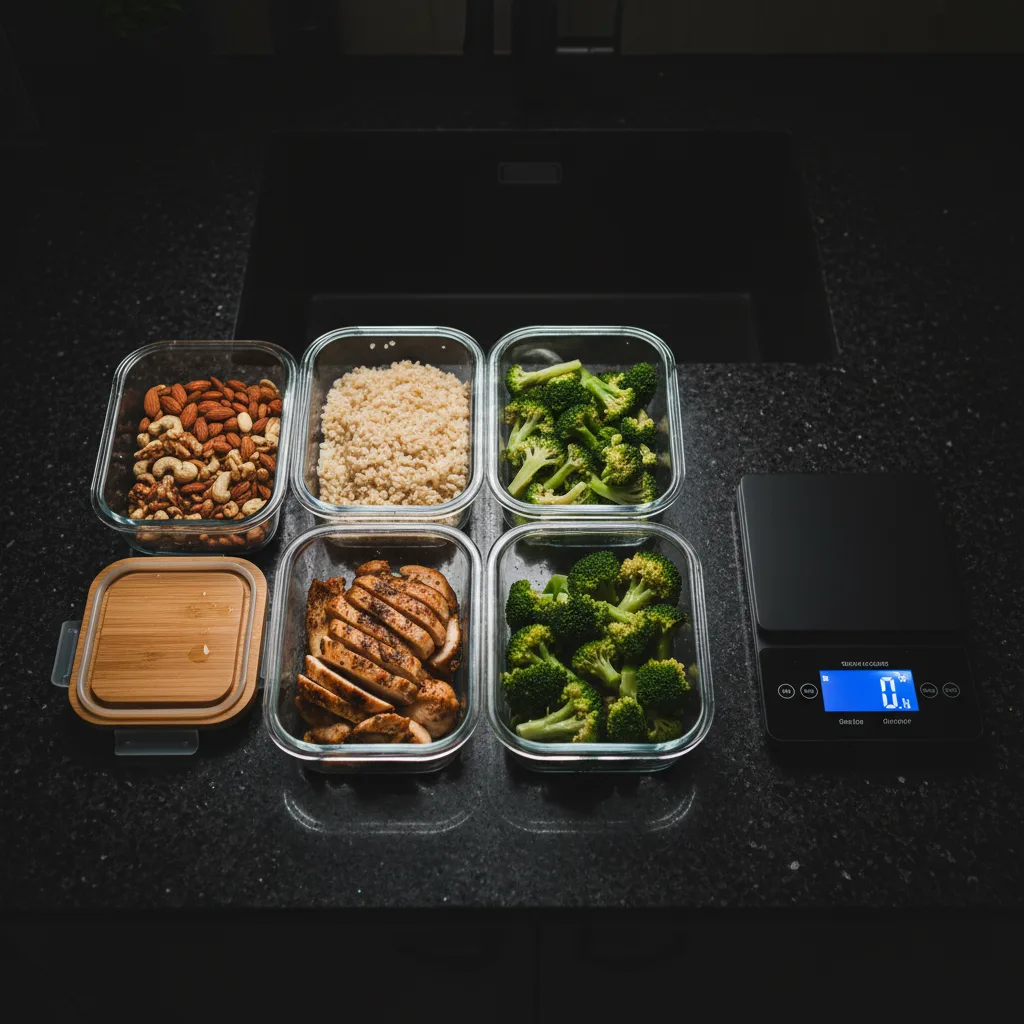
Most people who try counting macros for weight loss make the same mistake — they copy a ratio from the internet, follow it for two weeks, see no results, and quit. The problem isn't the concept. The problem is that a generic macro split doesn't account for your body, your activity level, or how much muscle you want to keep while losing fat.
Getting your macronutrients right for fat loss isn't complicated, but it does require understanding a few things first. Here's how to calculate your macros, which ratios actually work, and how to adjust them when progress stalls.
What Are Macros?
Macronutrients — macros for short — are the three categories of nutrients your body uses for energy and function:
Protein. Builds and repairs muscle tissue. Keeps you full longer than carbs or fat. Has the highest thermic effect — your body burns more calories digesting protein than any other macronutrient. This is why protein is the most important macro for fat loss.
Carbohydrates. Your body's preferred fuel source for high-intensity activity. Stored as glycogen in muscles and the liver. Carbs fuel your workouts, support recovery, and keep your brain functioning well. They're not the enemy — but the amount matters.
Fat. Essential for hormone production (including testosterone), cell membrane function, and absorbing fat-soluble vitamins. Fat is calorie-dense — 9 calories per gram compared to 4 for protein and carbs — so small changes in fat intake create big calorie swings.
Each macro provides calories: protein and carbs give you 4 calories per gram, fat gives you 9. Your total daily calories come from the sum of all three. Changing the ratio between them is what macro counting is all about.
How to Calculate Your Macros for Fat Loss
Step 1: Find Your Calorie Target
You need a calorie deficit to lose fat. No macro split overcomes eating more than you burn. A deficit of 300-500 calories per day is the sweet spot — aggressive enough to see results, conservative enough to preserve muscle and not feel miserable.
Start with your maintenance calories. A simple estimate: multiply your body weight in pounds) by 14-16 depending on activity level. Sedentary? Use 14. Active with regular exercise? Use 15-16. Then subtract 300-500 from that number.
Example: A 180 lb person who trains 4 times per week → 180 × 15 = 2,700 maintenance calories → 2,700 - 400 = 2,300 daily calorie target for fat loss.
Step 2: Set Protein First
Protein is the anchor. Set it first and build everything else around it.
For fat loss while preserving muscle, many lifters aim for roughly 0.8 to 1 gram of protein per pound of body weight. If you're significantly overweight, use your goal body weight instead. If you're lean and lifting heavy, push toward the higher end.
Example: 180 lb person → 180g protein per day → 180 × 4 = 720 calories from protein.
Step 3: Set Fat
Fat should make up roughly 25-35% of your total calories. Going below 20% for extended periods can mess with hormone levels, energy, and overall health. There's no benefit to going that low.
Example: 2,300 total calories × 0.30 = 690 calories from fat → 690 ÷ 9 = roughly 77g fat per day.
Step 4: Fill the Rest With Carbs
Whatever calories are left after protein and fat go to carbs. Carbs are the flexible macro — they fuel your workouts and make your diet more enjoyable, but they're the most adjustable piece.
Example: 2,300 total - 720 protein - 690 fat = 890 calories from carbs → 890 ÷ 4 = roughly 223g carbs per day.
Final macros for the example: 180g protein / 77g fat / 223g carbs = 2,300 calories.
Common Macro Ratios for Weight Loss
You'll see these ratios everywhere. Here's what each one actually means and who it works for.
40/30/30 (protein/carbs/fat). The most balanced split. Works for most people doing moderate exercise — lifting 3-4 times per week plus some cardio. Keeps carbs high enough to fuel workouts while prioritizing protein. This is a strong starting point if you've never tracked macros before.
40/40/20 (protein/carbs/fat). Higher carb, lower fat. Good for people who train intensely and feel flat on lower carb approaches. You need to choose healthy fats carefully at 20% — every gram counts. Works well for younger, active lifters.
40/20/40 (protein/fat/carbs). Lower carb, higher fat. Better for people who feel more satisfied with fat-heavy meals and don't need as much fuel for intense training. Works well for less active people or those doing mostly strength training without heavy cardio.
The reality: The exact ratio matters less than hitting your protein target and staying in a calorie deficit. Protein is the non-negotiable macro. How you split carbs and fat around it is personal preference and depends on how your body responds, your training style, and which approach you can actually stick to.
Coach's Note: The best macro ratio for fat loss is the one you can follow for 12 weeks without hating your life. A "perfect" split you abandon after 10 days does nothing. Pick a ratio that fits your food preferences, try it for 3-4 weeks, then adjust based on results.
Best Macros for Weight Loss: Female vs. Male
The core principles are the same regardless of gender. The numbers differ only because of differences in average body weight and muscle mass.
Best macros for weight loss female. Women typically need fewer total calories, so protein as a percentage of intake is often higher — sometimes 35-40% of total calories. A 140 lb woman targeting fat loss might land around 120-140g protein, 50-60g fat, and 130-160g carbs daily. The key is the same: protein first, calorie deficit maintained.
Best macros for weight loss female over 40. Muscle mass tends to decline with age, and metabolic rate follows, making protein even more important. Keeping protein at 1g per pound of goal body weight and ensuring adequate fat intake for hormonal health becomes critical. Strength training alongside proper macros is the most effective combination for body composition changes over 40.
For men. Higher total calories, same principles. A 200 lb man cutting might eat 200g protein, 80g fat, and 250g carbs. The ratio looks similar — the absolute numbers are just bigger.
How to Count Macros for Weight Loss
Tracking macros requires a food tracking app and a food scale. That's it.
Use an app. MyFitnessPal, MacroFactor, or Cronometer are the most popular. Enter your daily macro targets, log what you eat, and the app does the math.
Weigh your food. At least for the first few weeks. Most people massively underestimate portions — especially calorie-dense foods like nuts), oils, cheese, and peanut butter. A food scale removes the guesswork.
Hit your protein target first. Build each meal around a protein source — chicken, fish, eggs, Greek yogurt, lean meat, legumes. Then fill in carbs and fat around it. If you nail your protein and stay within your calorie target, the rest sorts itself out.
Don't aim for perfection. Being within 5-10g of each macro target is close enough. The stress of hitting exact numbers does more harm than being slightly off. Consistency beats precision every time.
Adjusting Your Macros When Progress Stalls
Fat loss isn't linear. You'll lose weight for a few weeks, then it slows or stops. Here's how to adjust.
First, check if you're actually stalled. Weight fluctuates daily due to water, sodium, and food volume. Look at the trend over 2-3 weeks, not day to day. If the weekly average isn't moving for 3+ weeks, it's time to adjust.
Option 1: Reduce calories by 100-200. Pull from carbs first — they're the most flexible macro. Drop 25-50g of carbs and reassess after two weeks. Don't touch protein.
Option 2: Add activity. Instead of eating less, move more. An extra 20-30 minutes of walking per day can create the additional deficit without cutting food further.
Option 3: Take a diet break. If you've been in a deficit for 12+ weeks, spend 1-2 weeks eating at maintenance. This reduces diet fatigue, normalizes hunger hormones, and sets you up for another productive push. It feels like quitting, but it's not — it's strategy.
Never cut protein to create a bigger deficit. Protein preserves muscle during fat loss. Cutting protein means losing more muscle, which slows your metabolism, which makes fat loss harder. Protect your protein at all costs.
Macro Myths Debunked
"Carbs make you fat." No. Excess calories make you gain fat. Carbs at the right amount fuel your training and make the diet sustainable. Cutting carbs too low tanks your energy, kills your workouts, and makes the diet harder to stick to.
"You need to eat clean to lose fat." You need to hit your calorie and macro targets. Nutrient-dense foods make that easier because they're more filling per calorie, but there's no magical fat-burning food. An apple and a gummy bear with the same macros provide the same energy.
"High protein damages your kidneys." Large reviews on healthy adults have consistently found no link between high protein intake and kidney damage. If you have pre-existing kidney issues, consult your doctor.
"Fat makes you fat." Dietary fat is essential for health. Eating too many total calories makes you gain weight — not fat specifically. Keeping fat at 25-35% of calories is both healthy and sustainable.
Frequently Asked Questions
What is the best macro ratio for fat loss?
A 40/30/30 split (protein/carbs/fat) works for most people. The exact ratio matters less than hitting adequate protein (0.8-1g per pound of body weight) and maintaining a calorie deficit. Start there and adjust based on how your body responds over 3-4 weeks.
Is 40/30/30 good for fat loss?
Yes — it's one of the most balanced and sustainable macro splits for fat loss. It provides enough protein to preserve muscle, enough carbs to fuel workouts, and enough fat for hormonal health. It's a proven starting point.
How do I figure out my macros to lose fat?
Multiply your body weight by 14-16 to estimate maintenance calories, subtract 300-500 for your deficit, set protein at 0.8-1g per pound, set fat at 25-35% of total calories, and fill the rest with carbs. Use a tracking app like MyFitnessPal to log your food daily.
Do I need to track macros to lose fat?
No — you can lose fat without tracking by eating in a calorie deficit intuitively. But tracking macros gives you much more control over body composition. It's the difference between "losing weight" (which might include muscle) and "losing fat" (which preserves muscle). If you lift weights and care about how you look, tracking is worth it.
How strict do I need to be when counting macros?
Not extremely strict. Hitting within 5-10g of each macro target is plenty. The goal is consistency over weeks and months, not perfection at every meal. Track honestly, stay close to your targets, and let the averages do the work.
Should I eat differently on training vs. rest days?
For most people, no. Keep your macros the same every day. Cycling macros (higher carbs on training days, lower on rest days) can work but adds unnecessary complexity for beginners. Start simple, get consistent, then experiment with cycling later if you want.
The Bottom Line
Fat loss comes down to a calorie deficit with enough protein to protect your muscle. Set your protein first — roughly 1 gram per pound of body weight. Set fat at 25-35% of total calories. Fill the rest with carbs. Track your intake with an app for at least the first month to build awareness of what you're actually eating. When progress stalls, cut carbs slightly or add activity — never cut protein. The best macro split is the one you can sustain long enough to see results. Pick one, commit for a month, adjust based on what the scale and the mirror tell you, and keep going.