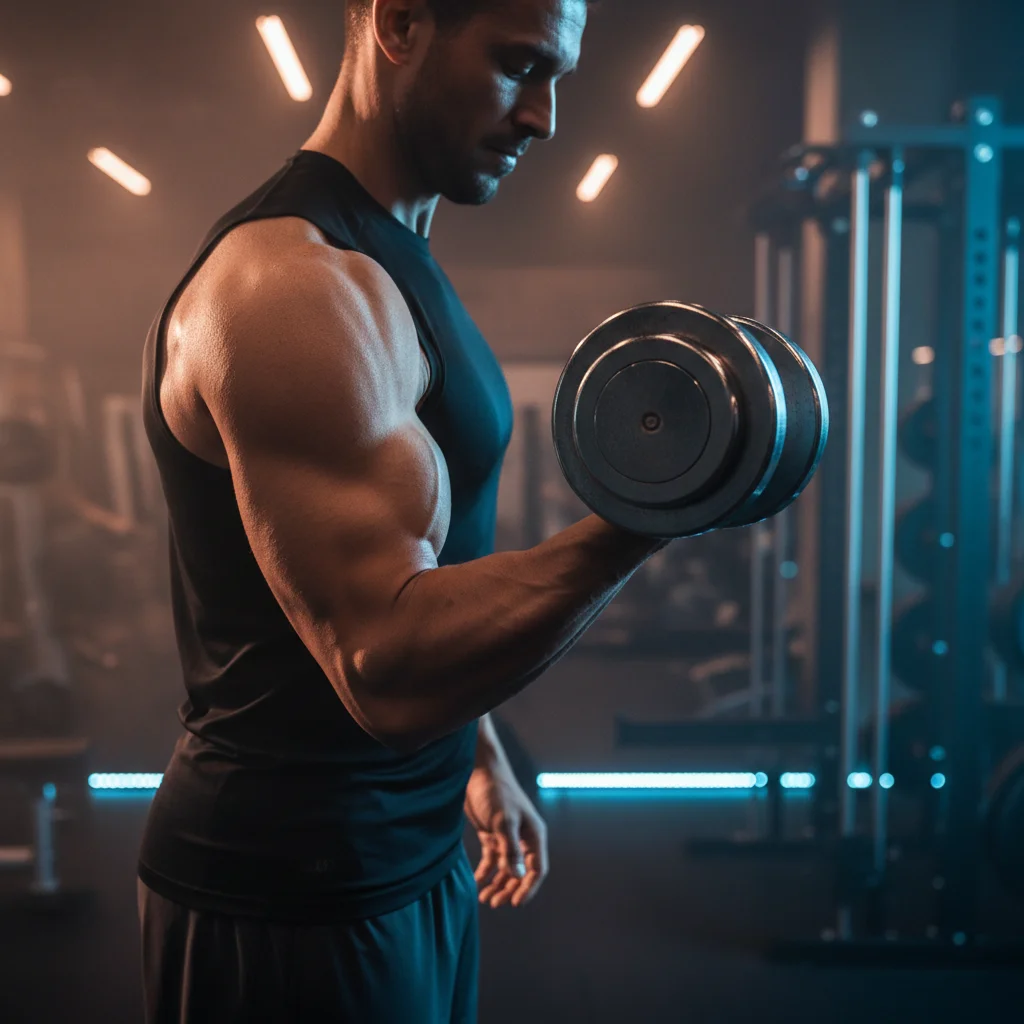
A pair of dumbbells is all you need to build impressive biceps. No cables, no machines, no specialty bars — just free weights and the knowledge of which exercises actually matter.
The advantage dumbbells have over barbells and machines isn't just convenience. Each arm works independently, which means your stronger side can't compensate for your weaker one. You get a greater range of motion at the wrist, allowing full supination under load. And because dumbbells demand more stabilization, your forearms and grip strength develop alongside your biceps without any extra effort.
Here are the 11 best dumbbell bicep exercises, why each one earns its place, and how to build a complete dumbbell bicep workout from them.
Why Dumbbells Are Ideal for Bicep Training
Before diving into the exercises, it's worth understanding what makes dumbbells uniquely effective for arm development.
Unilateral loading fixes imbalances. Most people have one arm that's noticeably stronger. Barbell curls let the dominant arm do more than its share — you won't even notice until the imbalance becomes visible. Dumbbell bicep exercises force each arm to handle its own weight, which gradually evens things out.
Full supination under load. The biceps brachii doesn't just flex the elbow — it also supinates the forearm (rotates your palm from facing down to facing up). With a barbell, your grip is locked. With a dumbbell, you can actively rotate your wrist during every bicep curl, which recruits more muscle fibers and creates a harder peak contraction. This makes the dumbbell biceps curl one of the most complete arm exercises in strength training.
Versatility at home or in the gym. A pair of adjustable dumbbells can replace an entire curl rack. Every exercise on this list can be done in a home gym, a hotel room, or a packed commercial gym where every barbell is taken.
Biceps Anatomy: What You're Actually Building
Understanding your bicep anatomy helps you pick exercises that cover all the bases — not just the ones that feel good.
The biceps brachii has two heads. The long head sits on the outer part of your arm and is primarily responsible for the bicep peak when you flex. The short head is on the inner side and contributes to arm width when viewed from the front. Both heads cross the shoulder joint, which means arm position relative to your torso affects which head works harder.
The brachialis sits underneath the biceps. When developed, it pushes the bicep up from below, making your entire upper arm look thicker. It responds best to neutral-grip and overhand exercises — movements where the biceps brachii is at a disadvantage and the brachialis muscle takes over as the primary elbow flexor.
The brachioradialis runs along the top of your forearm near the elbow. It's the muscle that gives your arm that tapered, powerful look from elbow to wrist. Hammer-grip dumbbell exercises target it directly.
Together, these three muscles make up the front of your upper arm. The triceps handle the back. A complete arm development plan hits both sides, but for dumbbell bicep curl work specifically, it's the long head, short head, brachialis, and brachioradialis that need coverage.
The 11 Best Dumbbell Bicep Exercises
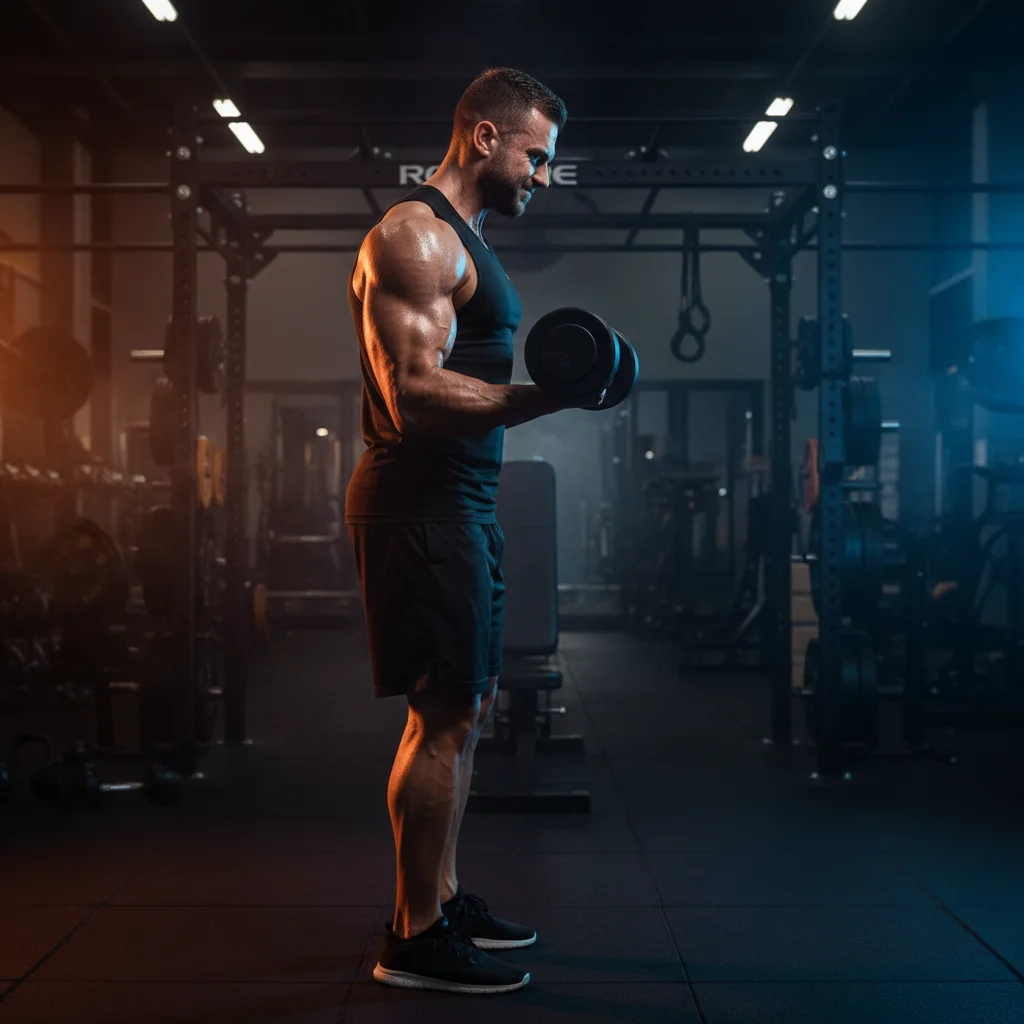
1. Standing Dumbbell Curl
The foundation. Stand with a dumbbell in each hand, palms forward, and curl both weights up while keeping your elbows pinned to your sides. Actively supinate — twist your pinky toward the ceiling — as you approach the top. Lower under control and let your arms fully extend at the bottom.
This is the exercise that should anchor every dumbbell bicep workout. It hits both heads of the biceps evenly and allows progressive overload more easily than most variations.
3-4 sets of 8-12 reps.
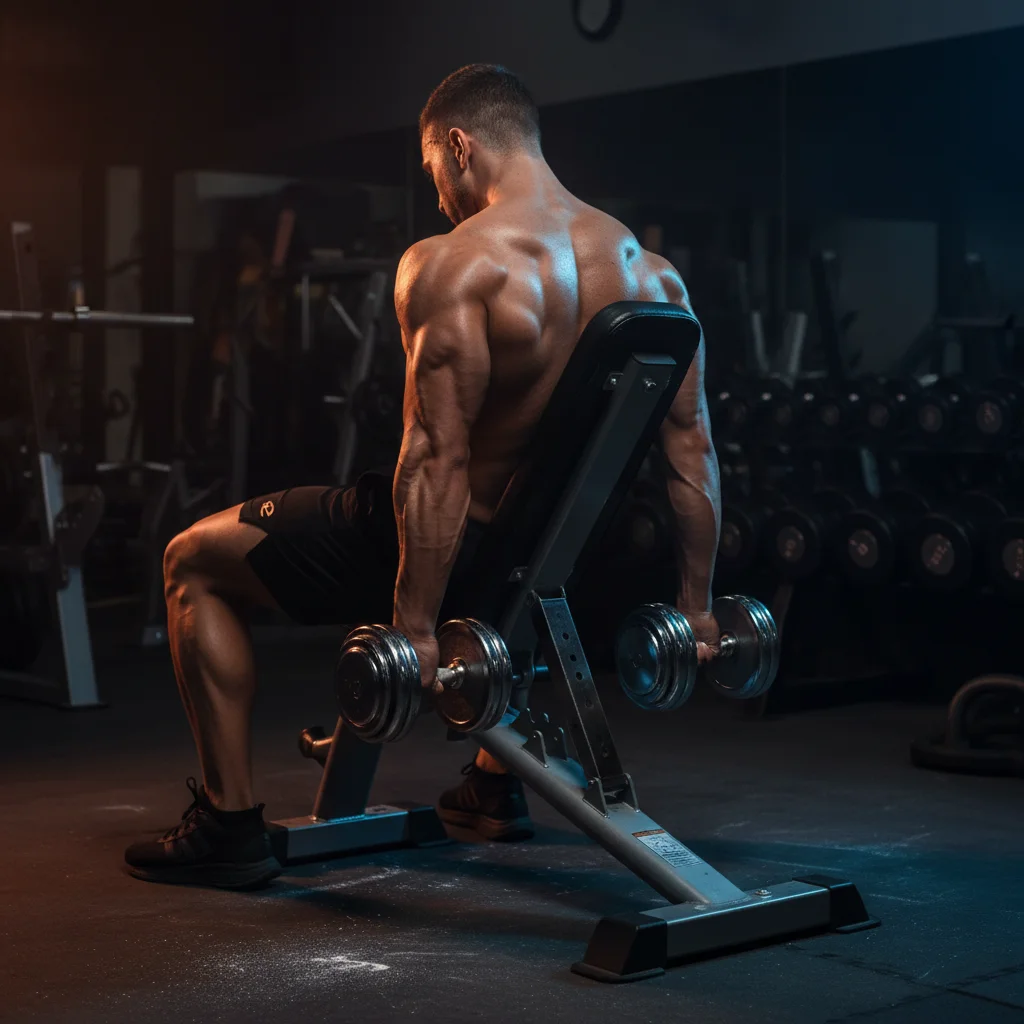
2. Incline Dumbbell Curl
Set an adjustable bench to 45-60 degrees, sit back, and let your arms hang straight down behind your torso. Curl the dumbbells up from this stretched position. The incline puts your arms behind your body, which stretches the long head of the biceps and forces it to work through a greater range of motion.
This is the single best dumbbell exercise for building the bicep peak. You'll use significantly less weight than standing curls — typically 50-60% — and that's by design. The stretch does the work, not the load.
3 sets of 10-12 reps.
3. Hammer Curl
Same setup as a standard curl, but your palms face each other throughout the entire movement — like you're holding a hammer. This neutral grip shifts emphasis from the biceps brachii to the brachialis and brachioradialis, building arm thickness that's visible from every angle.
Most people can handle equal or slightly more weight on hammer curls compared to standard curls. Don't let that tempt you into swinging — strict form produces better results.
3 sets of 10-12 reps.
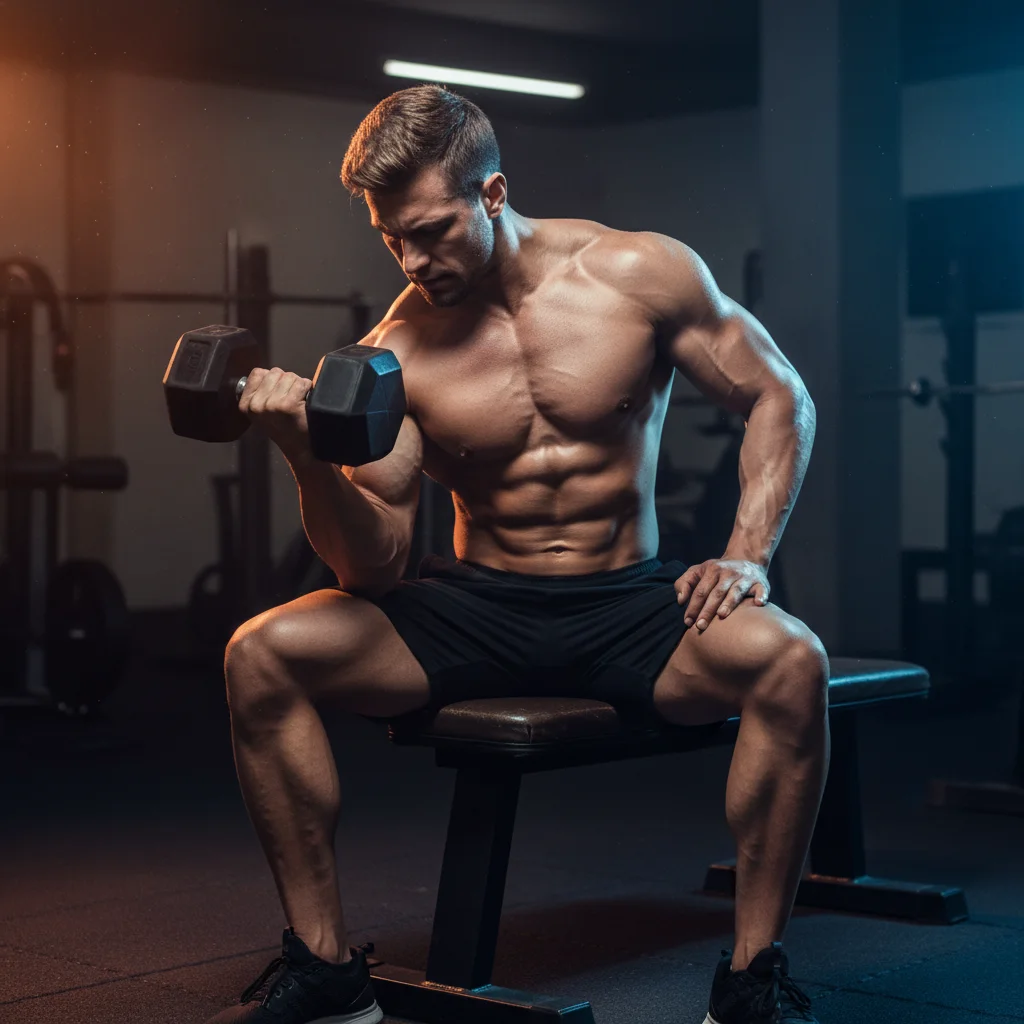
4. Concentration Curl
Sit on a bench with your feet wide, lean forward, and brace the back of your upper arm against your inner thigh. Curl one dumbbell at a time with complete focus on the contraction. EMG activation studies consistently rank this exercise among the highest for bicep recruitment — because there's nowhere to hide. No momentum, no body English, just pure bicep work.
The key detail most people miss: supinate hard at the top. Turn your pinky toward the ceiling and hold the squeeze for a full second.
2-3 sets of 10-15 reps per arm.
5. Incline Hammer Curl
Combine the stretched position of the incline bench with the neutral hammer grip. This targets the brachialis in its lengthened position — a potent growth stimulus that standing hammer curls can't replicate. Set the bench to 45-60 degrees, let your arms hang behind your torso, and curl without rotating your wrists.
If your arms look decent from the front but flat from the side, this exercise attacks that weakness directly.
3 sets of 10-12 reps.
6. Zottman Curl
Named after 19th-century strongman George Zottman, this is the Swiss Army knife of dumbbell bicep exercises. Curl up with palms facing up (standard grip), rotate your wrists at the top so palms face down (overhand grip), then lower with the overhand position. You get a strong bicep curl contraction on the way up and a brachioradialis-heavy eccentric on the way down.
Use about 60-70% of your standard curl weight. The overhand lowering phase is the limiting factor, and that's where the forearm magic happens.
3 sets of 8-10 reps.
7. Cross-Body Hammer Curl
Instead of curling straight up, bring the dumbbell across your torso toward the opposite shoulder. This diagonal path shifts more work to the brachialis and the long head of the biceps compared to standard hammer curls. The contraction hits deeper into the arm — you'll feel it between your bicep and tricep on the outer portion.
Always alternate arms on these. Do all reps on one side before switching, or alternate left-right.
3 sets of 10-12 reps per arm.
8. Seated Dumbbell Curl
Sitting on a bench with back support removes every compensation pattern your body uses during standing curls. Your back can't sway, your hips can't thrust, your legs can't generate momentum. Whatever weight goes up is 100% bicep effort.
Think of this as the honesty check for your curl strength. You'll probably drop 10-15% from your standing weight — and that gap tells you exactly how much you've been cheating.
3 sets of 8-12 reps.
9. Spider Curl
Lie chest-down on an incline bench set to about 45 degrees, arms hanging straight down. Curl the dumbbells up from this position. The spider curl is the inverse of the incline curl — instead of maximizing stretch at the bottom, it maximizes tension at the top. The resistance profile means the exercise is hardest at peak contraction, which creates an intense squeeze.
These are best used as a finisher after heavier work. Go light and focus on the contraction.
2-3 sets of 12-15 reps.
10. Drag Curl
Stand with dumbbells at your sides and curl them upward, but instead of the normal arc, drag the weights up along the front of your body by pulling your elbows back behind your torso. This unusual bar path removes the front deltoid from the movement and places extreme emphasis on the long head of the biceps.
Drag curls feel awkward the first few times. The range of motion is shorter than a standard curl, and you'll use less weight. That's normal. Once you find the groove, the long head contraction is unmistakable.
2-3 sets of 10-12 reps.
11. Reverse Dumbbell Curl
Flip your grip — palms face down throughout the entire curl. This pronated position puts the biceps brachii at a mechanical disadvantage, forcing the brachioradialis and wrist extensors to handle the load. It's the best dumbbell exercise for direct forearm development.
Expect to use about 50-60% of your regular curl weight. If your wrists complain, the weight is too heavy. Start light and build up gradually.
2-3 sets of 12-15 reps.
Dumbbell Bicep Workout for Beginners
If you're just starting out, three exercises is enough to stimulate growth without destroying your elbows. Master these before adding complexity.
1. Standing Dumbbell Curl — 3 sets x 10-12 reps
2. Hammer Curl — 3 sets x 10-12 reps
3. Concentration Curl — 2 sets x 12 reps per arm
Total: 8 sets. This covers the biceps brachii (standing curl), brachialis (hammer curl), and provides strict isolation (concentration curl). Rest 60-90 seconds between sets. Train biceps twice per week with at least 48 hours between sessions.
Advanced Dumbbell Bicep Workout for Mass
For experienced lifters who need more volume and exercise variation to keep growing.
1. Incline Dumbbell Curl — 3 sets x 10-12 reps
2. Standing Dumbbell Curl — 3 sets x 8-10 reps
3. Hammer Curl — 3 sets x 10-12 reps
4. Spider Curl — 2 sets x 12-15 reps
5. Zottman Curl — 2 sets x 10 reps
Total: 13 sets. The incline curl opens the workout with the long head stretch while you're fresh. Standing curls provide the heaviest bilateral load. Hammer curls cover the brachialis. Spider curls maximize peak contraction. Zottman curls finish off both biceps and forearms. This takes about 35-40 minutes.
At-Home Dumbbell Bicep Workout
You don't need a gym to build bigger arms. A pair of adjustable dumbbells and a chair or bench is the full setup.
1. Standing Dumbbell Curl — 3 sets x 10-12 reps
2. Cross-Body Hammer Curl — 3 sets x 10-12 reps per arm
3. Concentration Curl (use a chair) — 2 sets x 12-15 reps per arm
Total: 8 sets. If you have an adjustable bench, swap the standing curl for incline curls to add the stretch component. This home workout provides enough stimulus for steady bicep growth when combined with other upper body pulling work like rows or pull-ups.
Tips for Getting the Most Out of Your Dumbbell Bicep Workout
Progressive overload still applies. The goal isn't just to show up and curl — it's to curl more than last time. Add 2.5-5 pounds when you can complete all prescribed reps with clean form. On dumbbell curls, small increments matter more than big jumps. Magnetic fractional plates can help if your dumbbells only go up in 5-pound steps.
Train biceps twice per week. Research consistently shows that hitting a muscle group twice per week produces more muscle hypertrophy than once per week at the same total volume. Split your bicep work across two sessions — perhaps one on a pull day and one on an arm day.
Don't neglect the eccentric. The lowering phase of every curl should take 2-3 seconds. Dropping the weight quickly wastes the portion of the exercise where the most muscle damage (the productive kind) occurs. If you can't control the descent, the dumbbell is too heavy.
Vary your exercises, not just your weight. Different dumbbell curl variations challenge the biceps at different points in the range of motion. Incline curls are hardest at the bottom (stretch). Spider curls are hardest at the top (contraction). Standing curls are hardest in the middle. Rotating between these across your training week ensures your biceps never fully adapt to one stimulus.
Coach's Note: If you've been curling the same dumbbells for months and your arms haven't grown, the problem is almost never the exercise selection. It's either the effort level (your last two reps should genuinely scare you) or the total weekly volume (most people do too little, not too much). Fix those two things before adding exotic variations.
Frequently Asked Questions
Can I build biceps with dumbbells only?
Yes. Dumbbells provide everything you need for complete bicep development — bilateral curls, unilateral isolation, and multiple grip positions. Many lifters with impressive arms train exclusively with dumbbells. The key is progressive overload and sufficient volume, not equipment variety.
How many dumbbell bicep exercises should I do per workout?
Two to four exercises is the sweet spot. Pick one compound-style curl (standing or incline), one hammer-grip variation (hammer or cross-body), and optionally one isolation finisher (concentration or spider curl). More than four bicep exercises in one session usually means you're not working hard enough on each one.
How often should I train biceps?
Twice per week is optimal for most people. This allows you to accumulate 10-16 total sets of bicep work per week — the range most research supports for muscle hypertrophy — while giving each session enough recovery time. Training biceps three times per week can work for advanced lifters, but most people recover better with two focused sessions.
Are dumbbell curls better than barbell curls?
Neither is universally better — they complement each other. Barbell curls allow heavier loading, which is better for progressive overload and strength. Dumbbell curls allow full supination and independent arm work, which is better for balanced development and peak contraction. Use both if you can. If you can only pick one, dumbbells are the more versatile choice.
What We Recommend
Bowflex SelectTech 552 Adjustable Dumbbells
If you're building a home arm workout, adjustable dumbbells replace an entire rack and handle every curl variation in this article.
The Bottom Line
Building bigger biceps with dumbbells comes down to three things: pick exercises that hit all three elbow flexors (biceps brachii, brachialis, brachioradialis), use enough weight to challenge yourself in the 8-15 rep range, and progress consistently over time. The 11 exercises above cover every angle and grip position your arms need. Start with the beginner workout if you're new, graduate to the advanced routine when three exercises no longer creates soreness, and train with the kind of effort where your last rep is a genuine fight. That's what builds arms — not the number of exercises, but the quality of each set.