That dull ache at the front of your shoulder — the one that flares up during barbell curls, gets worse on incline pressing, and never quite goes away between sessions. You've probably blamed your rotator cuff, your form, or "sleeping on it wrong." But there's a structure most lifters have never heard of that's often the real culprit: the bicipital groove.
The bicipital groove is a small channel in your upper arm bone where the biceps tendon lives. When it's healthy, you don't know it exists. When it's irritated, every curl and every press reminds you.
Here's what the bicipital groove is, why it causes front-of-shoulder pain, how to tell if it's the problem, and what to do about it.
What Is the Bicipital Groove?
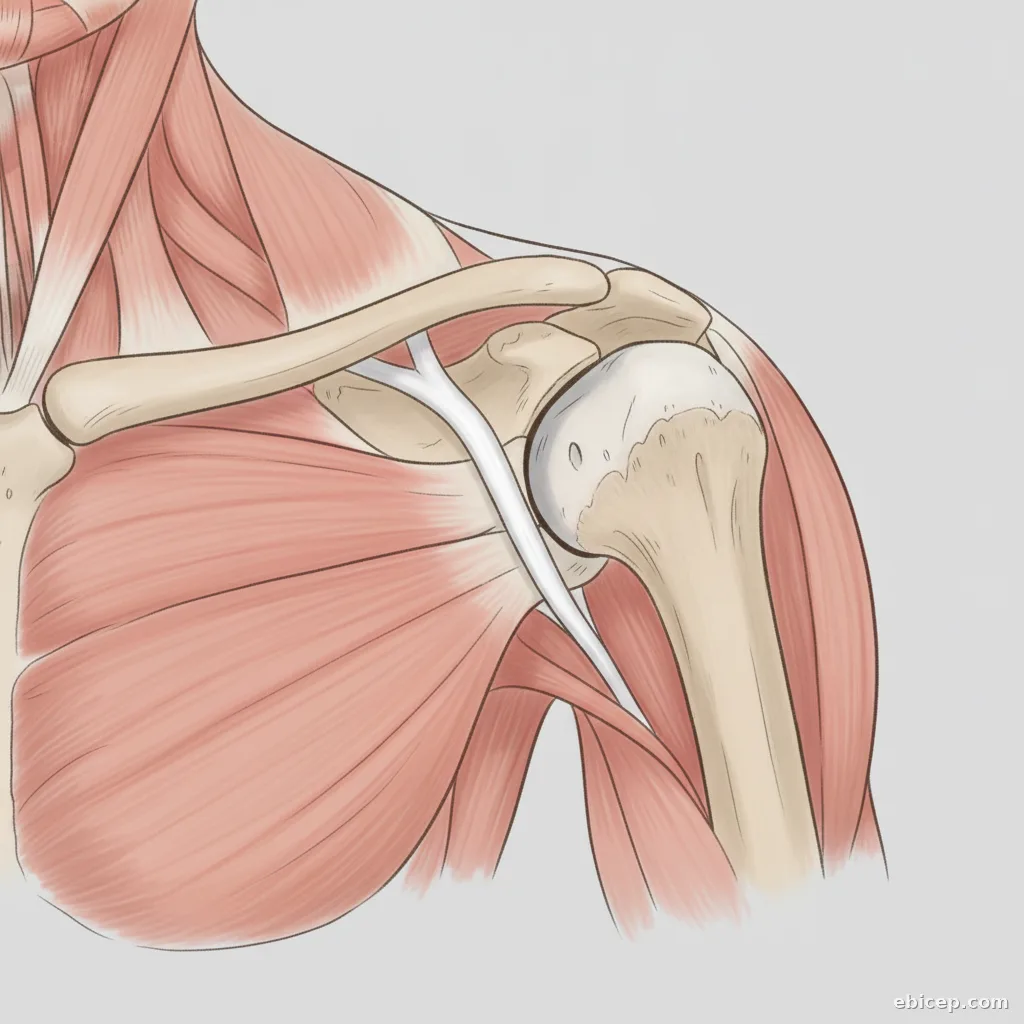
The bicipital groove — also called the intertubercular sulcus — is a vertical channel on the front of the humerus (upper arm bone). It sits between two bony bumps: the greater tubercle) on the outside and the lesser tubercle on the inside.
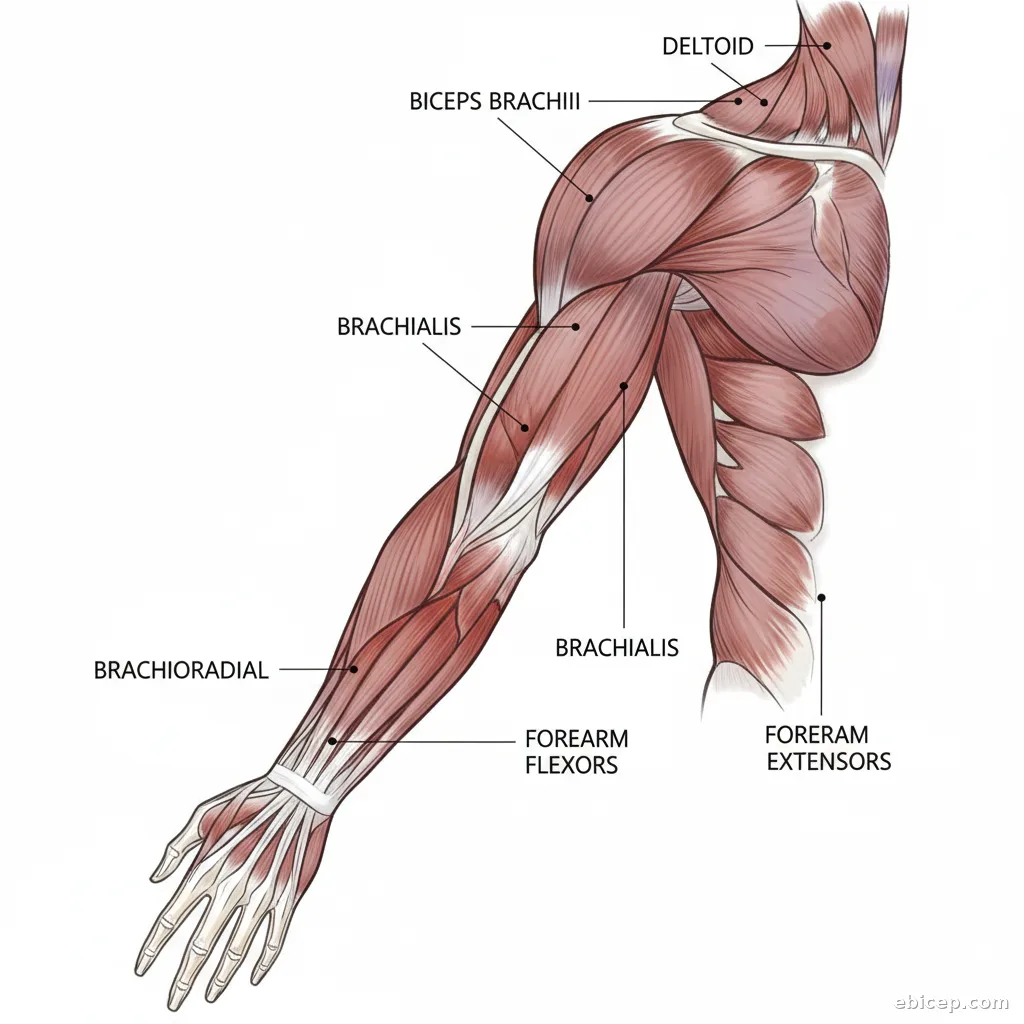
The long head of the biceps brachii tendon runs through this groove like a rope in a pulley. A ligament called the transverse humeral ligament bridges across the top, holding the tendon in place. Every time you curl, press, or raise your arm, the tendon slides through this groove.
When everything is healthy, the tendon glides smoothly. When it's irritated — from overuse, inflammation, or structural problems — you get that familiar front-of-shoulder pain that makes curling miserable.
Why Lifters Get Bicipital Groove Pain
The bicipital groove is a high-traffic area. Every pressing, curling, and overhead movement generates forces that cross it. Several major muscles — including the pectoralis major, latissimus dorsi, and teres major — insert directly at or near the groove. That's a lot of mechanical stress converging on a small piece of anatomy.
The most common groove-related problems in lifters:
Biceps tendonitis. The tendon becomes inflamed within the groove from repetitive loading. This is the most common cause of front-of-shoulder pain in people who lift. It develops gradually — a mild ache that becomes a sharper pain over weeks or months of training through it. For treatment, see our bicep tendonitis treatment guide.
Biceps tendon subluxation. The tendon partially slips out of the groove during shoulder rotation. You might feel a snap or click at the front of the shoulder. This happens when the transverse humeral ligament is damaged, when the subscapularis muscle (part of the rotator cuff) is torn, or when the groove is anatomically shallow.
Degenerative changes. Over years of heavy training, the groove can develop bone spurs that irritate the tendon as it slides through. The tendon itself can fray or partially tear. This is more common after age 35-40, especially in lifters with a long history of heavy pressing and overhead work.
Exercises Most Likely to Irritate the Groove
Not all exercises stress the groove equally. These are the biggest offenders:
Heavy barbell curls with poor form. Swinging the bar up creates a sudden jerk on the biceps tendon at the bottom of the curl — right where it sits in the groove. Strict form with controlled negatives protects the groove. Ego curling destroys it.
Incline dumbbell curls. The stretched position at the bottom puts the long head tendon under maximum tension within the groove. If your shoulders aren't warmed up, this can aggravate existing irritation. Not a bad exercise — but one that demands proper preparation.
Heavy bench press. The pec's insertion crosses right over the groove. Under heavy loads, the pec pulls laterally against the tendon. If you bench frequently without adequate pulling volume, internal rotation tightness narrows the space around the groove.
Overhead pressing with limited mobility. Forcing your arms overhead when your shoulder joint lacks the range of motion compresses structures around the groove. If you can't get your arms fully overhead without arching your back, heavy overhead work is risky.
Sloppy preacher curls. Letting the weight drop at the bottom of a preacher curl creates a sudden stretch on the biceps tendon that yanks against the groove. Controlled negatives prevent this — but most people don't control preacher curls nearly enough.
How to Tell If Your Bicipital Groove Is the Problem
The palpation test. Sit with your arm at your side, elbow bent to 90 degrees. Place two fingers on the front of your shoulder, between the two bony bumps. Slowly rotate your forearm inward and outward. You'll feel the groove — and the tendon — roll under your fingers. If pressing on this spot reproduces your pain, the groove is likely involved.
The Speed test. Hold your arm straight out in front of you, palm up. Have someone push your arm downward while you resist. If this reproduces pain at the front of the shoulder, the biceps tendon is being stressed and the groove is likely the source.
Pain pattern. Bicipital groove pain typically aches at the front of the shoulder, worsens during curling and pressing, improves with rest, and returns when you train again. It's usually a specific spot you can point to — not a diffuse shoulder soreness.
If pain persists beyond 2-3 weeks despite rest and modification, see a doctor or physical therapist. An MRI or ultrasound can confirm tendon damage.
Coach's Note: That nagging front-of-shoulder pain that shows up during curls and benching? Most lifters train through it for months before getting it checked. Don't be that person. What starts as mild tendon irritation in the groove can become a partial tear if you keep loading it. Take two weeks off curling, ice it, and see if it resolves. If it doesn't, see a professional.
When Should You Worry?
Probably fine — keep training with modifications:
- Mild ache that goes away after warming up
- Only hurts on one specific exercise
- No snapping, clicking, or instability
- Pain doesn't wake you up at night
Get evaluated by a professional:
- Snapping or clicking at the front of the shoulder
- Pain that persists after 2-3 weeks of rest
- Weakness when curling or gripping
- Pain that wakes you at night
- Visible asymmetry in the bicep (one side looks different)
How to Protect the Bicipital Groove
Warm up before pressing and curling. Band pull-aparts, light external rotations, and arm circles. Cold tendons in tight grooves don't slide well. Two minutes of warm-up prevents weeks of injury recovery.
Strengthen the rotator cuff. Weak rotator cuff muscles allow the humerus to shift during movements, which changes how the tendon tracks through the groove. External rotations with a band or light dumbbell 2-3 times per week is enough.
Control the eccentric on every curl. Dropping the weight at the bottom creates a sudden jerk on the tendon. Two to three seconds down, every rep. Your groove will thank you.
Balance pressing and pulling. Heavy bench pressing without adequate rowing creates internal rotation dominance that compresses the groove. For every set of pressing, do at least one set of pulling.
Don't train through sharp front-of-shoulder pain. Dull warmup soreness that resolves is one thing. Sharp pain that gets worse during the set is your tendon telling you to stop.
The Anatomy Behind the Groove
For those who want the deeper details:
The groove is typically 6-8 cm long and varies in depth between individuals. A shallow groove provides less containment and may predispose some lifters to tendon subluxation. Blood supply to the tendon within the groove is limited, which is one reason biceps tendon injuries heal slowly.
The greater tubercle serves as the attachment point for the supraspinatus and infraspinatus (rotator cuff muscles). The lesser tubercle anchors the subscapularis. These insertions create a complex mechanical environment where rotator cuff health directly affects how the tendon tracks through the groove — which is why rotator cuff tears and biceps tendon problems frequently occur together.
Frequently Asked Questions
What causes bicipital groove pain?
Most commonly, biceps tendonitis — inflammation of the long head tendon within the groove from repetitive curling, pressing, or overhead work. Other causes include tendon subluxation (slipping out of the groove), bone spurs, or associated rotator cuff problems. Poor curl form and excessive pressing volume without pulling are the most common training-related triggers.
Can a torn rotator cuff affect the bicep?
Yes. The subscapularis — a rotator cuff muscle — helps contain the biceps tendon within the groove. A subscapularis tear can destabilize the groove and cause the tendon to sublux. Rotator cuff problems and biceps tendon problems frequently occur together and should be evaluated together.
How can I prevent shoulder issues related to the bicipital groove?
Warm up before pressing and curling, strengthen your rotator cuff, control the eccentric phase of curls, balance pressing and pulling volume, and don't push through front-of-shoulder pain. Most groove problems develop gradually — early modification prevents worse injuries down the line.
What does the Speed test check for?
The Speed test evaluates biceps tendon integrity and irritation. You hold your arm straight in front of you (palm up) and resist downward pressure. If this causes pain at the front of the shoulder, the biceps tendon is likely inflamed or damaged within the groove. It's a quick screening tool — not a definitive diagnosis.
The Bottom Line
The bicipital groove is a small channel in your upper arm bone that houses the long head of the biceps tendon. Most lifters never think about it — until it starts hurting. Front-of-shoulder pain during curls and pressing is often the groove telling you something is wrong. Warm up properly, control your negatives, balance your pressing and pulling, and take front-of-shoulder pain seriously before it becomes a bigger problem. The anatomy is simple, the fix is usually straightforward, and the biggest mistake is ignoring it.