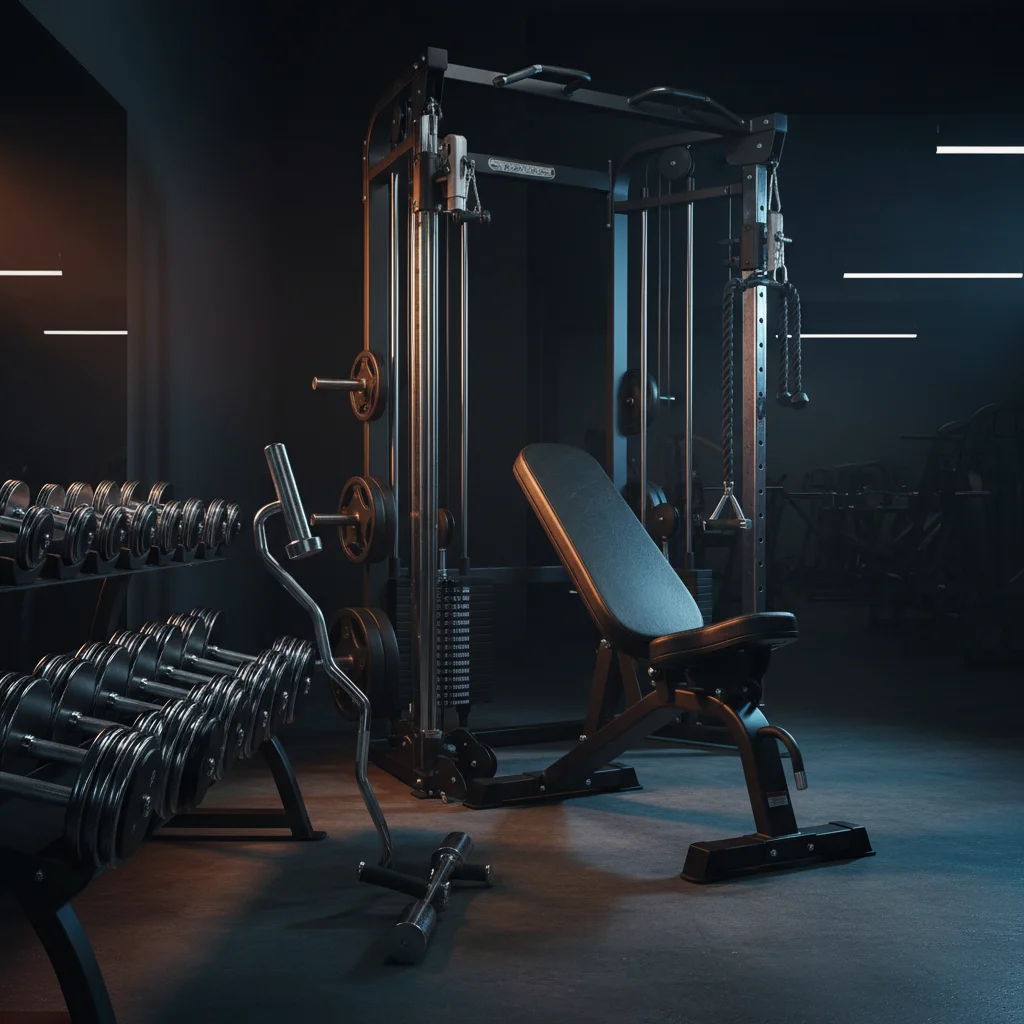
A good set of adjustable dumbbells replaces an entire rack of fixed weights. One pair. Same corner of your room. That's it.
If you've been going back and forth on whether adjustable dumbbells are worth the money — or which ones to actually buy — this guide covers everything. How they work, what to look for, who they're good for, and who should skip them entirely.
What Are Adjustable Dumbbells?
An adjustable dumbbell is a single dumbbell that lets you change the weight without swapping out the entire thing. Instead of buying a set of 5s, 10s, 15s, 20s, 25s, and so on — each taking up space and costing money — you get one pair that covers the full weight range.
Most adjustable dumbbells go from about 5 lbs up to 50 pounds, though heavier models exist. Some go up to 80 pounds or even 90 lb per dumbbell, which is enough for serious strength training.
Sounds simple enough. The execution varies a lot depending on which type you buy.
How Do Adjustable Dumbbells Work?
There are three main designs, and they feel very different in your hand.
Dial or selector systems. You twist a dial at the end of the dumbbell to choose your weight. The mechanism locks the right number of plates onto the handle and leaves the rest behind in the cradle. Bowflex SelectTech dumbbells and NordicTrack Select-A-Weight dumbbells use this approach. They're fast — weight changes take about two seconds. The downside is the internal mechanism adds bulk, so they feel bigger in your hand than a traditional dumbbell at the same weight.
Pin or slide systems. You slide a pin or toggle into the weight you want, similar to a gym cable machine. PowerBlock adjustable dumbbells are the most well-known example. These tend to be more compact than dial systems, and they're generally more durable because the mechanism is simpler. The trade-off is the shape — they look and feel like a block rather than a traditional dumbbell.
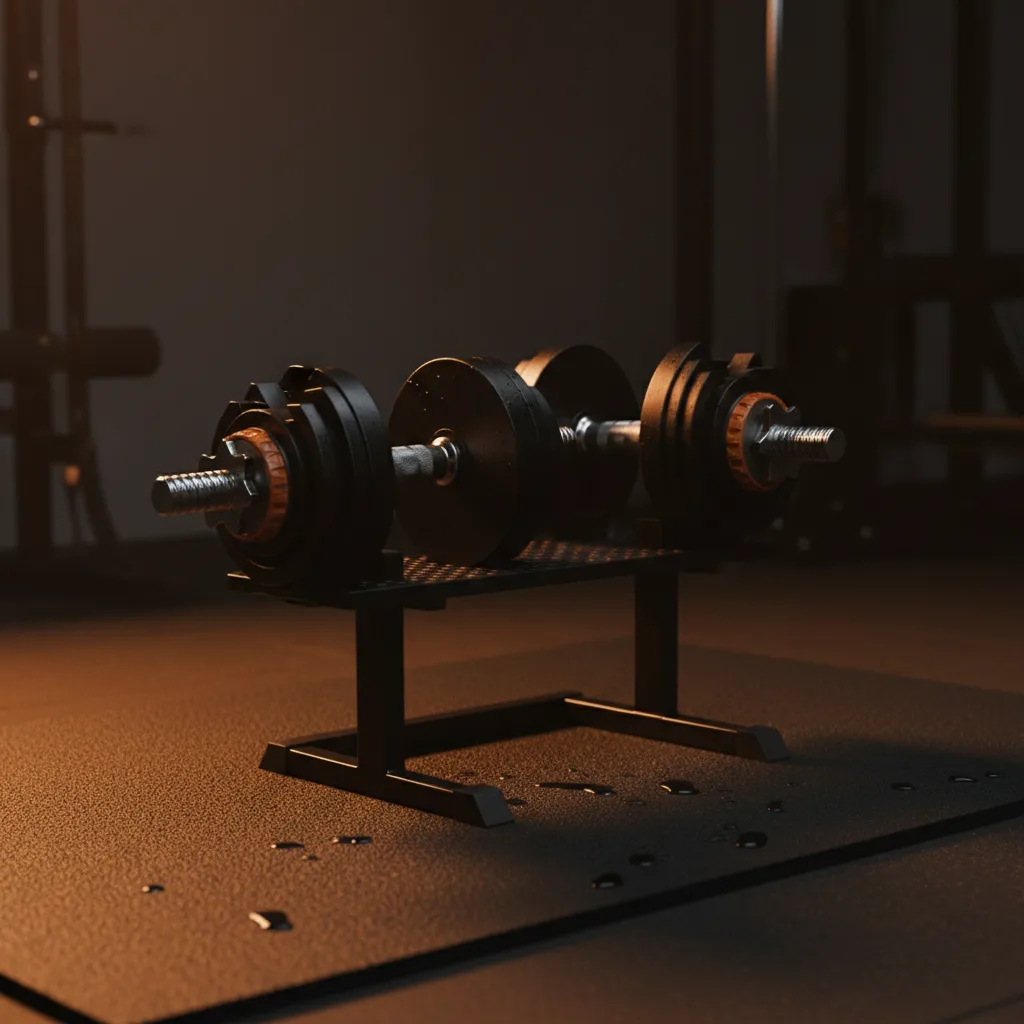
Spinlock or plate-loaded systems. Old-school design. You slide plates onto a handle and tighten a collar to hold them in place. These are the cheapest adjustable dumbbells you'll find, and they're basically indestructible. But changing weight is slow — you're unscrewing collars, swapping plates, and retightening. That kills your workout flow if you need to change weight between sets.
Each type has its place. The right one depends on how you train and how much you want to spend.
Benefits of Adjustable Dumbbells
They save a ridiculous amount of space. A full set of fixed dumbbells from 5 to 50 pounds is roughly 15 individual pairs. That's a dedicated dumbbell rack taking up a wall of your home gym. A single pair of adjustable dumbbells fits on a small stand in the corner. If space in your home gym is tight, this alone makes the decision for you.
They save money in the long run. A good set of fixed dumbbells from 5 to 50 lbs costs anywhere from $500 to over $1,000. A solid pair of adjustable dumbbells covers the same range for $300 to $500. You're getting the same weight range for roughly half the price. Discount adjustable dumbbells from brands like Snode or CAP can cut that even further.
They grow with you. When you get stronger, you don't need to buy new dumbbells. You just use more of the weight range you already have. This is especially good for beginners who aren't sure what weights they'll need yet.
They work for every dumbbell exercise. Curls, presses, rows, lunges, lateral raises — adjustable dumbbells handle all of it. Every workout you'd do with gym dumbbells, you can do at home with a compact weight set.
What to Look for in Adjustable Dumbbells
Not all adjustable dumbbells are equal. Here's what actually matters when you're choosing.
Weight range. Most people should aim for at least 5 to 50 lbs per dumbbell. That covers the vast majority of exercises for both upper and lower body. If you're already strong or plan to do heavy compound movements, look for sets that go to 80 pounds or 90 lb adjustable dumbbells. A weight set for women often starts lighter — around 5 to 25 lbs — though there's no reason anyone can't use a full-range set and just dial it down.
Weight increments. Some dumbbells jump in 5 lb steps. Others offer 2.5 lb increments. Smaller increments matter more than you'd think — especially for exercises like lateral raises and bicep curls where a 5 lb jump can be the difference between good form and sloppy reps. The best adjustable dumbbell sets offer 2.5 lb increments at least in the lower weight range.
How fast you can change weight. If your workout involves supersets or drop sets, you need quick weight changes. Dial systems change in two seconds. Pin systems take five seconds. Plate-loaded systems take 30 seconds or more. For most home workouts, anything under ten seconds is fine.
Durability. This is where cheap and expensive adjustable dumbbells differ the most. A durable adjustable dumbbell has metal internals and a solid mechanism. Budget sets sometimes use plastic components that can crack or wear out after a year or two of heavy use. Read reviews from people who've owned them for more than six months — that's when durability issues show up.
How they feel in your hand. This is personal, but it matters. Some adjustable dumbbells feel awkward during certain exercises because of their shape or size. If you can try them in person before buying, do it. If not, look for reviews that mention how they feel during exercises like dumbbell curls, overhead presses, and rows — not just what they look like on a shelf.
The stand or cradle. Most selector-style adjustable dumbbells come with a cradle or stand — weights on a stand that you set and lift from. Make sure the cradle is sturdy. Wobbly cradles are annoying and can make the weight selection mechanism harder to use. Some brands sell a stand separately, which is worth it if the dumbbells sit on the floor otherwise.
Adjustable Dumbbells vs. Traditional Dumbbells
Let's be honest about the trade-offs.
Fixed dumbbells win on feel. A traditional dumbbell is a solid piece of metal. It's compact, balanced, and feels natural in your hand. Adjustable dumbbells, no matter how good, are always a bit bigger and sometimes slightly less balanced.
Fixed dumbbells win on speed. Grab and go. No dials, no pins, no fiddling. In a commercial gym with a full dumbbell rack, fixed weights are faster.
Adjustable dumbbells win on everything else for home use. Cost, space, versatility. If you're building a home gym, it's not even close. A set of adjustable dumbbells plus an adjustable bench gives you more exercise options than most people would ever need.
Honestly, both have their place. Gym dumbbells at the gym. Adjustable dumbbells at home.
Coach's Note: If you train alone at home, adjustable dumbbells are actually safer than a barbell for heavy pressing. You can bail on a failed dumbbell rep by dropping the weights to the side. Try that with a barbell on your chest.
Best Adjustable Dumbbells for Different Needs
Rather than ranking every brand, here's how to match a style to how you actually train.
Best adjustable dumbbells overall — for most home gym owners. You want a dial or selector system in the 5 to 50 lb range with 2.5 lb increments. This covers everything from light lateral raises to moderately heavy rows and presses. Bowflex SelectTech 552 and the REP Fitness QuickDraw adjustable dumbbells both fit this description well. The REP QuickDraw feels more like a traditional dumbbell in hand, which is a nice touch.
Best budget adjustable dumbbells — when price matters most. Plate-loaded spinlock dumbbells are the cheapest option by far. You can find a pair with enough plates to reach 50 pounds for under $100. Yes, changing weight is slow. But the dumbbells themselves are practically indestructible, and you can always buy more plates later. For someone who's working out at home on a budget, these work fine.
Best adjustable dumbbells for beginners. If you're just starting a workout routine and aren't sure how much weight you'll need, a set that tops out at 25 or 30 lbs with small increments is plenty. You'll outgrow it eventually, but that might take six months to a year. No need to spend $400 on a set that goes to 90 lb when you're curling 15s.
Best heavy adjustable dumbbells — for advanced strength training. If you need more than 50 pounds per dumbbell, your options narrow but they're solid. PowerBlock adjustable dumbbells go up to 90 lb per hand with expansion kits. Ironmaster Quick-Lock dumbbells also reach 75+ lbs and are built like tanks. These are for people who already have a strength training foundation and need heavy weight for compound movements like dumbbell bench press and heavy rows.
Best adjustable dumbbells for small spaces. PowerBlock is the most compact design overall. The block shape stacks tighter than round dumbbells with cradles. If your "home gym" is a closet or apartment corner, compactness matters more than aesthetics.
Adjustable Dumbbell Exercises You Can Do
A pair of adjustable dumbbells opens up a huge number of exercises. Here are the ones that matter most for a full-body workout.
Upper body pushing: dumbbell bench press, overhead press, incline press, floor press, Arnold press
Upper body pulling: dumbbell rows, renegade rows, upright rows, bicep curls, hammer curls, reverse curls
Lower body: goblet squats, lunges, Romanian deadlifts, step-ups, Bulgarian split squats
Core and shoulders: Turkish get-ups, lateral raises, front raises, dumbbell woodchops
That's enough to build a complete exercise routine for your entire body — no gym membership required.
Are Adjustable Dumbbells Safe?
This comes up a lot, and it's a fair question. You're holding a mechanism over your head. What if it fails?
The short answer: modern adjustable dumbbells from established brands are safe. Quality brands aren't winging this — locking mechanisms are engineered for loads well beyond their rated maximum. Plates don't just fall off mid-rep.
That said, there are a few common-sense precautions.
Always make sure the weight is fully locked before you lift. With dial systems, spin the dial all the way until it clicks. With pin systems, push the pin in until it's flush. A half-engaged lock is the only realistic failure point.
Don't drop adjustable dumbbells. This is the biggest difference from gym dumbbells. Fixed dumbbells can take a beating. Adjustable dumbbells have internal mechanisms that can get damaged from repeated drops. If you're the type who drops weights after a heavy set, these aren't for you — or at least use them for lighter work.
Inspect the mechanism occasionally. Check that dials turn smoothly, pins slide fully, and nothing is cracked or loose. This takes 30 seconds and prevents problems.
How Heavy Should Adjustable Dumbbells Be?
This depends on your training experience and fitness goals.
Beginners: 5 to 25 lbs is usually plenty for the first 3-6 months. You might think that sounds light, but proper form with 20 lb dumbbells will humble most beginners on exercises like lateral raises and incline curls.
Intermediate lifters: 5 to 50 lbs covers about 90% of your dumbbell needs. Heavy pressing and rowing might bump against the top end, but 50 pound dumbbells are enough for most isolation and moderate compound work.
Advanced lifters: 5 to 80 or 90 lb adjustable dumbbells. You need the heavy end for dumbbell bench press, heavy rows, and loaded carries. This is where PowerBlock and Ironmaster shine.
The weight set for women question. There's no reason women need a different dumbbell set. A 5 to 50 lb adjustable set works for anyone. Most women will use the lower end of the range more often, but having the heavier weights available means you won't outgrow the set as you get stronger. Buy once, use forever.
Who Should and Shouldn't Buy Adjustable Dumbbells
Buy adjustable dumbbells if:
• You're building a home gym and space is limited
• You want one compact weight set that covers a wide range
• You train alone and need safe, versatile equipment
• You're tired of waiting for dumbbells at a crowded gym
Skip adjustable dumbbells if:
• You already have access to a full gym with dumbbell racks
• You primarily do barbell-based strength training and dumbbells are secondary
• You regularly drop weights after heavy sets
• You need to change weight every few seconds (circuit training with rapid transitions)
Adjustable Dumbbell Safety and Maintenance
Taking care of adjustable dumbbells is easy but important if you want them to last.
Keep the mechanism clean. Dust and chalk get into dials and pins over time. Wipe them down after sweaty workouts. If a dial starts feeling gritty, compressed air clears it out.
Store them in the cradle or on a stand. Don't leave them on the floor where they can get kicked or stepped on. The cradle protects the selection mechanism and keeps your space organized.
Don't exceed the rated weight. If your set goes to 50 lbs, don't try to jerry-rig extra weight onto it. Buy a heavier set instead.
Frequently Asked Questions
Is a 20 lb dumbbell actually 40 lbs?
No. When someone says "20 lb dumbbells," they mean 20 lbs per dumbbell. A pair of 20s is 40 lbs total, but each dumbbell is still 20.
Are adjustable dumbbells as good as regular dumbbells?
For home use, yes. They cover the same exercises and weight ranges. Fixed dumbbells feel slightly better in hand and are faster to grab, but for a home gym, adjustable dumbbells are the practical choice.
Do adjustable dumbbells break easily?
Quality ones don't. Cheap knockoffs with plastic internals can develop issues after heavy use. Stick with established brands and you'll be fine. Most come with warranties of at least two years.
Why are adjustable dumbbells so expensive?
You're paying for engineering. The mechanism that lets you change weight quickly and safely isn't simple to design or manufacture. That said, they're still cheaper than buying a full set of fixed dumbbells — which would cost significantly more and take up way more space.
Can you keep adjustable dumbbells outside?
Not recommended. The mechanism and metal plates will rust in humidity and rain. If your gym is in a garage, keep them stored indoors when not in use, or at least covered.
How long do adjustable dumbbells last?
Good ones last 10+ years with basic maintenance. The mechanism is the weakest link — moving parts eventually wear. But even mid-range adjustable dumbbells from brands like Bowflex or PowerBlock routinely last 5-7 years of regular home workouts without issues.
What We Recommend
Bowflex SelectTech 552 Adjustable Dumbbells
The standard that most adjustable dumbbells get compared against. Dial system goes from 5 to 52.5 lbs in 2.5 lb increments, which covers the full range for most home gym owners. Weight changes take about two seconds. The cradle keeps everything organized. If you want one set and don't want to think about it again, this is what most people end up with.
The Bottom Line
A good set of adjustable dumbbells is the single best investment for a home gym. One pair replaces an entire rack, fits in a corner, and handles every dumbbell exercise you'll ever need. Get a set in the 5 to 50 lb range if you're starting out, or go heavier if you've already built a strength training foundation. Take care of the mechanism, don't drop them, and they'll last for years. It's not complicated — just pick one and start lifting.