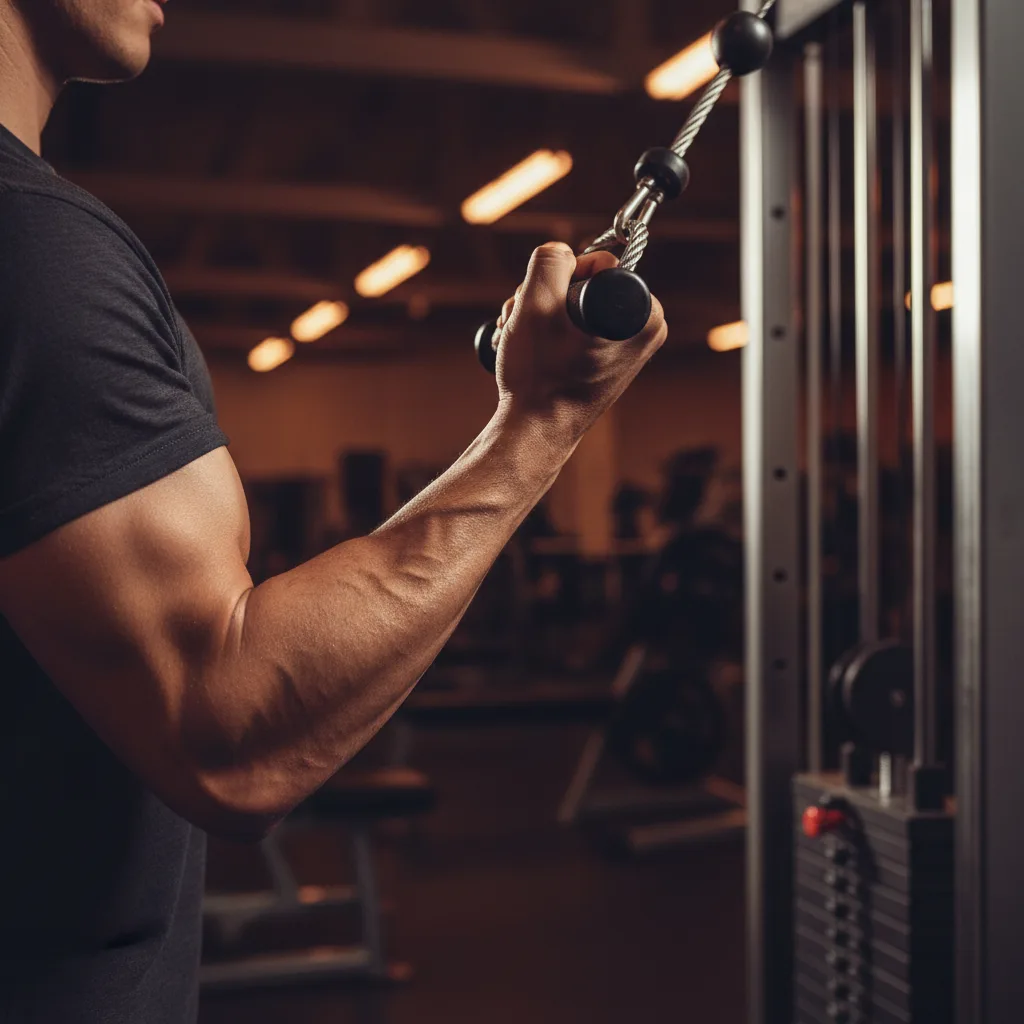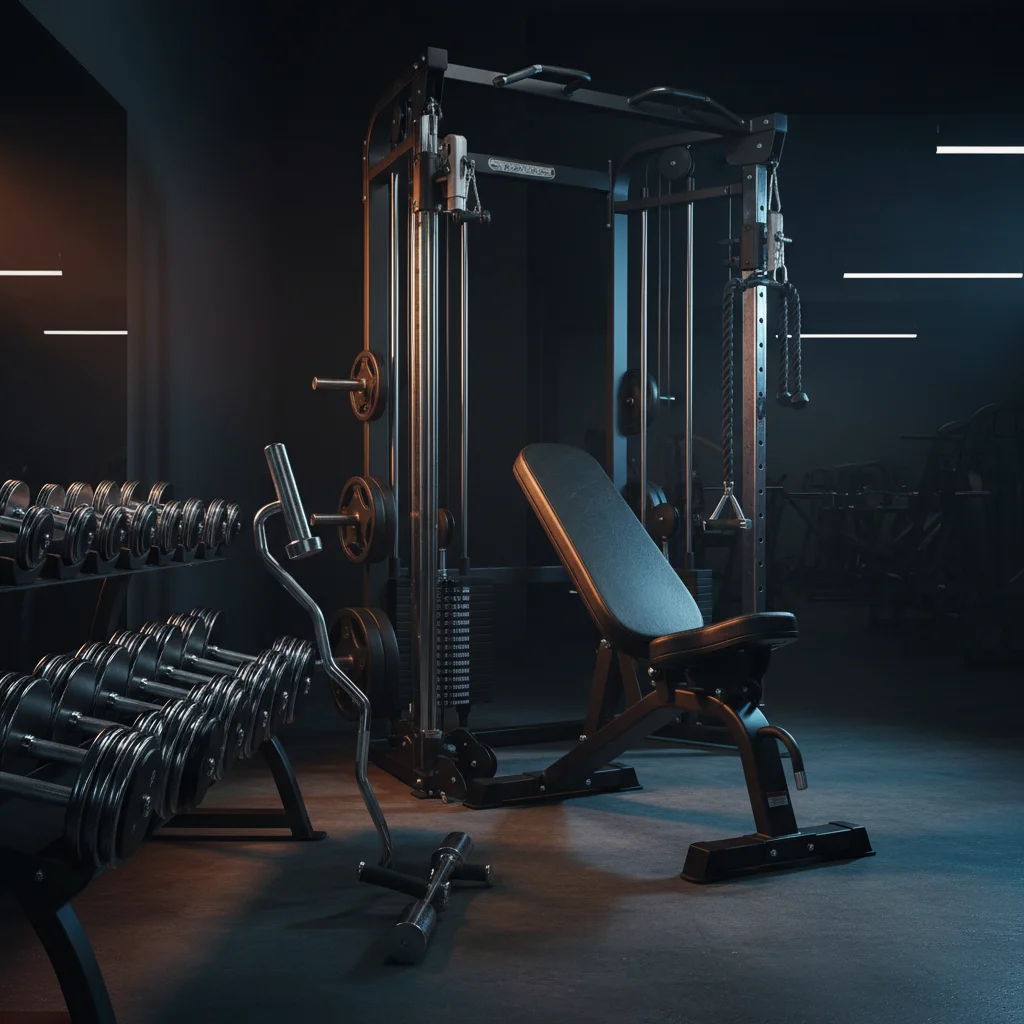
Most gyms have a cable machine. Most cable machines have the same three attachments that have been there since 2003 — a frayed rope, a sticky lat bar, and a straight bar with no knurling. If you've ever tried to do cable curls with a handle that's been soaking up other people's sweat for a decade, you already know why owning your own cable attachments matters.
Whether you're building a home gym or just bringing your own handles to a commercial gym, the right cable machine attachments make every pulling and pushing exercise feel better. Here's every attachment worth buying, what each one does, and which ones you actually need.
What Are Cable Machine Attachments?
Cable machine attachments are the handles, bars, ropes, and straps that clip onto the end of a cable machine's pulley system. The attachment determines your grip position, your range of motion, and which muscles get targeted hardest. Swap the attachment and the same cable machine becomes a completely different exercise.
Every cable attachment connects using a standard carabiner or snap hook. They're universal — most attachments fit any cable machine, whether it's a commercial gym stack, a home gym functional trainer, or a budget pulley system.
The Cable Attachments You Actually Need
You don't need twenty attachments. You need five or six that cover every grip angle and exercise pattern. Here's the list, ranked by importance.
Straight Bar Attachment
The one you'll use most. A straight bar handles bicep curls, tricep pushdowns, upright rows, and lat pulldowns. If you only buy one cable attachment, this is it. Look for one with knurled handles and rotating swivel hooks — the knurling gives you grip, the rotation prevents the cable from twisting during sets.
Length matters. A 20-inch bar works for most exercises. Anything shorter and wide-grip pulldowns feel cramped. Anything longer and curls feel awkward. Some bars come with a slight curve — that's fine and can be easier on the wrists.
Lat Pulldown Bar
Wider than a straight bar — usually 38 to 48 inches — with angled ends for a comfortable grip during lat pulldowns. The curved ends let your shoulders settle into a natural position instead of fighting a flat bar. Essential for serious back training.
Go for solid steel with rubber or knurled grip sections. Cheap lat bars flex under heavy weight, which feels terrible and can be unsafe. A good lat pulldown bar lasts forever.
Tricep Rope
If the straight bar is number one, this is a close second. The rope allows natural wrist rotation during pushdowns and overhead extensions, which hits the triceps differently than a rigid bar. It's also excellent for face pulls, cable hammer curls, and rope curls for the biceps.
Length tip: Standard ropes are about 27 inches. Longer ropes (36 inches) give you more range of motion on pushdowns and let you split the ends wider at the bottom of each rep. If you train triceps seriously, the longer rope is worth it.
D-Handle (Single Grip Handle)
A single handle for unilateral work — one arm at a time. Cable curls, single-arm rows, single-arm tricep extensions, chest flyes, and dozens of other exercises. D-handles are small, cheap, and essential. Buy a pair.
The best ones have a rotating attachment point so the handle spins freely as you move through the exercise. Handles that don't rotate force your wrist into uncomfortable positions during certain movements.
V-Bar Attachment
A compact V-shaped handle for close-grip work. Excellent for close-grip lat pulldowns, seated cable rows, and tricep pushdowns with a neutral grip. The V-bar targets the mid-back and inner lats differently than a wide lat bar — it's a complement, not a replacement.
Ankle Strap
Wraps around your ankle and connects to a low cable for glute kickbacks, hip abductions, and cable leg curls. If you do any lower body cable work, ankle straps are non-negotiable. Padded straps with a D-ring attachment are the most comfortable. Buy a pair — you'll eventually want to do bilateral work without swapping between legs.
Row Handle (Close-Grip)
A double-grip handle for seated rows, often with a neutral (palms-facing) grip. Some people use the V-bar for this, which works fine. A dedicated row handle usually has more grip space and feels better under heavier loads.
Coach's Note: Bring your own attachments to the gym in a drawstring bag. Takes 30 seconds to swap, and you'll never have to use a crusty rope that smells like 2017 again. Most gym staff don't care as long as you're not leaving your gear on the machine.
What Makes a Good Cable Attachment?
Not all cable attachments are equal. Here's what separates good from junk.
Steel construction. The attachment needs to handle heavy loads without bending or flexing. Solid steel is the standard. Avoid anything that feels hollow or lightweight — if a lat bar flexes when you pull 150 lbs, it's not built right.
Rotating swivel hooks. The carabiner or snap hook should rotate freely. Non-rotating attachments cause the cable to twist during exercises, which creates friction and uneven resistance. Rotating hooks feel smoother and last longer.
Knurled or rubber grips. You're gripping these under load and often with sweaty hands. Smooth chrome handles are a nightmare. Knurled steel or textured rubber grips give you control without needing chalk.
Proper weight rating. Good cable attachments are rated for at least 500-800 lbs, even though you'll never pull that much. The rating reflects build quality and safety margin. Budget attachments rated for 200 lbs are built to a price, not a standard.
Cable Attachments for Home Gym vs. Commercial Gym
Home gym: You need the full set because nobody else is providing them. Start with a straight bar, rope, pair of D-handles, and a lat bar. Add ankle straps and a V-bar when your budget allows. Buy once, buy quality — you'll use these for years.
Commercial gym: The gym provides attachments, but they're shared and often worn out. Bringing your own D-handles and rope is the biggest quality-of-life upgrade you can make. They fit in a gym bag and swap in seconds.
How to Maintain Your Cable Attachments
Cable attachments are low-maintenance but not zero-maintenance.
Wipe them down after use. Sweat causes rust on steel and degrades rubber grips over time. A quick wipe with a towel or disinfectant keeps them clean and extends their life.
Check the carabiner and swivel regularly. Make sure the snap hook closes fully and the swivel rotates freely. A stuck swivel or a carabiner that doesn't lock is a safety issue.
Store them hanging, not piled. Tossing attachments in a bin tangles cables and bends hooks. Hang them on a wall rack or hook. Takes up less space and keeps everything organized.
Frequently Asked Questions
Are cable attachments universal?
Yes — nearly all cable attachments use a standard carabiner or snap hook connection that fits any cable machine. Whether it's a commercial gym stack, a home gym functional trainer, or a budget pulley, your attachments will fit. The only exception is some older or proprietary machines with non-standard connection points, which is rare.
What attachment is best for bicep training?
A straight bar for standard cable curls, a rope for cable hammer curls, and D-handles for single-arm work. Those three cover every cable bicep exercise you'd want to do. An EZ curl bar attachment is also great if straight bars bother your wrists.
What cable attachment is best for triceps?
A rope for pushdowns and overhead extensions, a V-bar for close-grip pushdowns, and a straight bar for reverse-grip pushdowns. The rope is the most versatile — if you only buy one attachment for triceps, get the rope.
Do I need expensive cable attachments?
No. Mid-range attachments from brands like Yes4All, Titan, or CAP work great for most people. You're paying for solid steel, rotating swivels, and decent grips — not a brand name. Premium attachments from companies like PRIME or MAG Grips are nice but not necessary unless you're competing or training at an elite level.
How many cable attachments do I need for a home gym?
Start with four: straight bar, tricep rope, pair of D-handles, and a lat pulldown bar. That covers every major upper body exercise on a cable machine. Add ankle straps and a V-bar later. Six total attachments handles everything you'll ever need.
What We Recommend
Yes4All Cable Machine Attachment Set
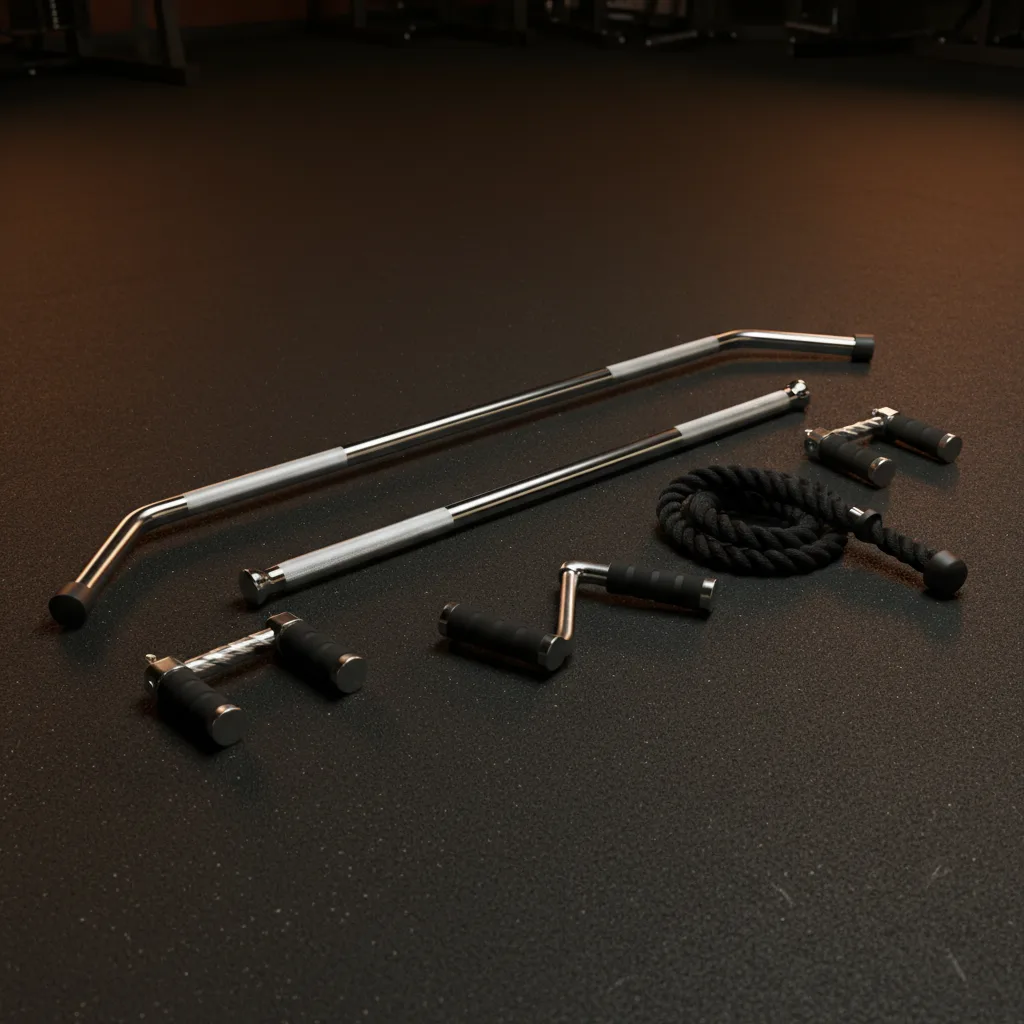
This set covers everything on the list — straight bar, EZ curl bar, tricep rope, V-bar, and D-handles with rotating swivels and rubber grips. Steel construction rated to 880 lbs. One purchase, all attachments handled. Fits any standard cable machine.
The Bottom Line
Cable machine attachments are cheap, universal, and massively underrated. A $30-50 attachment set turns a basic cable machine into a full-body training station. Start with a straight bar and a rope — those two alone cover most exercises. Add D-handles and a lat bar next. Don't overthink it, don't overspend, and if you train at a commercial gym, bring your own. Your grip, your hygiene, your gains.