The brachioradialis is the muscle most lifters train accidentally and never on purpose. It's the thick slab of muscle that runs from just above your elbow to the thumb side of your forearm — the one that makes your arms look powerful in a T-shirt with the sleeves rolled up.
If you've ever wondered why your forearms look underdeveloped despite years of curling, the answer is almost certainly that you've been training around the brachioradialis rather than targeting it directly. Standard supinated curls put it at a mechanical disadvantage. To actually build this muscle, you need specific grip positions, specific exercises, and a basic understanding of how elbow flexion changes with forearm rotation.
Here's everything you need to know.
What Is the Brachioradialis?
The brachioradialis is a forearm muscle — technically — but it acts primarily at the elbow, not the wrist. It originates on the lateral supracondylar ridge of the humerus (the outer edge of your upper arm bone, just above the elbow) and inserts near the distal end of the radius at the wrist.
Its primary function is elbow flexion — bending your arm. But here's the detail that changes how you should train it: the brachioradialis is strongest when your forearm is in a neutral or pronated grip position. When your palm faces up (supinated), the biceps brachii takes over as the dominant elbow flexor and the brachioradialis contribution drops significantly.
This is why standard bicep curls don't build impressive forearms. The supinated grip minimizes brachioradialis activation. To target the brachioradialis, you need to curl with your palms facing down (pronated) or facing each other (neutral).
Brachioradialis vs Brachialis: What's the Difference?
These two muscles get confused constantly, and the confusion leads to poor exercise selection.
The **brachialis** sits underneath the biceps brachii on the upper arm. It's a pure elbow flexor — it bends your arm regardless of grip position. When developed, it pushes the biceps up from below and adds thickness to the upper arm. Exercises like hammer curls and reverse curls target it.
The **brachioradialis** sits on the forearm, running from the upper arm bone to the wrist. It also flexes the elbow, but it's most active when the forearm is in mid-pronation — the neutral "handshake" grip. It's the muscle responsible for forearm size and that tapered look from elbow to wrist.
Both muscles work together during pulling movements, but they respond to different grip positions. The brachialis doesn't care much about forearm rotation. The brachioradialis cares a lot — it activates most with a neutral or pronated grip and least with a supinated grip.
Anatomy of the Forearms
Your forearms are crowded with small muscles, but for building visible size, only three groups really matter.
**Wrist flexors** run along the anterior (palm side) of your forearm. They curl your wrist downward and help with grip strength. Wrist curls target them.
**Wrist extensors** run along the posterior (back) of your forearm. They extend your wrist upward. Reverse wrist curls and overhand grip exercises train them.
**The brachioradialis** is the largest and most visible forearm muscle. It sits on the lateral (thumb-side) surface and is the primary contributor to forearm mass. It responds to elbow flexion exercises with a neutral or pronated grip — not wrist exercises.
This last point is critical. Many lifters try to build bigger forearms with wrist curls alone. Wrist curls train the wrist flexors, which are small muscles near the wrist. The brachioradialis — the muscle that actually creates forearm size — needs elbow flexion exercises with the right grip. Wrist curls won't touch it.
7 Best Brachioradialis Exercises
1. Reverse Barbell Curl
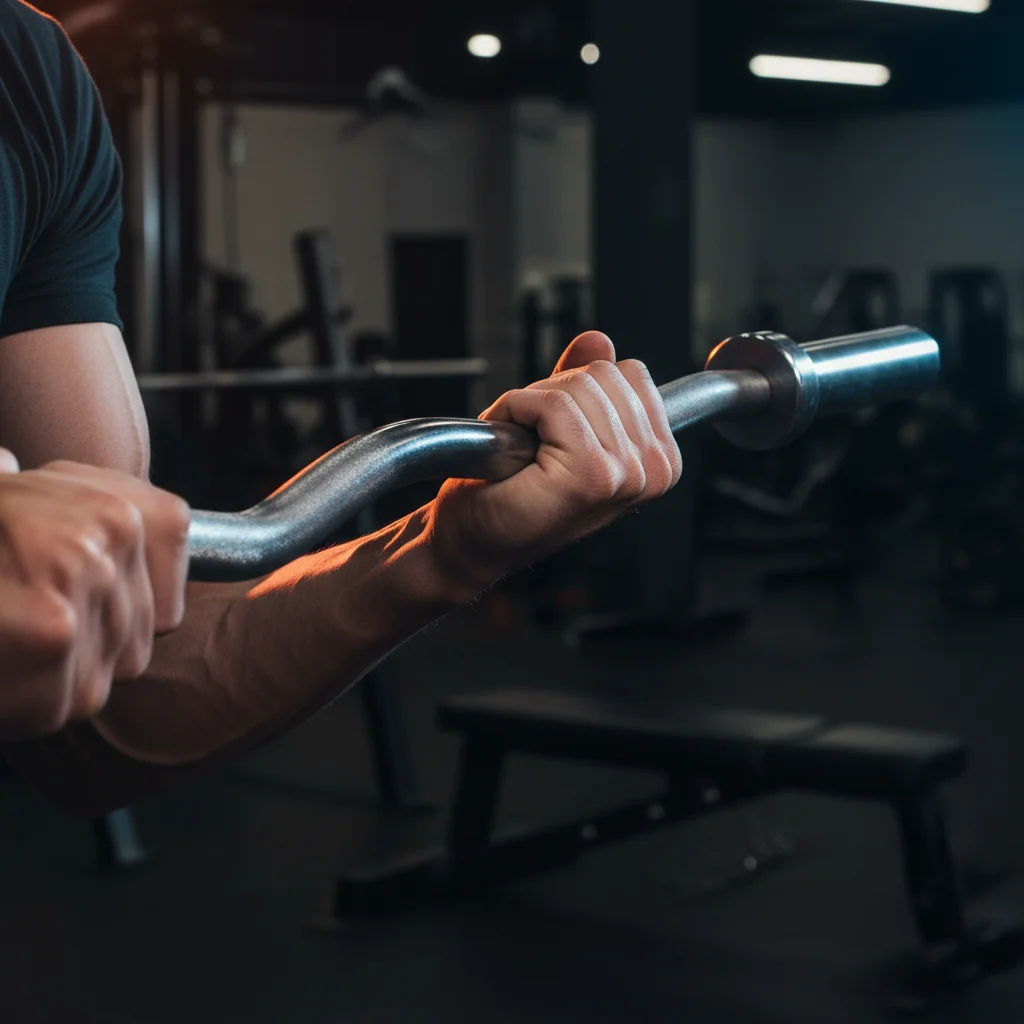
The most direct brachioradialis exercise you can do. Grab a barbell or EZ curl bar with an overhand (pronated) grip — palms facing down — and curl. The pronated grip forces the brachioradialis to handle the majority of the elbow flexion work because the biceps brachii is at a significant mechanical disadvantage in this position.
Use about 50-60% of your regular curl weight. If your wrists hurt, switch to the EZ bar — the angled grip reduces the rotational strain on the forearm.
3 sets of 10-15 reps. Higher reps work better here because the forearm muscles respond well to sustained tension.
2. Hammer Curl
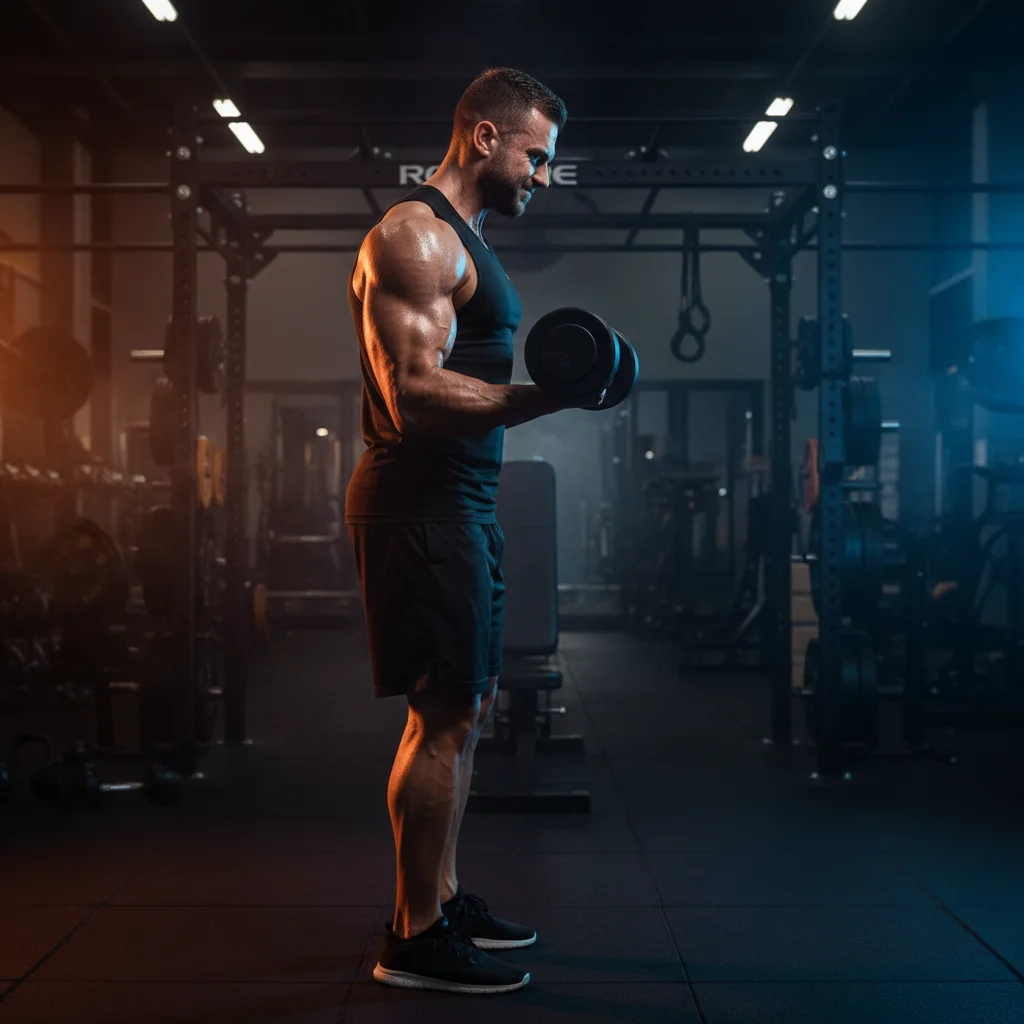
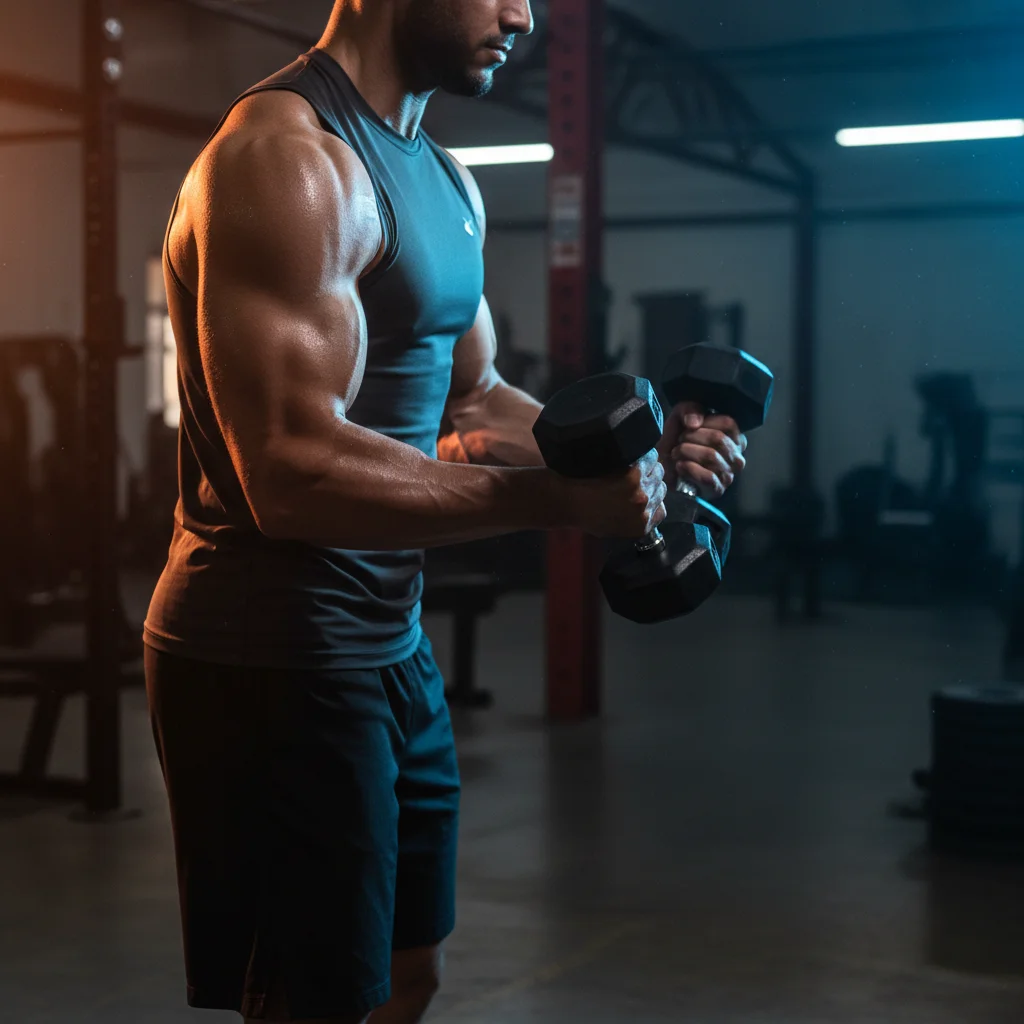
The hammer curl is probably the best all-around brachioradialis builder because the neutral grip (palms facing each other) places the forearm in mid-pronation — the position where the brachioradialis is a powerful elbow flexor. You can handle more weight than reverse curls, which means more mechanical tension on the muscle.
Standing, seated, or on an incline bench — all variations work. The key is maintaining the neutral grip throughout. No wrist rotation, no supination at the top.
3 sets of 10-12 reps.
3. Cross-Body Hammer Curl
Curl the dumbbell across your torso toward the opposite shoulder instead of straight up. This diagonal path increases brachioradialis activation compared to standard hammer curls because the forearm angle changes relative to the resistance. You'll feel the contraction deeper in the outer arm and into the forearm.
Alternate arms. Go slightly lighter than standard hammer curls and focus on the squeeze at the top.
3 sets of 10-12 reps per arm.
4. Reverse Cable Curl
Using a cable machine with a straight bar attachment and an overhand grip gives you something reverse barbell curls can't — constant tension. With a barbell, the brachioradialis gets a brief rest at the bottom and top of each rep. The cable keeps the muscle under load through the entire range of motion.
Set the pulley to the lowest position. Step back slightly so there's tension even at full arm extension. Curl with control and squeeze at the top.
3 sets of 12-15 reps.
5. Zottman Curl
The Zottman curl is a hybrid that targets the biceps on the way up (supinated grip) and the brachioradialis on the way down (pronated grip). At the top of a standard curl, rotate your wrists so palms face down, then lower with the overhand grip. The eccentric phase under pronation hammers the brachioradialis.
The beauty of the Zottman curl is efficiency — you get biceps work and brachioradialis work in the same exercise. Use about 60-70% of your standard dumbbell curl weight.
3 sets of 8-10 reps.
6. Pronated Grip Dumbbell Curl
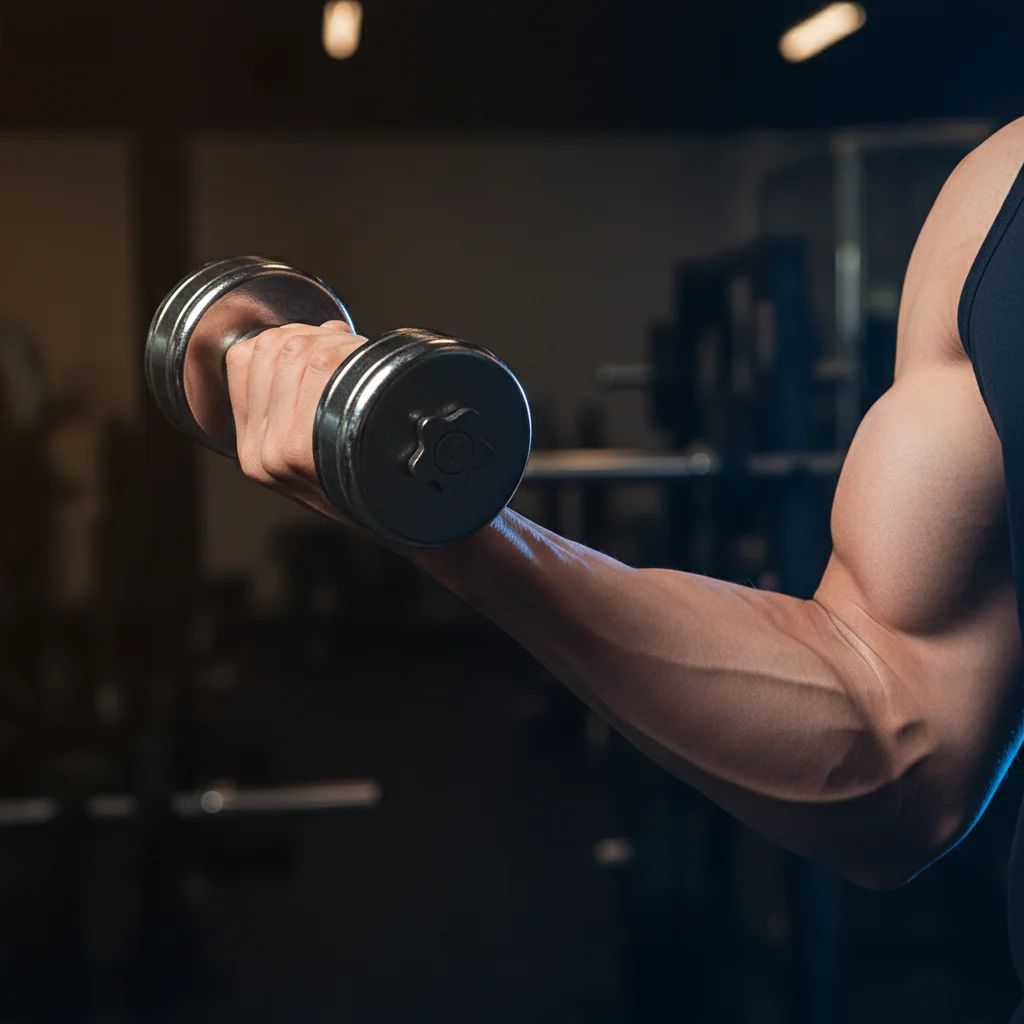
Same as a standard dumbbell curl, but with your palms facing the floor throughout the entire movement. This is the dumbbell version of the reverse barbell curl and allows each arm to work independently. It's also slightly easier on the wrists than the barbell version because each hand can find its natural angle.
A pair of dumbbells is all you need — this works perfectly in a home gym or when the cable machine is taken.
3 sets of 12-15 reps.
7. Reverse Grip EZ Bar Preacher Curl
Combine the pronated grip with the preacher bench for maximum brachioradialis isolation. The pad eliminates all momentum, and the overhand grip ensures the brachioradialis does the heavy lifting instead of the biceps. This is the exercise where you'll feel your forearms burn like never before.
Go very light. The combination of the preacher pad lockdown and the pronated grip makes this brutally hard. If you can do 15 reps, the weight is probably right.
2-3 sets of 12-15 reps.
How to Maximize Your Forearm Workout
**Grip position is everything.** If you want to target the brachioradialis, your grip must be neutral or pronated. Supinated curls activate the biceps brachii preferentially. This isn't opinion — in electromyography (EMG) studies, brachioradialis activation tends to shift dramatically based on forearm rotation.
**Train brachioradialis exercises after your bicep work.** The brachioradialis is a smaller muscle that fatigues faster. If you hit it first, your grip and forearm endurance will suffer on every subsequent exercise. Do your heavy barbell curls and incline curls first, then finish with reverse curls and hammer curls.
**Higher reps generally work better.** The brachioradialis has a higher proportion of slow-twitch muscle fibers compared to the biceps brachii. Sets of 10-15 reps with controlled tempo create more time under tension, which is the stimulus this muscle responds to best for muscle hypertrophy. Going heavy with 5-rep sets on reverse curls usually just leads to wrist strain.
**Don't confuse wrist exercises with forearm exercises.** Wrist curls train the small wrist flexors. They have their place, but they won't build the visible forearm mass you're after. The brachioradialis needs elbow flexion — curling movements — with the right grip. If you only have time for one forearm exercise, make it a reverse curl or hammer curl, not a wrist curl.
Coach's Note: If your forearms are lagging while everything else grows, it's almost never a volume problem — it's a grip problem. Most lifters curl exclusively with palms up, which is like trying to build your side delts with only front raises. Flip your grip, and the forearms finally have a reason to grow.
How to Program Brachioradialis Exercises
Here's a simple forearm-focused addition you can bolt onto the end of any upper body workout:
**Option A — Minimal (5 minutes):**
Reverse Barbell Curl — 3 sets x 12-15 reps
**Option B — Moderate (10 minutes):**
Hammer Curl — 3 sets x 10-12 reps
Reverse Curl — 2 sets x 12-15 reps
**Option C — Full forearm workout (15 minutes):**
Hammer Curl — 3 sets x 10-12 reps
Reverse Cable Curl — 3 sets x 12-15 reps
Wrist Curl — 2 sets x 15-20 reps
Training frequency: hit the brachioradialis twice per week. It recovers quickly because it's a relatively small muscle, and it gets indirect stimulation from every pulling exercise you do. Two direct sessions per week on top of your normal pull day back work is plenty of training volume.
Benefits of Brachioradialis Exercises
**Stronger grip.** The brachioradialis assists in gripping, especially during heavy pulls. Strengthening it directly improves your grip strength on deadlifts, rows, and pull-ups — exercises where grip failure often limits how much back work you can do.
**Forearm aesthetics.** The brachioradialis is the largest visible forearm muscle. Developing it creates that thick, tapered look from elbow to wrist that makes your entire arm look more muscular — even when you're not flexing.
**Injury prevention.** A strong brachioradialis helps stabilize the elbow joint during heavy pulling and curling movements. Weak forearm muscles relative to strong biceps can lead to elbow strain, tendinopathy, and overuse issues over time. Direct forearm training in your strength training routine addresses this imbalance before it becomes a problem.
**Better arm balance.** If you only train biceps with supinated curls, you develop one set of elbow flexors while neglecting the others. The brachialis muscle and brachioradialis both contribute to elbow flexion and arm aesthetics — ignoring them is like building your chest but never training triceps. Adding brachioradialis work creates a more balanced, stronger forearm that contributes to every upper body exercise.
Frequently Asked Questions
What exercise works the brachioradialis the most?
The reverse barbell curl with a pronated (palms-down) grip is the most direct brachioradialis exercise. It minimizes biceps involvement and forces the brachioradialis to act as the primary elbow flexor. Hammer curls are a close second and allow heavier loading.
How do you isolate the brachioradialis?
True isolation isn't possible because multiple muscles always assist in elbow flexion. However, you can maximize brachioradialis activation by using a pronated or neutral grip and bracing your upper arm against a preacher pad to eliminate momentum. A reverse grip preacher curl is the closest thing to brachioradialis isolation.
Can you train the brachioradialis at home?
You don't need machines for this one — hammer curls and reverse dumbbell curls both effectively target the brachioradialis with nothing but dumbbells. Even without weights, a towel-grip pull-up with a neutral hand position provides strong brachioradialis activation.
Are forearm exercises push or pull?
Forearm exercises that involve elbow flexion (reverse curls, hammer curls) are pulling movements. Wrist curls and wrist extensions are technically neither — they're isolation movements for the wrist flexors and extensors. Most people include forearm work on pull day since the brachioradialis is already activated during back exercises.
How long does it take to build bigger forearms?
The brachioradialis responds to training like any other muscle — visible changes typically appear after 8-12 weeks of consistent, progressive work. Forearm muscles are used constantly in daily life, so they can be stubborn compared to muscles like the biceps that don't get as much incidental activation. Patience and consistency with the right exercises matter more than volume.
What We Recommend
CAP Barbell Olympic EZ Curl Bar
The EZ bar is the best tool for reverse curls — the angled grip reduces the wrist strain that makes straight bar reverse curls uncomfortable.
The Bottom Line
Building bigger forearms isn't about doing more wrist curls — it's about understanding that the brachioradialis, the muscle that actually creates forearm size, responds to elbow flexion with a neutral or pronated grip. Reverse curls, hammer curls, and Zottman curls are your primary tools. Train them twice per week after your main bicep work, keep reps in the 10-15 range, and give them time to grow. The forearms are stubborn, but they respond to the right stimulus just like every other muscle.