It's one of the most common questions lifters ask — and the short answer is yes, but not in the way most people think. Standard bicep curls do engage your forearms, but mostly as stabilizers and grip muscles. They won't build the thick, visible forearm muscle that most people are after.
The longer answer involves understanding which forearm muscles actually fire during different curl variations, why some grips target the forearms directly while others barely touch them, and what to do if your forearms are either hurting or lagging behind your biceps.
Let's break it all down.
What Muscles Does a Bicep Curl Work?
Before diving into the forearm question specifically, it helps to see the full picture of what bicep curls work across your entire arm.
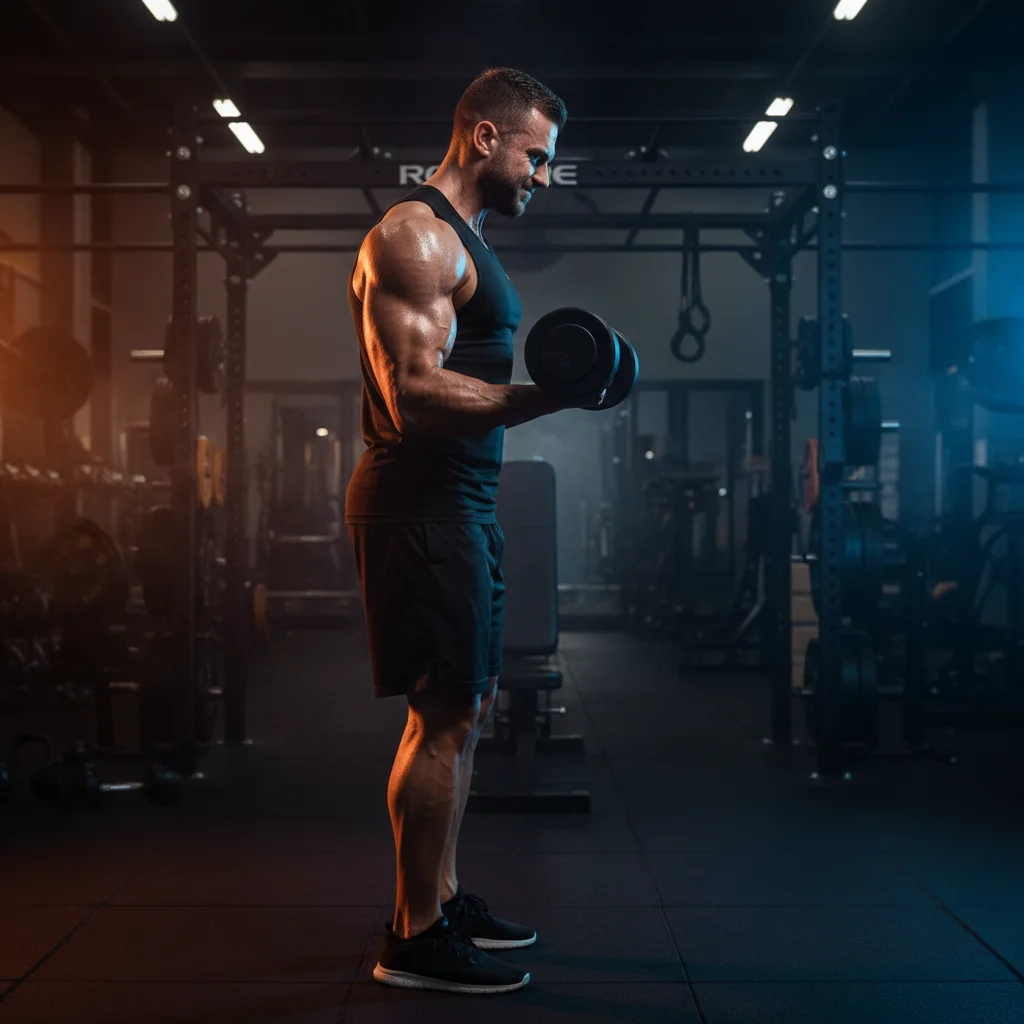
**Biceps brachii.** The two-headed muscle on the front of your upper arm. It's the primary mover — the muscle doing the heavy lifting during every curl rep. Both the long head (outer peak) and short head (inner width) contract to flex the elbow and supinate the forearm.
**Brachialis.** The brachialis muscle sits underneath the biceps. A powerful elbow flexor that works during every curl regardless of grip. Responds best to neutral and pronated grip positions like hammer curls.
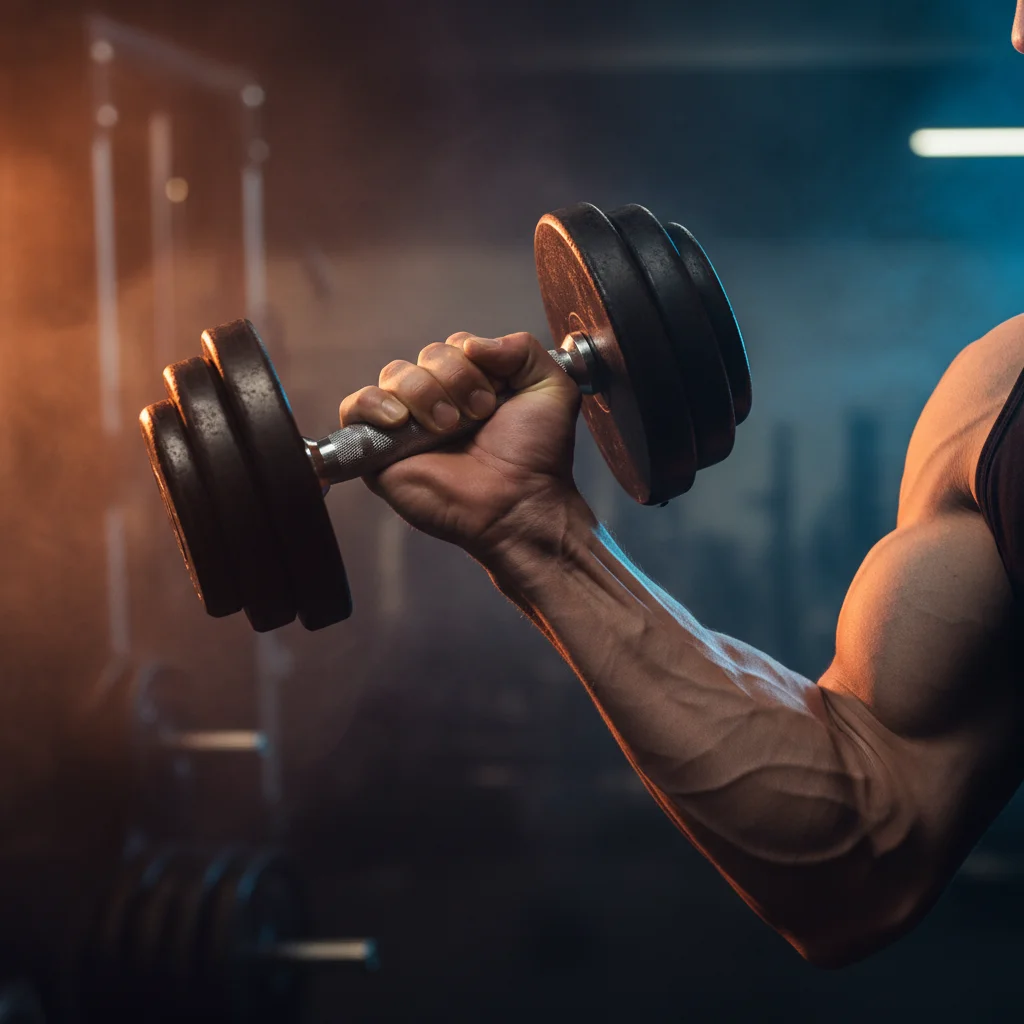
**Brachioradialis.** This is where the forearm conversation gets interesting. The brachioradialis is technically a forearm muscle, but it acts at the elbow — not the wrist. It's the thick muscle on the thumb side of your forearm near the elbow, and it's the single biggest contributor to visible forearm size.
**Forearm flexors.** The group of smaller muscles on the palm side of your forearm. They contract isometrically (without changing length) to maintain your grip on the weight during curls.
**Wrist extensors.** The muscles on the back of your forearm. They stabilize your wrist to keep it from collapsing forward under the load.
How Much Forearm Work Do Standard Bicep Curls Provide?
Here's the honest answer: not enough to build bigger forearms on their own.
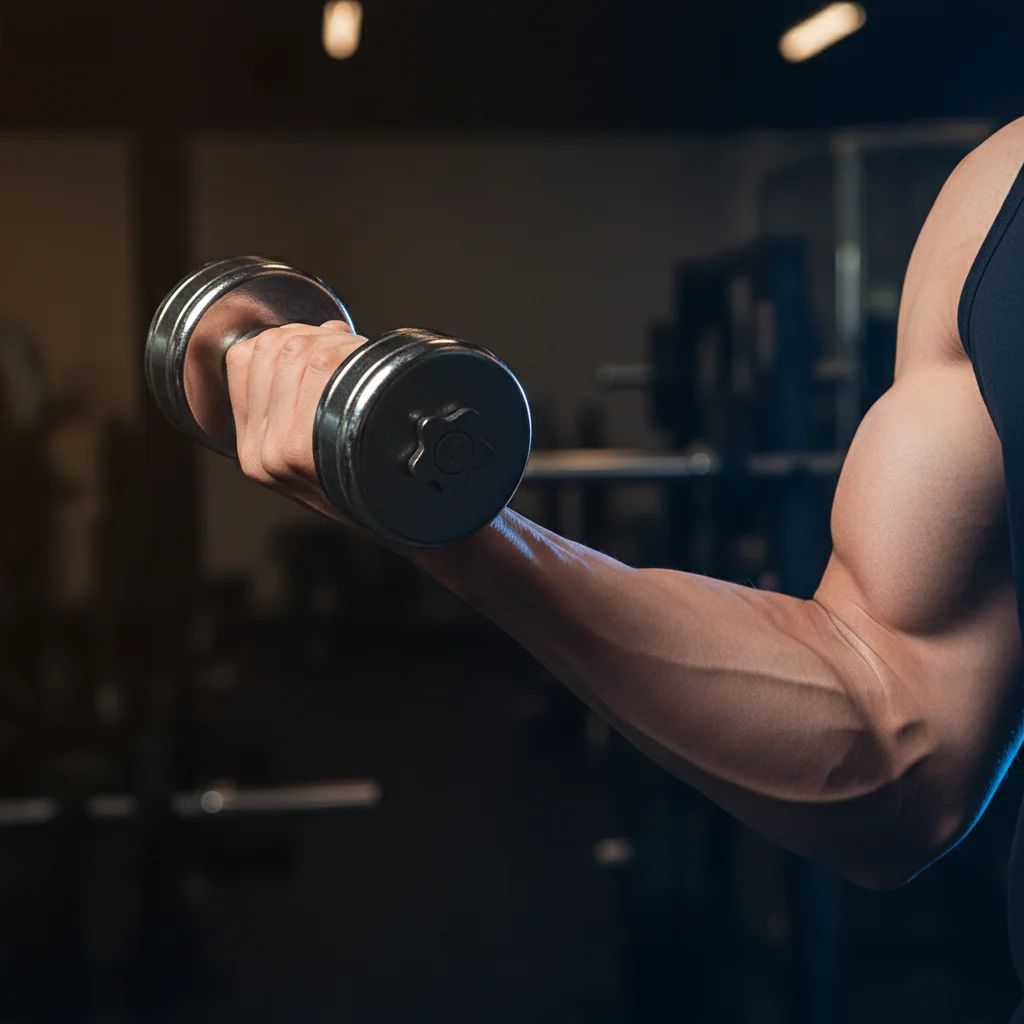
During a standard supinated bicep curl (palms facing up), the forearm muscles work in two ways. Your forearm flexors contract to keep your fingers wrapped around the dumbbell or barbell — that's grip work, and it's isometric. Your wrist extensors work to keep your wrist stable. And the brachioradialis assists with elbow flexion, but it's in a mechanically weak position when your palm is facing up.
Think of it like this: your forearms during a supinated curl are like your core during a squat. They're working, they're necessary, but nobody builds a six-pack from squatting alone. Same principle — nobody builds big forearms from standard curls alone.
The forearm muscles are engaged. They're just not challenged enough in a supinated curl to trigger meaningful muscle growth. To actually build bigger forearms, you need to change the grip.
Coach's Note: If your forearms burn out before your biceps during standard curls, that's not a sign that curls "work forearms well." It's a sign your grip strength is the weak link. Strengthen your forearms directly with reverse curls and hammer curls, and that problem disappears within a few weeks.
Which Curl Variations Actually Build Forearms?
The key variable is grip position. As your forearm rotates from palms-up (supinated) toward palms-down (pronated), the brachioradialis activation increases dramatically. Here's how the most common curl variations stack up for forearm work:
Reverse Curls — Best for Forearms
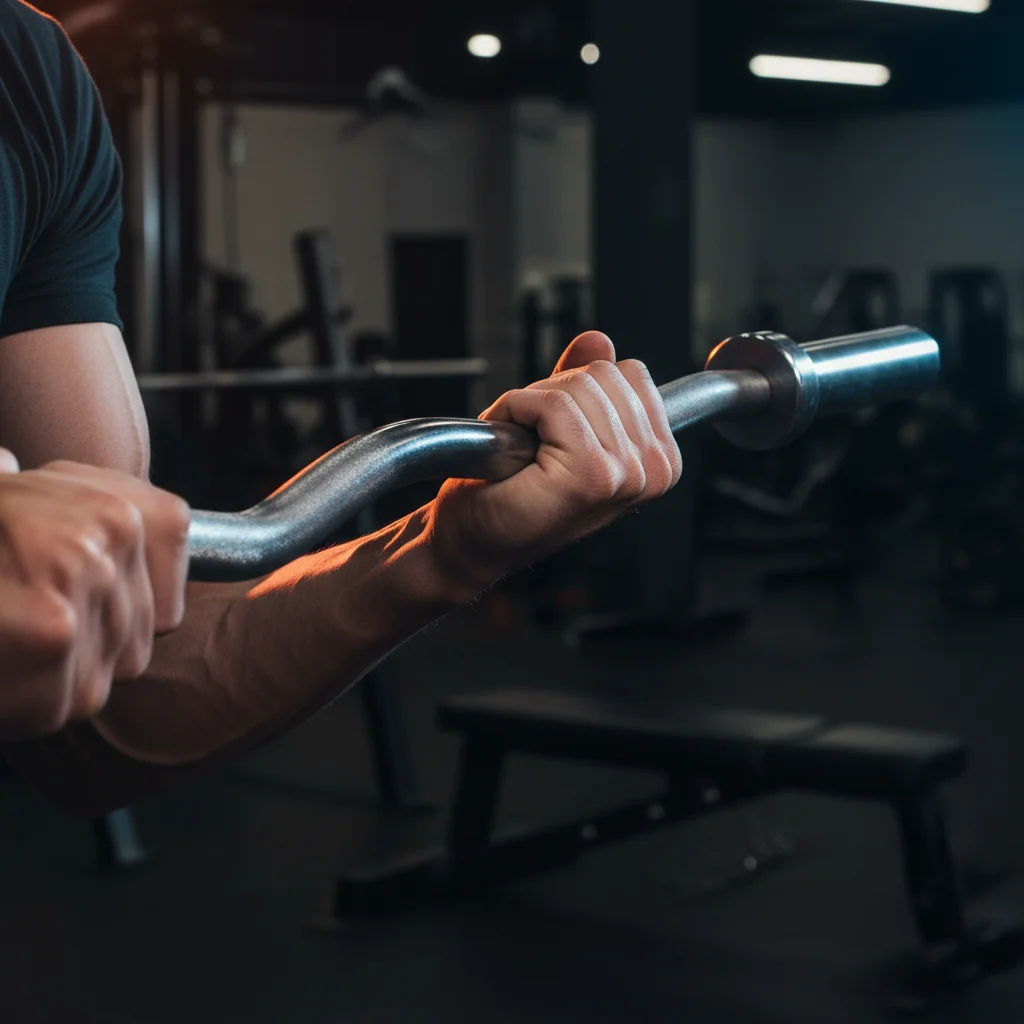
Reverse curls use a pronated grip — palms facing down throughout the entire movement. This puts the biceps brachii at a severe mechanical disadvantage and forces the brachioradialis to become the primary elbow flexor. The wrist extensors also work significantly harder to stabilize the wrist in this position.If you want one exercise that directly builds bigger forearms, this is it. Use an EZ curl bar if a straight barbell bothers your wrists. Expect to use about 50-60% of your regular curl weight.
Hammer Curls — Strong Forearm Builder
Hammer curls use a neutral grip — palms facing each other. This mid-position activates the brachioradialis strongly while still allowing the biceps and brachialis to contribute. You can handle more weight than reverse curls, which means more total mechanical tension on the forearm muscles.Hammer curls are the best "two-for-one" exercise — substantial forearm work without sacrificing bicep development.
Zottman Curls — Biceps Up, Forearms Down
Zottman curls combine both grips in one movement. You curl up with palms facing up (maximizing bicep work), rotate your wrists at the top, then lower the weight with palms facing down (maximizing brachioradialis work on the eccentric). The forearms get hammered on every lowering phase.Standard Supinated Curls — Minimal Forearm Building
Your regular bicep curl with palms up. Forearms work isometrically for grip, but the brachioradialis is in its weakest mechanical position. Fine for biceps, insufficient for forearm growth.
Understanding Forearm Pain During Bicep Curls
"Do bicep curls work forearms" is a growth question. But "why do my forearms hurt during curls" is a completely different — and more urgent — one. Forearm pain when curling is common and usually fixable.
Common Causes of Forearm Pain When Curling
**Grip too tight.** Death-gripping the bar creates excessive tension in the forearm flexors and wrist extensors. Hold the weight firmly but not with white knuckles — your hands are hooks, not clamps.
**Wrists collapsing or bending.** If your wrists flex backward or forward during curls, the small forearm muscles absorb stress they aren't built to handle. Keep your wrists locked in a neutral, straight position throughout every rep.
**Too much weight, too fast.** The forearm muscles are smaller and recover slower than the biceps. Jumping up in weight before your forearms adapt leads to strain. Progress gradually — your forearms will catch up, but they need time.
**Straight barbell strain.** The fixed supinated position of a straight barbell forces your forearm bones (radius and ulna) into full rotation, which stresses the wrist joint. If straight bar curls cause forearm pain, switch to an EZ bar or dumbbells where your wrist can find a more natural angle.
When to Worry About Forearm Pain
Dull achiness after a hard set of curls is normal — that's muscle fatigue. Sharp pain during a rep, pain that radiates into the wrist or elbow, or pain that doesn't resolve within 48 hours could indicate something more serious: forearm splints, tendonitis, or even a stress injury.
If the pain is sharp, persistent, or affects daily activities like typing or gripping, stop curling and consult a professional. Training through genuine forearm pain rarely ends well.
How to Build Bigger Forearms: The Curl Add-On
If your goal is specifically to build bigger, stronger forearms using curls, here's a simple protocol to add to the end of any arm or pull day workout:
**Minimal approach (5 minutes):**
Hammer Curls — 3 sets x 10-12 reps**Complete approach (10 minutes):**
Hammer Curls — 3 sets x 10-12 reps Reverse Curls — 2 sets x 12-15 reps**Full forearm workout (15 minutes):**
Hammer Curls — 3 sets x 10-12 reps Reverse Curls — 3 sets x 12-15 repsWrist Curls — 2 sets x 15-20 reps
Hit this twice per week. The brachioradialis recovers relatively quickly, and it gets indirect work from every pulling exercise in your routine. Two direct sessions per week is plenty of training volume for visible forearm growth.
Benefits of Adding Forearm-Focused Curls
**Grip strength improves.** Stronger forearms mean a stronger grip. That translates directly to heavier deadlifts, longer hold times on pull-ups, and better performance on every rowing exercise. When your grip stops being the weak link, your back training improves immediately.
**Your arms look complete.** Big biceps attached to skinny forearms look unbalanced — and everyone notices. Developing the brachioradialis creates that tapered, powerful look from elbow to wrist that makes your entire arm look more muscular, even in a T-shirt.
**Elbow health.** The forearm muscles cross the elbow joint and help stabilize it under load. Strengthening them directly reduces the risk of elbow strain and tendon issues that plague lifters who only train biceps with heavy supinated curls.
**Functional strength and size.** Strong forearms improve your ability to carry, grip, twist, and manipulate objects in daily life — from opening jars to carrying kettlebells to stabilizing your shoulder during overhead movements. In strength training, the forearms are the link between your hands and the rest of your body — and a chain is only as strong as its weakest link. Biceps curls through a full range of motion will always be a foundation exercise, but adding forearm-targeted variations makes every curl more productive.
Frequently Asked Questions
Do bicep curls build forearms?
Standard supinated bicep curls provide minimal direct forearm stimulus — the forearm muscles work mostly as stabilizers, not primary movers. To build forearms with curls, you need to use a neutral grip (hammer curls) or pronated grip (reverse curls) to shift the workload to the brachioradialis.
Why do I feel my forearms when I do bicep curls?
Two possible reasons. First, your forearm flexors are working hard to maintain your grip on the weight — if they're weak relative to your biceps, they fatigue first. Second, your wrists may be bending under load, creating strain in the forearm muscles. Fix it by strengthening your forearms directly and keeping your wrists locked straight during curls.
Should your forearms hurt when doing bicep curls?
A mild burn or fatigue is normal, especially with heavier weights or higher rep sets. Sharp pain, lasting soreness, or pain that radiates to the wrist or elbow is not normal. The most common fixes are switching from a straight barbell to an EZ bar, reducing weight, and ensuring your wrists stay in a neutral position. If pain persists, see a professional.
Do reverse bicep curls work forearms?
Yes — reverse curls are the best curl variation for direct forearm work. The pronated grip (palms down) forces the brachioradialis to become the primary elbow flexor, and the wrist extensors work harder to stabilize the wrist. They're the single most effective curl for building visible forearm size.
Can bicep curls alone give me big forearms?
Not with a standard supinated grip. You need to include neutral or pronated grip variations — hammer curls, reverse curls, or Zottman curls — to meaningfully train the forearm muscles. Think of standard curls as a bicep exercise with forearm stabilization, and hammer/reverse curls as combined bicep and forearm exercises.
The Bottom Line
Standard bicep curls do work your forearms — but only as stabilizers and grip muscles, not as primary movers. That's enough to maintain basic forearm strength but not enough to build size. To actually develop bigger forearms through curling, flip your grip: hammer curls hit the brachioradialis through a neutral position, and reverse curls target it even more aggressively with a pronated grip. Add one or both to your routine twice a week, and the forearms that standard curls neglect will finally start growing.