You don't need a gym to build biceps. You don't need dumbbells. You don't even need a barbell. What you need is your body weight, something to hang from or pull against, and the willingness to work harder than you would with a curl bar.
Building biceps with bodyweight exercises is different from traditional weight training — but it works. The exercises are less isolated and more compound, which means your biceps share the work with your back, shoulders, and forearms. That's not a drawback. That's functional strength you can feel in real life.
Here are the best bodyweight bicep exercises you can do at home, at a park, or anywhere with a bar, a doorframe, or a sturdy table.
Best Bodyweight Bicep Exercises
1. Chin-Ups
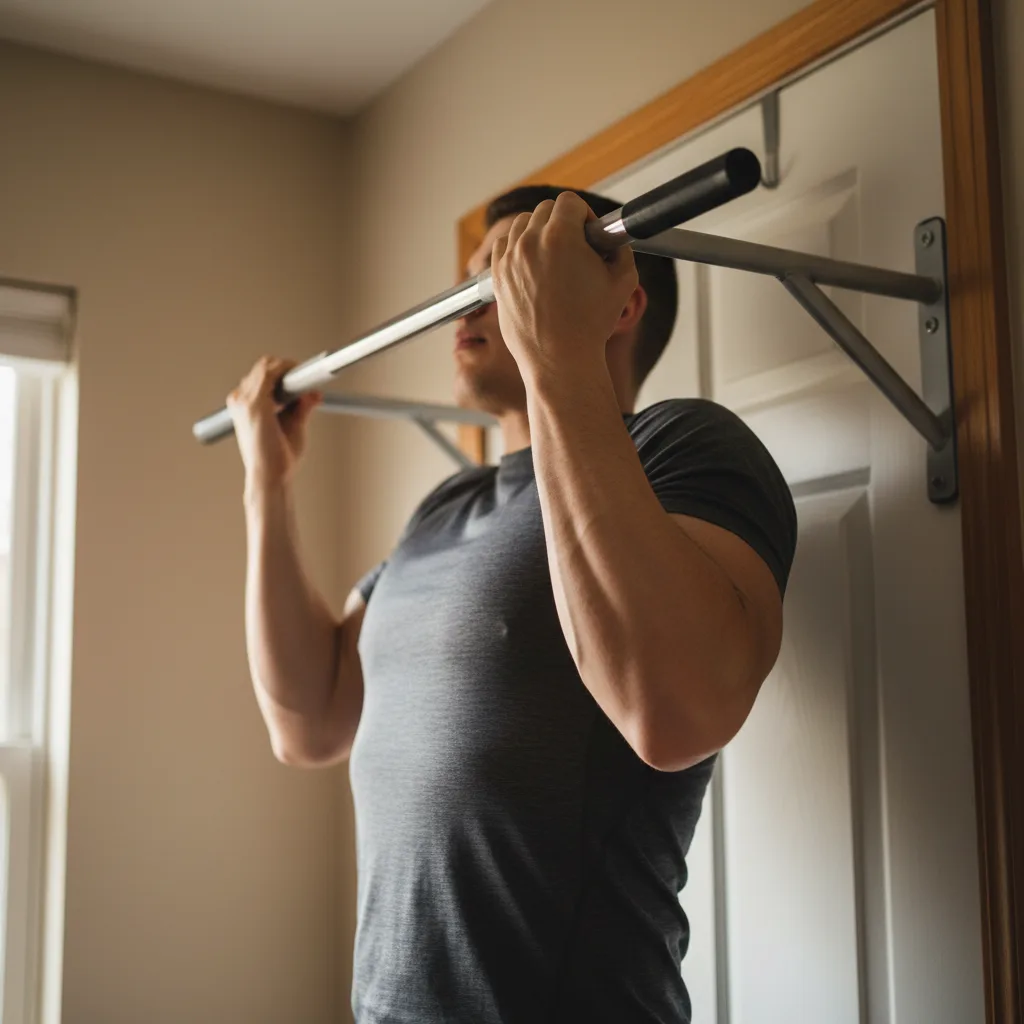
The king of bodyweight bicep exercises. Grab a pull-up bar with an underhand grip (palms facing you), hands shoulder-width apart. Pull yourself up until your chin clears the bar, then lower under control.
Chin-ups hit the biceps harder than any other bodyweight movement because the underhand grip forces your arms into full supination — the exact position that maximizes bicep recruitment. If you can do 3 sets of 8-10 strict chin-ups, your biceps are getting plenty of stimulus without ever touching a weight.
Can't do a chin-up yet? Start with negative chin-ups — jump to the top position and lower yourself as slowly as possible. 3 sets of 5 slow negatives builds the strength to do full reps within a few weeks.
2. Inverted Rows (Bodyweight Rows)
Lie under a bar set at waist height — a smith machine bar, a sturdy table edge, or a low pull-up bar works. Grab it with an underhand grip, keep your body straight from head to heels, and pull your chest to the bar.
Inverted rows are essentially horizontal chin-ups. They're easier than vertical chin-ups, which makes them perfect for beginners who aren't ready for full pull-ups yet. The underhand grip keeps the biceps heavily involved.
Make them harder: Elevate your feet on a chair, or pause for 2 seconds at the top of each rep.
3. Isometric Bicep Holds
Stand in a doorframe. Place your palms against the underside of the frame at about 90 degrees elbow flexion. Push upward as hard as you can for 10-20 seconds. Rest. Repeat.
This is an isometric exercise — your muscle contracts without moving. It won't build massive arms on its own, but it's a surprisingly effective way to build bicep strength with zero equipment and zero space. You can do these literally anywhere with a doorframe.
4. Towel Curls
Drape a towel over a pull-up bar and grab one end in each hand. Hang from the towel with your arms bent and pull yourself up using a curling motion. The unstable grip forces your forearms and biceps to work overtime.
No pull-up bar? Loop a towel around a sturdy post or tree branch. Or grab both ends of a towel, step on the middle with your foot, and curl upward against the resistance of your own bodyweight pushing down through your leg.
5. Resistance Band Curls
Technically not pure bodyweight, but a resistance band costs $10 and fits in your pocket. Stand on the band, grab the ends, and curl — same motion as a dumbbell curl. The resistance increases as the band stretches, which creates a different strength curve than free weights.
Bands are the closest thing to replicating a traditional bicep curl without actual weights. If you're training at home with no equipment, a set of bands is the single best investment you can make.
6. Doorframe Curls
Stand in a doorframe with one hand gripping the frame at waist height. Lean back so your arm is extended and your bodyweight is pulling you away from the frame. Now curl yourself toward the frame by bending your elbow — just like a single-arm bicep curl, except the resistance is your own body.
This one looks weird. It also works surprisingly well for isolating the biceps without any equipment at all.
7. Close-Grip Push-Up Variations
Push-ups are primarily a chest and triceps exercise. But close-grip and diamond push-ups also recruit the biceps as stabilizers, especially during the lowering phase. They won't replace curls for bicep isolation, but they contribute to overall arm development in a bodyweight-only program.
For more bicep involvement, try the "bicep push-up" — hands turned outward with fingers pointing to the sides instead of forward. This shifts more demand onto the biceps during the pushing motion.
Coach's Note: The biggest lie in bodyweight training is that you can't build real biceps without weights. You absolutely can — but you have to do chin-ups. Every other bodyweight bicep exercise is supplementary. Chin-ups are the main course. If you have access to nothing else, find something to hang from and start pulling.
How to Build a Bodyweight Bicep Workout at Home
Here's a complete bodyweight bicep workout you can do with nothing but a pull-up bar or a sturdy horizontal surface.
Chin-ups: 3 sets of max reps (or 3 sets of 5 negatives if you can't do full reps)
Inverted rows (underhand grip): 3 sets of 10-12 reps
Towel curls or doorframe curls: 3 sets of 8-10 reps per arm
Isometric doorframe holds: 3 sets of 15-20 seconds
Total time: About 20 minutes. Do this 1-2 times per week alongside your other bodyweight training.
Can You Really Build Biceps Without Weights?
Yes — with a caveat.
Bodyweight exercises can absolutely build bigger, stronger biceps. Chin-ups in particular are one of the best bicep builders in existence, bodyweight or not. Gymnasts, calisthenics athletes, and rock climbers all develop impressive arms without ever doing a traditional curl.
The caveat is progressive overload. With weights, you add 2.5 lbs each week. With bodyweight, you need to get creative — add reps, slow down the tempo, add a pause at the top, wear a weighted backpack, or progress to harder variations. Without progressive overload, your biceps adapt and stop growing.
Here's the other catch — isolation. You can't isolate the biceps with bodyweight the way you can with a dumbbell curl or cable curl. Bodyweight bicep exercises are almost always compound movements that involve the back. That's fine for building functional arms — but if your goal is maximum bicep hypertrophy, adding even basic equipment like resistance bands or a pair of light dumbbells makes a night-and-day difference.
Benefits of Bodyweight Bicep Training
Zero equipment cost. A pull-up bar costs $20-30. Everything else — doorframes, tables, towels — is free. You can build a solid bicep workout for less than the price of a single gym visit.
Train anywhere. Hotel room, backyard, park, office doorframe during lunch. Bodyweight training removes every excuse about access.
Joint-friendly. Bodyweight exercises tend to be easier on the elbows and wrists than heavy barbell curls. The load is distributed across more joints and the movement patterns are more natural.
Builds functional strength. Pulling your own bodyweight builds strength that transfers to real life — climbing, carrying, lifting. Curling a dumbbell in a mirror doesn't translate the same way.
Complementary to weight training. Even if you have gym access, bodyweight exercises make excellent warm-ups, finishers, and travel workouts. You don't have to choose one or the other.
Frequently Asked Questions
Can you train biceps with bodyweight?
Yes. Chin-ups, inverted rows, towel curls, and doorframe curls all target the biceps using only bodyweight. Chin-ups are the most effective — they recruit the biceps heavily through a full range of motion with significant load. Combine 2-3 bodyweight exercises and you have a complete bicep workout.
What's the best bodyweight exercise for biceps?
Chin-ups. No contest. The underhand grip places the biceps in their strongest pulling position, and lifting your entire bodyweight provides more resistance than most people curl with dumbbells. If you can only do one bodyweight exercise for biceps, make it chin-ups.
Can you get big arms with bodyweight exercises?
You can build impressive arms, but pure bodyweight training has a ceiling for maximum size compared to progressive weight training. Many calisthenics athletes have lean, defined arms — not bodybuilder-size arms. Adding resistance bands or a weighted backpack extends that ceiling significantly.
How do you progress bodyweight bicep exercises?
Add reps, slow down the tempo (3-4 second negatives), add pauses at peak contraction, wear a weighted backpack during chin-ups, or progress to harder variations like archer chin-ups or one-arm inverted rows. The key is making each workout slightly harder than the last.
Can I build biceps without a pull-up bar?
It's harder but possible. Doorframe curls, towel curls around a post, resistance band curls, and isometric holds all work without a bar. A set of resistance bands is the best low-cost solution — they replicate the curling motion better than any other no-equipment option.
What We Recommend
Ally Peaks Pull Up Bar for Doorway
If you're training biceps at home, a doorway pull-up bar is the single most important piece of equipment you can own. This one handles up to 440 lbs, fits most standard doorframes without screws, and gives you multiple grip positions for chin-ups, pull-ups, and neutral-grip variations. Takes 30 seconds to install and removes just as fast.
The Bottom Line
Building biceps without weights comes down to one thing — find something to pull against. A chin-up bar is ideal. A table for inverted rows works. Even a doorframe or a towel gives you options. The exercises are harder to isolate than traditional curls, but they build real, functional arm strength. Do chin-ups, add inverted rows and one isolation variation, progress the difficulty over time, and your arms will grow. You don't need a gym membership to build arms worth flexing — you just need to get creative and stay consistent.