The EZ curl bar is one of the most common pieces of equipment in any gym, but most lifters grab it without understanding exactly what it does differently than a straight bar or a pair of dumbbells. The angled grip changes which muscles work hardest, how much stress hits your wrists, and whether you're building peak or width.
Here's a complete breakdown of the muscles EZ bar curls target, how the bar curl compares to a straight barbell and dumbbell curls, and how to get the most out of this exercise.
What Is an EZ Curl Bar?
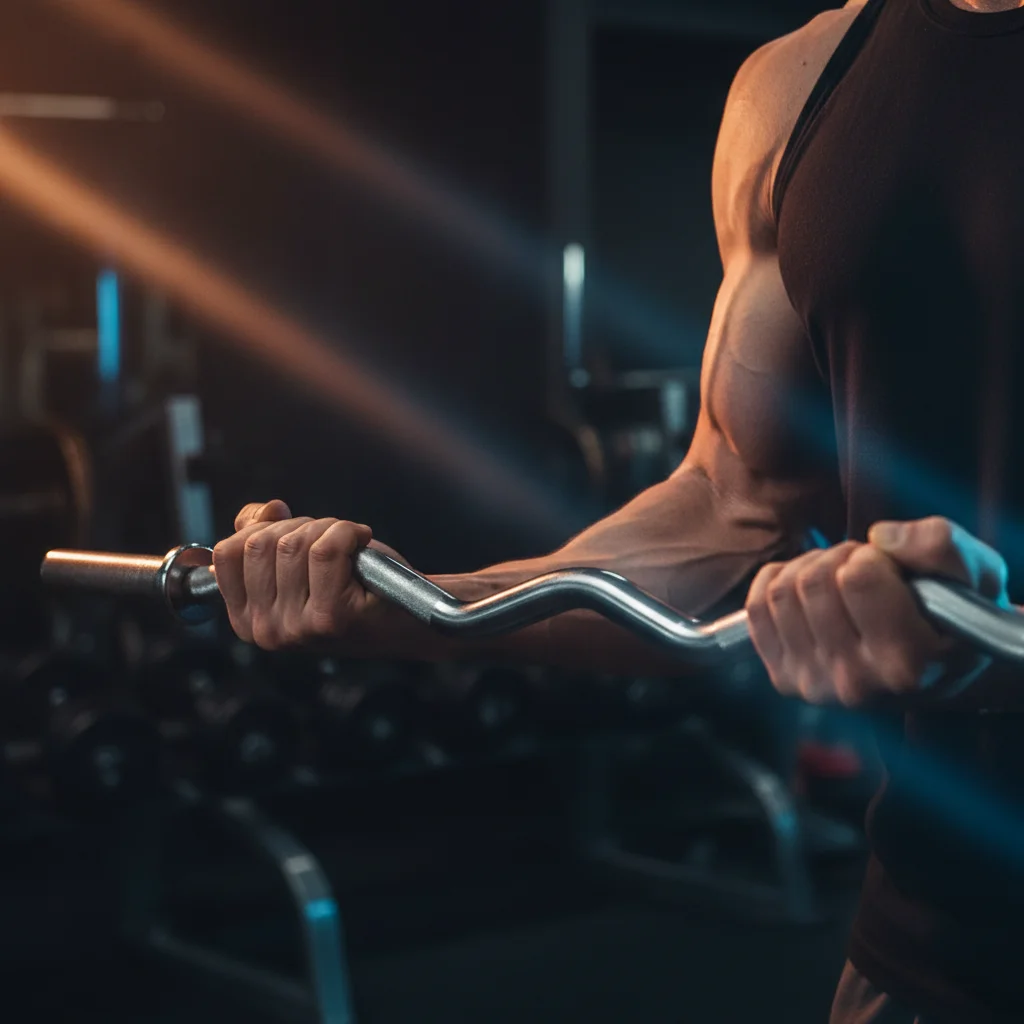
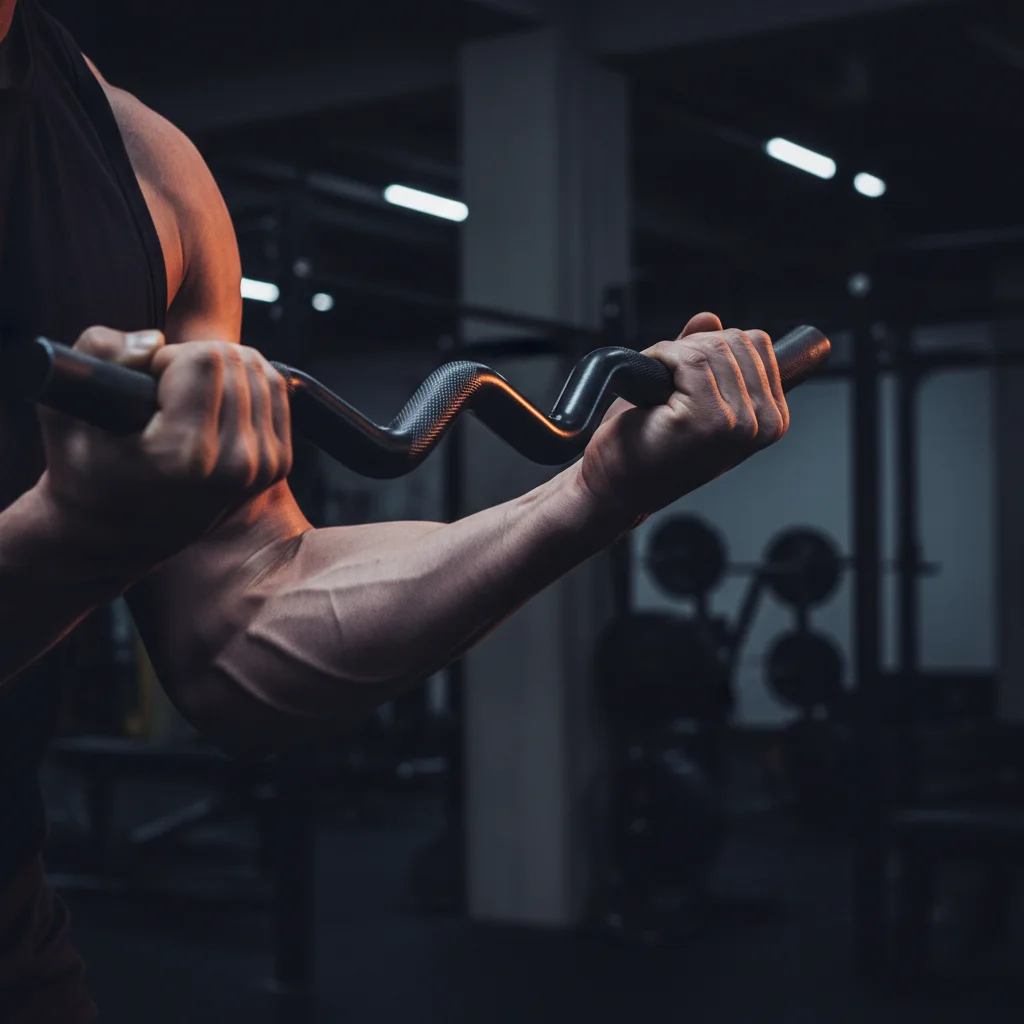
The EZ curl bar is a shorter, lighter barbell with W-shaped bends in the grip section. These angled grips let you hold the bar in a semi-supinated position — somewhere between palms fully up and palms facing each other. Most EZ bars weigh between 15-25 pounds (compared to a standard Olympic straight bar at 45 pounds) and are about 4 feet long.
The EZ bar was originally designed in the 1950s to reduce the wrist strain that straight bar curls cause — and that's still why most lifters prefer it today. The "EZ" stands for "easy," as in easy on the wrists.
What Muscles Do EZ Bar Curls Work?
EZ bar curls primarily target the elbow flexors — the muscles responsible for bending your arm. But the angled grip shifts emphasis compared to a straight bar.
**Biceps brachii (primary).** Both the long head and short head of the biceps work during EZ bar curls. However, the semi-supinated grip of the EZ bar tends to slightly reduce biceps brachii activation compared to a fully supinated straight bar curl. The difference is modest — but it's real.
**Brachialis (significant secondary).** The brachialis muscle sits underneath the biceps and is a powerful elbow flexor. Because the EZ bar's angled grip moves your hands away from full supination, the brachialis picks up more of the load compared to straight bar curls. This is actually one of the EZ bar's hidden strengths — it works the muscle that builds upper arm thickness, not just the peak.
**Brachioradialis (secondary).** The brachioradialis — the large forearm muscle near the elbow — contributes to elbow flexion during any curl variation. Its activation increases as your grip moves from supinated toward neutral, so the EZ bar hits it slightly more than a straight barbell.
**Forearm flexors and wrist stabilizers.** Your grip on the bar engages the forearm muscles isometrically throughout the movement. The angled grip reduces rotational stress on the wrist compared to a straight bar, which means less forearm fatigue from fighting uncomfortable joint positions — and more useful work from actual curling.
What Bicep Head Do EZ Bar Curls Hit?
This is the most common question lifters ask about the EZ bar, and the answer depends on your grip width.
**Close grip on the inner angles** shifts emphasis toward the long head of the biceps — the outer head that's responsible for the bicep peak when viewed from the side. The narrower hand position places the long head in a stronger mechanical position.
**Wide grip on the outer angles** shifts emphasis toward the short head — the inner head that contributes to arm width when viewed from the front. This is also the grip that most closely mimics a straight barbell curl.
**Standard grip** (hands on the middle angles) works both heads fairly evenly. This is where most people should start, and honestly where most people should stay unless they have a specific weakness to address.
Coach's Note: Don't overthink the grip width. The difference in head activation between close and wide grip is measurable in a lab but modest in the gym. Unless you're an advanced lifter chasing specific weak points, just grip the bar where it feels natural and focus on getting stronger over time. That matters more than grip position ever will.
EZ Curl Bar vs Straight Bar: Pros and Cons
This is the debate that never dies in gym forums. Here's what actually matters.
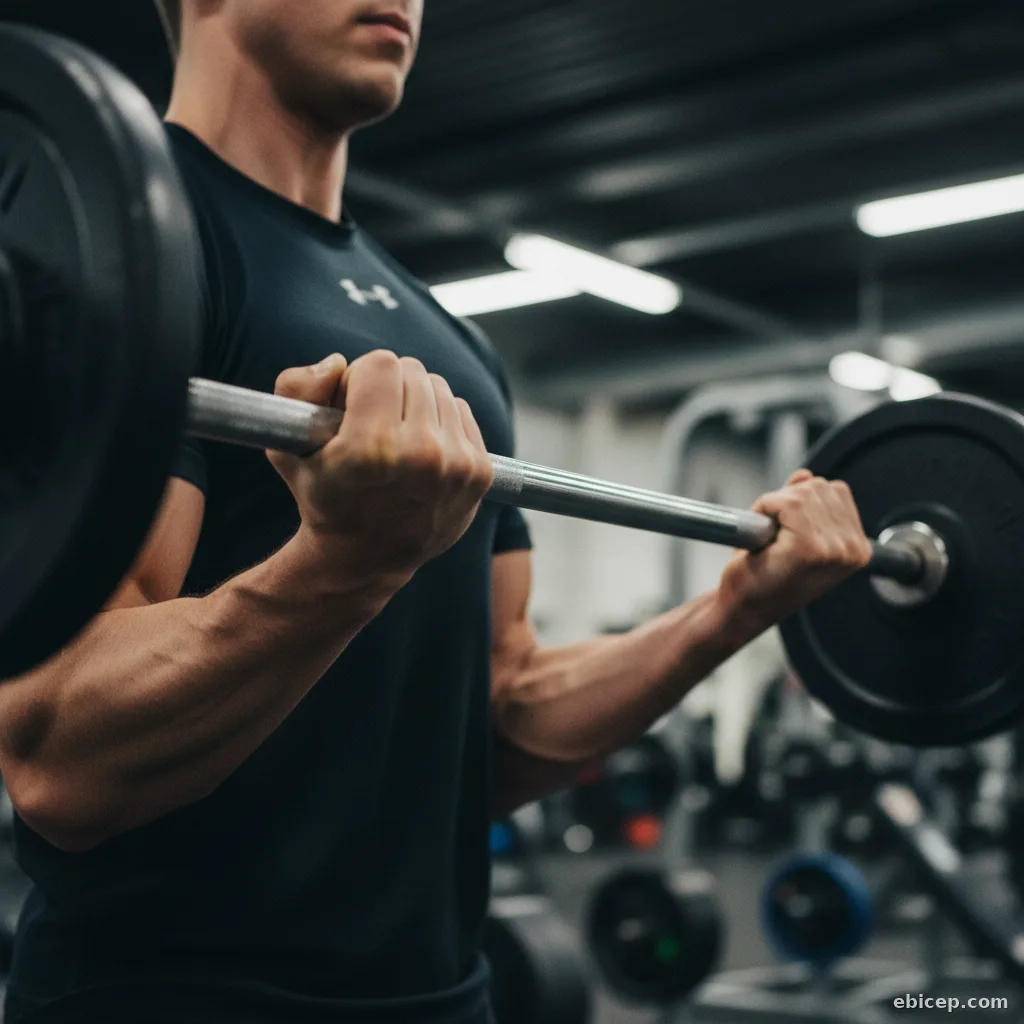
**Muscle activation.** A straight barbell forces full supination, which maximizes biceps brachii activation — particularly the short head. The EZ bar's angled grip slightly reduces peak bicep activation but increases brachialis and brachioradialis involvement. In practice, the difference is small enough that most lifters won't notice it in the mirror. If you're chasing every last percentage of bicep activation, the straight bar wins. If you want well-rounded arm development, the EZ bar is arguably better.
**Wrist comfort.** This is where the EZ curl bar dominates. Some wrists love straight bars. A lot don't. The straight bar forces full supination under load, which creates rotational stress on the forearm bones (radius and ulna). Many lifters experience wrist discomfort or pain during straight bar curls, especially with heavier weights. The EZ bar's angled grip reduces this stress significantly. If straight bar curls hurt your wrists, switch to the EZ bar without guilt — the marginal activation difference isn't worth joint pain.
**Weight and loading.** Straight barbells are heavier (45 lbs vs 15-25 lbs for most EZ bars), which means you can load more total weight. However, for curls, the lighter bar is actually an advantage — you can make smaller weight jumps by adding lighter plates, which is better for progressive overload on isolation exercises.
**Versatility.** The EZ curl bar handles more than just curls. You can use it for skull crushers (triceps), reverse curls (forearms), upright rows (shoulders), and close-grip bench press variations. A straight barbell can do all of these too, but the EZ bar's wrist-friendly angles make several of these exercises more comfortable.
How to Perform EZ Bar Curls Correctly
Stand with your feet shoulder-width apart. Grip the EZ bar on the inner or middle angled sections with an underhand grip. Let the bar hang at arm's length in front of your thighs.
Curl the bar upward by bending at the elbows. Keep your upper arms pinned to your sides — they shouldn't drift forward until the very top of the movement. Squeeze your biceps hard at the peak contraction, then lower the bar under control. Take at least 2 seconds on the way down. Let your arms fully extend at the bottom before starting the next rep.
**Common mistakes to avoid:**
**Swinging the body.** If you need momentum to lift the bar, it's too heavy. Your torso should stay completely still. Stand against a wall if you can't stop the sway.
**Cutting range of motion.** Start with arms fully extended. Curl until your forearms are nearly vertical. Partial reps at either end cheat you out of the stretch at the bottom and the squeeze at the top.
**Gripping too tight.** A death grip on the bar shifts work to the forearm flexors and away from the biceps. Hold the bar firmly but not with white knuckles. Think of your hands as hooks — they hold the bar, but your biceps do the lifting.
EZ Bar Curl Variations Worth Trying
**Reverse EZ bar curl.** Flip your grip — palms face down. This turns the exercise into a brachioradialis and forearm builder. You'll use about 50-60% of your regular curl weight. The EZ bar is actually the best tool for reverse curls because the angled grip reduces the wrist strain that makes straight bar reverse curls uncomfortable.
**EZ bar preacher curl.** Combine the EZ bar with a preacher bench for maximum isolation. The pad eliminates all momentum, and the angled grip protects your wrists in the vulnerable stretched position at the bottom. This is one of the best exercises for targeting the short head.
**Close-grip EZ bar curl.** Grip the innermost angles to shift emphasis to the long head and bicep peak. The narrow hand position also increases the range of motion slightly.
**EZ bar drag curl.** Instead of the normal curling arc, drag the bar up along the front of your body by pulling your elbows back. This removes the front deltoid from the movement and increases long head activation. Lighter weight, shorter range of motion, intense contraction.
**Seated EZ bar curl.** Sit on a bench and perform the curl. Removes all lower body momentum. A good honesty check for lifters who suspect they're swinging on standing curls.
How to Program EZ Bar Curls
EZ bar curls work as either a primary or secondary bicep curl exercise on arm day or pull day. They're a staple in any strength training program focused on arm muscle hypertrophy.
**As your main curl:** 3-4 sets of 8-10 reps. Use a weight that challenges you on the last 2 reps of each set. Progress by adding 2.5-5 pounds when you can complete all reps with clean form.
**As a secondary exercise after barbell curls:** 3 sets of 10-12 reps. Moderate weight, focus on the squeeze. The EZ bar's comfort advantage lets you accumulate volume without wrist fatigue.
**As a preacher curl variation:** 3 sets of 10-12 reps. Lighter weight, controlled eccentric, full stretch at the bottom. Don't bounce out of the bottom position — that's where bicep tendon injuries happen.
EZ bar curls pair well with hammer curls in the same workout. The EZ bar targets the biceps brachii through a semi-supinated position, while hammer curls hit the brachialis and brachioradialis through a neutral grip. Together, they cover all three major elbow flexors.
Frequently Asked Questions
Do EZ bar curls work the long head or short head?
Both, but emphasis shifts with grip width. Close grip favors the long head (peak). Wide grip favors the short head (width). Standard grip works both heads fairly evenly. The difference between grip positions is real but moderate — don't obsess over it unless you're specifically trying to build one head.
Are EZ bar curls better than dumbbell curls?
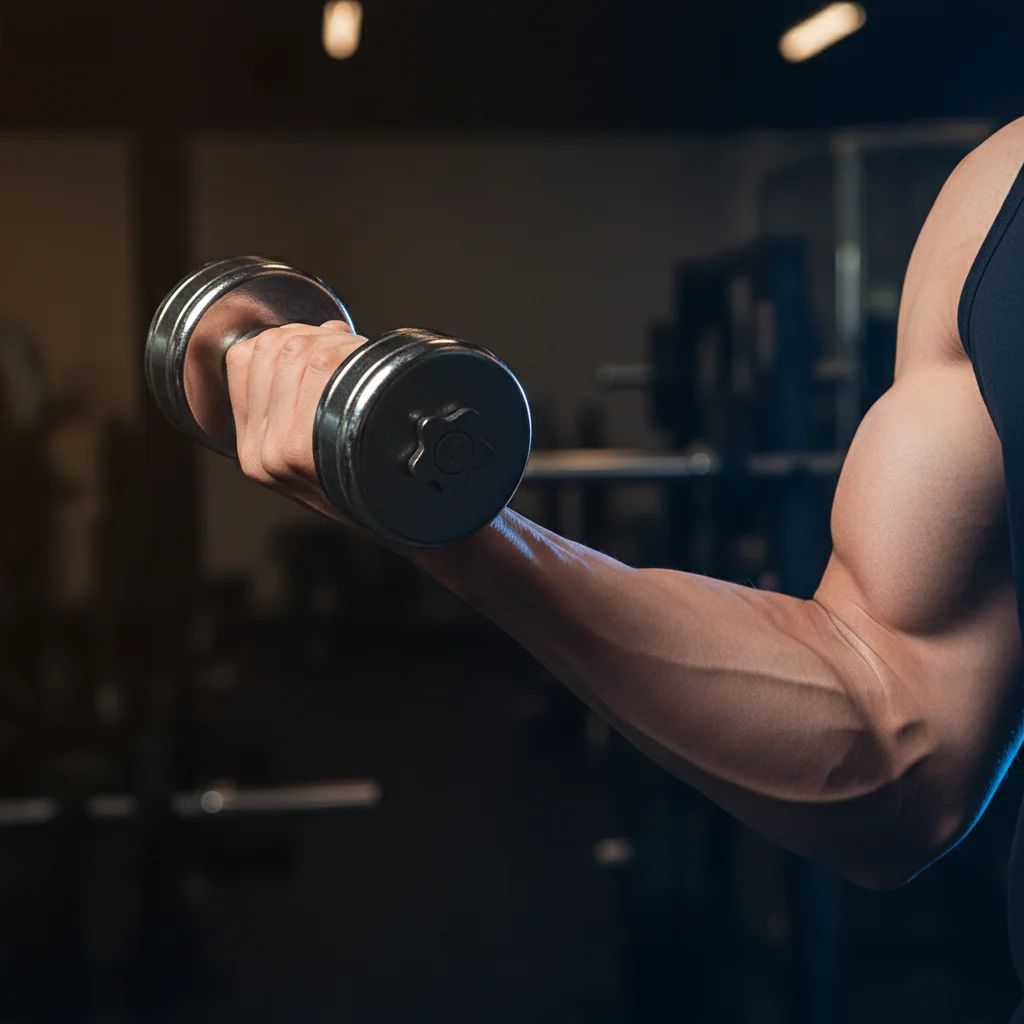
They serve different purposes. EZ bar curls allow bilateral loading (both arms at once) and easy progressive overload with small weight plates. Dumbbell curls allow full supination, independent arm work, and greater range of motion. Use both in your training — they complement each other.
Do EZ bar curls work forearms?
Yes, but indirectly. Your forearm flexors work isometrically to maintain your grip, and the brachioradialis assists in elbow flexion. For more direct forearm work, try reverse EZ bar curls with a pronated grip — that shifts the primary load to the brachioradialis and forearm muscles.
Can I use an EZ bar instead of a straight barbell for all curls?
For most lifters, yes. The small reduction in peak biceps activation is offset by the wrist comfort, the brachialis involvement, and the ability to train without joint pain. If your wrists are healthy and you prefer the straight bar feel, use it. If there's any discomfort, the EZ bar is the smarter long-term choice.
What can I do if I don't have an EZ bar?
Use dumbbells with a slight wrist angle — turn your palms about 30-45 degrees inward from full supination. This mimics the EZ bar's grip angle. Alternatively, hammer curls use a neutral grip that's even more wrist-friendly than the EZ bar, though they target the brachialis more heavily than the biceps.
What We Recommend
CAP Barbell Olympic EZ Curl Bar
If you're training at home and need an EZ bar, this Olympic version takes standard 2-inch plates and handles everything from curls to skull crushers.
The Bottom Line
The EZ curl bar works the same muscles as any other curl — biceps brachii, brachialis, and brachioradialis — but the angled grip shifts the balance slightly toward the brachialis and forearms while reducing wrist stress. It's not better or worse than a straight bar; it's different. For most lifters, the EZ bar is the more practical choice because it lets you train heavy and often without your wrists paying the price. Grip it on the angles that feel natural, curl with control, progress the weight over time, and let your arms grow.