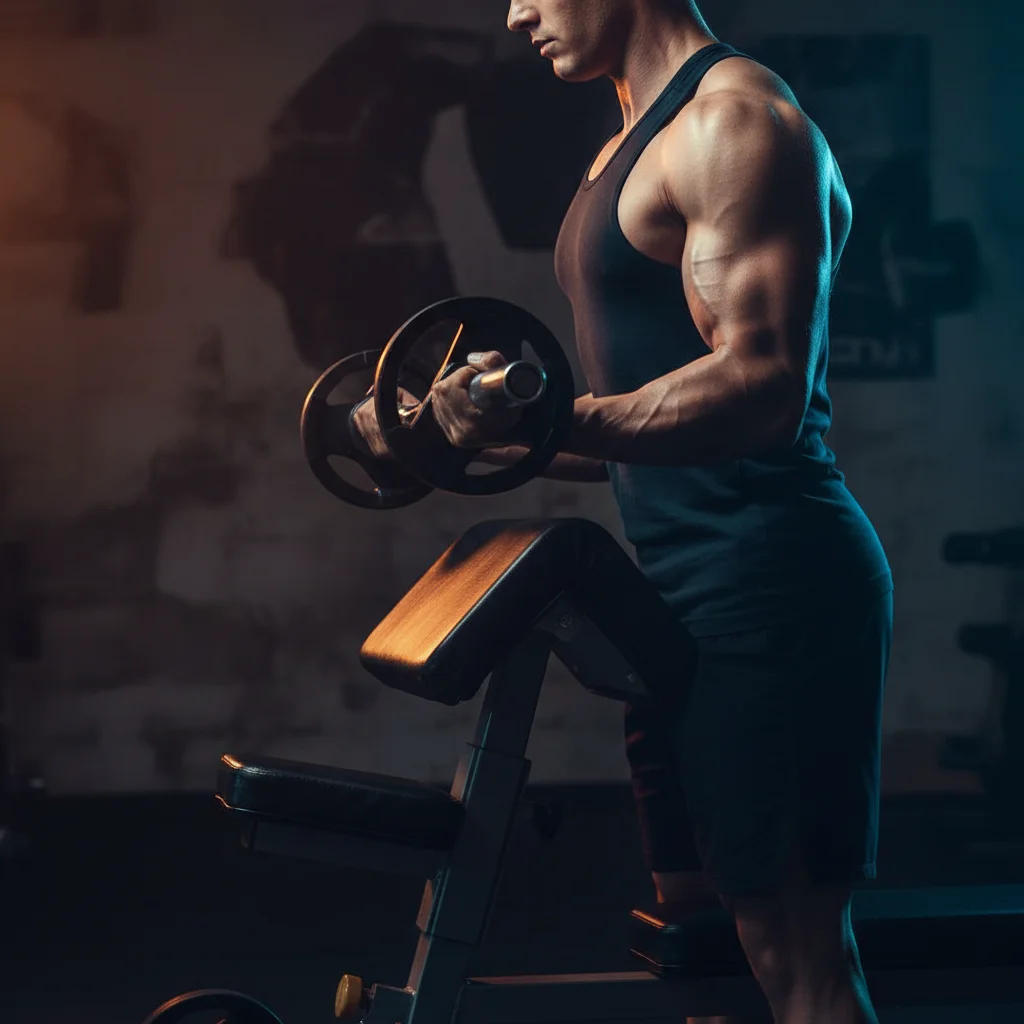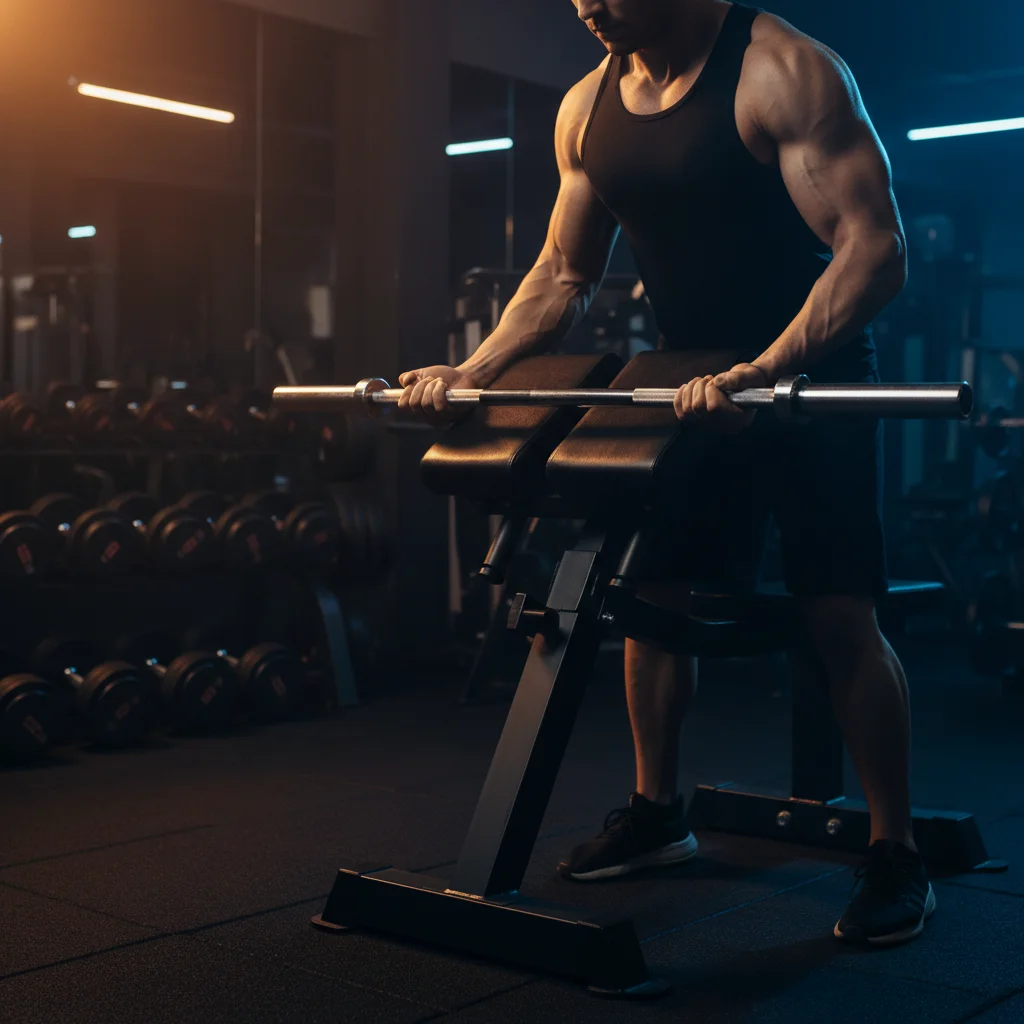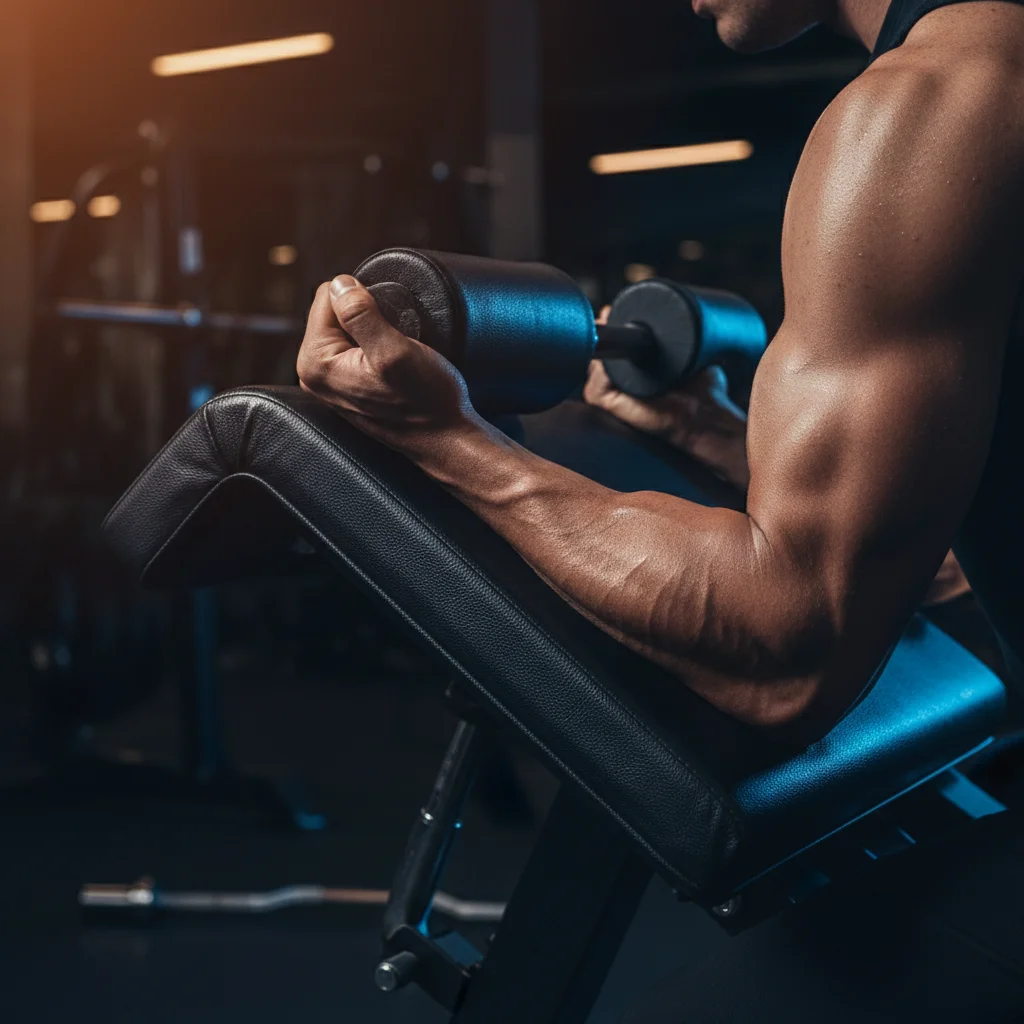
The angle of your preacher curl bench changes everything about the exercise — which head of the biceps works hardest, how much stretch you get at the bottom, where the movement is most difficult, and even how safe the exercise is for your elbows. Most lifters never adjust the angle. They just sit down at whatever the bench is set to and start curling. That's leaving muscle growth on the table.
Understanding how bench angle affects the preacher curl lets you customize the exercise for your specific goals — whether that's building bigger biceps, targeting the short head, maximizing the stretch, or protecting a cranky elbow.
Here's what each angle does and how to set up your preacher curl bench for the best results.
How Bench Angle Changes the Preacher Curl
The standard preacher curl bench has a pad angled at roughly 45 degrees. But if you're using an adjustable bench as a preacher station — which many home gym lifters do — you can set the angle anywhere from about 30 to 70 degrees. Each angle creates a different training stimulus.
Here's what actually changes: **the angle determines where in the range of motion the exercise is hardest.**
At a steeper angle (closer to vertical), the preacher curl is hardest at the top of the movement — near full flexion. This is similar to a spider curl, where peak tension occurs at the contraction.
At a shallower angle (closer to horizontal), the preacher curl is hardest at the bottom — in the stretched position. This creates a deep loaded stretch on the biceps, which is one of the strongest signals for muscle hypertrophy that training research has identified.
Most dedicated preacher benches sit at around 45 degrees, which balances both effects. But if you have the option to adjust, understanding what each angle does gives you a real advantage.
The Best Angle for Preacher Curls: 45-60 Degrees
For most lifters doing standard preacher curls, setting the pad between 45-60 degrees is the sweet spot. Here's why this range works so well:
**45 degrees** provides a moderate stretch at the bottom and decent tension at the top. It's the angle most dedicated preacher benches use because it offers the best balance between stretch stimulus and peak contraction. Your arms rest naturally against the pad, your elbows sit at a comfortable position, and the resistance curve feels smooth throughout the full range of motion.
**60 degrees** (steeper) shifts more difficulty toward the top of the curl. You'll feel a stronger squeeze at peak flexion, but the stretch at the bottom is less intense than at 45 degrees. This angle works well if you want to focus on the contraction — think of it as halfway between a standard preacher curl and a spider curl.
**The honest answer for most people:** Set it at 45 degrees and focus on your form. The difference between 45 and 60 degrees is real but modest. What matters far more is keeping your upper arms pressed into the pad, controlling the eccentric, and not locking out at the bottom.
Coach's Note: If you're using an adjustable bench as a preacher station, set it to one notch above 45 degrees. Pure 45 is sometimes too flat for taller lifters — your elbows end up hanging past the edge of the pad instead of resting on it. One click steeper usually fixes the fit without changing the exercise significantly.
Steeper Angles (60-75 Degrees): More Contraction
Setting the bench steeper — 60 to 75 degrees — shifts the preacher curl's difficulty curve toward the top of the movement. The biceps work hardest at peak contraction, and the stretched position at the bottom becomes relatively easier.
**When to use steeper angles:**
You want to emphasize the squeeze and peak contraction. You're pairing preacher curls with another exercise that already provides stretch (like incline curls). You have elbow issues that are aggravated by deep stretches under load — the steeper angle reduces tendon stress at the bottom.
**What changes at steeper angles:**
The exercise starts feeling more like a spider curl. Your arms hang more vertically, which means gravity is pulling straight down through the biceps at the top of the curl. You'll feel a stronger peak contraction but less of that deep stretch at the bottom that makes standard preacher curls so effective for growth.
**Weight adjustment:** You may need to drop 5-10% compared to your standard 45-degree preacher weight. The top-loaded resistance profile is more demanding at peak flexion.
Shallower Angles (30-45 Degrees): More Stretch
Setting the bench shallower — 30 to 45 degrees — increases the stretch at the bottom of the preacher curl and shifts more difficulty toward the lengthened position. This is where the muscle growth magic happens.
**When to use shallower angles:**
You want to maximize the stretched position under load. You're prioritizing muscle hypertrophy over peak contraction. Your elbows are healthy and can handle the increased tendon stress at full extension.
**What changes at shallower angles:**
The bottom of the curl becomes significantly harder. Your biceps are stretched further under load, creating a stronger growth stimulus. Research keeps pointing to the same thing: training muscles in their lengthened position produces more hypertrophy than training them in their shortened position — which makes shallower angles potentially more effective for building bigger biceps.
**The caution:** Shallower angles put more stress on the distal bicep tendon. The deeper stretch means the tendon is under greater tension at full extension. Never fully lock out your elbows at a shallow angle — always maintain that slight 10-15 degree bend. And if your elbows complain, move the angle back toward 45 degrees.
How to Set Up an Adjustable Bench for Preacher Curls
If your gym doesn't have a dedicated preacher curl bench, an adjustable bench works as a solid substitute. Here's the setup:
**Step 1:** Set the bench to 45-60 degrees (start at 45 if you're new to this).
**Step 2:** Stand behind the bench. The top of the backrest should sit roughly at armpit height. If it's too low, your elbows will hang below the pad. If it's too high, you'll be crunching forward uncomfortably.
**Step 3:** Drape your upper arms over the top of the backrest. Your armpits should rest near the top edge, and your elbows should be firmly on the pad surface — not floating past the bottom edge.
**Step 4:** Grip your dumbbell or EZ bar and curl from this position. Keep your chest lightly pressed against the top of the bench for stability.
The fit won't be as precise as a dedicated preacher bench — the backrest is designed for your back, not your arms. But the principle is identical: lock your upper arms against a surface, eliminate momentum, and curl with strict form.
Preacher Curl Variations by Angle
Different angles pair naturally with different preacher curl variations:
**45 degrees — standard EZ bar preacher curl.** The default. Works both heads with a balanced resistance profile. Best for moderate-weight sets of 8-12 reps. This is where most of your preacher curl work should happen.
**30-40 degrees — dumbbell preacher curl.** The shallower angle increases the stretch, and dumbbells let you supinate fully at the top. Lighter weight, higher reps (10-15), emphasis on the growth-producing stretch at the bottom.
**60+ degrees — spider curl position.** At steep angles, you're essentially doing a spider curl with arm support. Use dumbbells, keep the weight moderate, and focus on squeezing hard at the top. This complements the shallower-angle work by emphasizing the other end of the range of motion.
Common Preacher Curl Mistakes Related to Angle
**Using one angle forever.** Most lifters find a comfortable angle and never change it. Rotating between 30-45-60 degrees across different training weeks provides variety in the resistance curve, which can prevent plateaus and stimulate growth from different angles.
**Angle too steep for heavy weight.** At steep angles (60+), the exercise is hardest at peak contraction. Loading heavy at this angle puts enormous stress on the biceps at their weakest mechanical position. Keep steep-angle preacher curls moderate to light — save the heavy work for 45-degree standard preacher curls or standing barbell curls.
**Angle too shallow with full lockout.** At shallower angles (30-40), the stretch at the bottom is intense. Fully locking out your elbows here is the fastest path to a bicep tendon strain. Control the descent, stop just short of full extension, and never bounce out of the bottom.
**Not adjusting the pad height with the angle.** When you change the bench angle, the effective height of the pad changes too. A bench at 60 degrees positions the top edge higher than the same bench at 30 degrees. Re-check your setup every time you change the angle — armpits at the top edge, elbows on the pad, not dangling off the bottom.
Muscles Worked at Different Angles
The muscles worked don't change — preacher curls always target the biceps brachii (primarily the short head), the brachialis, and the brachioradialis to a lesser degree. What changes is where in the range of motion each muscle works hardest.
**Shallower angles (30-45):** More stretch on the biceps at the bottom. The brachialis contributes more in the lengthened position. Greater eccentric demand on the distal bicep tendon.
**Standard angle (45):** Balanced demand across the full range of motion. Both the stretch and contraction phases are productive.
**Steeper angles (60+):** More tension at the top. The biceps work hardest at peak contraction. Less tendon stress at the bottom, making this angle safer for lifters with elbow sensitivity.
Frequently Asked Questions
What angle should my bench be for preacher curls?
45-60 degrees is the ideal range for most lifters. 45 degrees gives a balanced resistance curve with good stretch at the bottom. 60 degrees shifts more work toward peak contraction. If you're using an adjustable bench as a preacher substitute, start at one notch above 45 degrees and adjust from there.
Is a steeper or shallower angle better for preacher curls?
Shallower angles (30-45) are generally better for muscle growth because they increase the loaded stretch at the bottom — a strong hypertrophy stimulus. Steeper angles (60+) are better for peak contraction and are safer for lifters with elbow issues. The best approach rotates between angles across training weeks.
Should I do machine curls or free weight preacher curls?
Free weight preacher curls (dumbbell or EZ bar) provide more natural wrist rotation and require more stabilization. Machine preacher curls provide a fixed path and constant tension. Both are effective. If you're training heavy, the machine is safer. If you want maximum muscle engagement, free weights with proper form are slightly better.
Does the angle matter more than the weight?
Not really — both matter. The angle determines where the exercise is hardest (stretch vs contraction), and the weight determines how much mechanical tension your biceps experience. You need sufficient weight to challenge the muscle AND the right angle to target it effectively. Don't sacrifice weight for angle adjustments — find the angle that lets you lift with good form through a full range of motion, then focus on progressive overload.
The Bottom Line
The preacher curl bench angle isn't just a setup detail — it's a training variable that changes what the exercise does to your biceps. Shallower angles maximize the growth-producing stretch at the bottom. Steeper angles emphasize the contraction at the top. The standard 45-degree angle balances both. Set your bench between 45-60 degrees for most of your preacher curl work, rotate to shallower or steeper angles periodically for variety, and always — always — control the bottom of the rep. That's where elbows get hurt and where muscles get built. Same position, two very different outcomes depending on whether you rush through it or own it.