The preacher curl and the barbell curl are two of the most popular bicep exercises in any gym — and lifters have been arguing about which one is better for decades. The truth is they're not competing for the same job. They target the same muscle through different mechanisms, and understanding those differences is what separates lifters who build complete arms from lifters who just curl heavy and hope for the best.
Here's an honest comparison of the preacher curl vs barbell curl — what each one does better, what each one does worse, and how to use both for maximum bicep growth.
What Is a Preacher Curl?
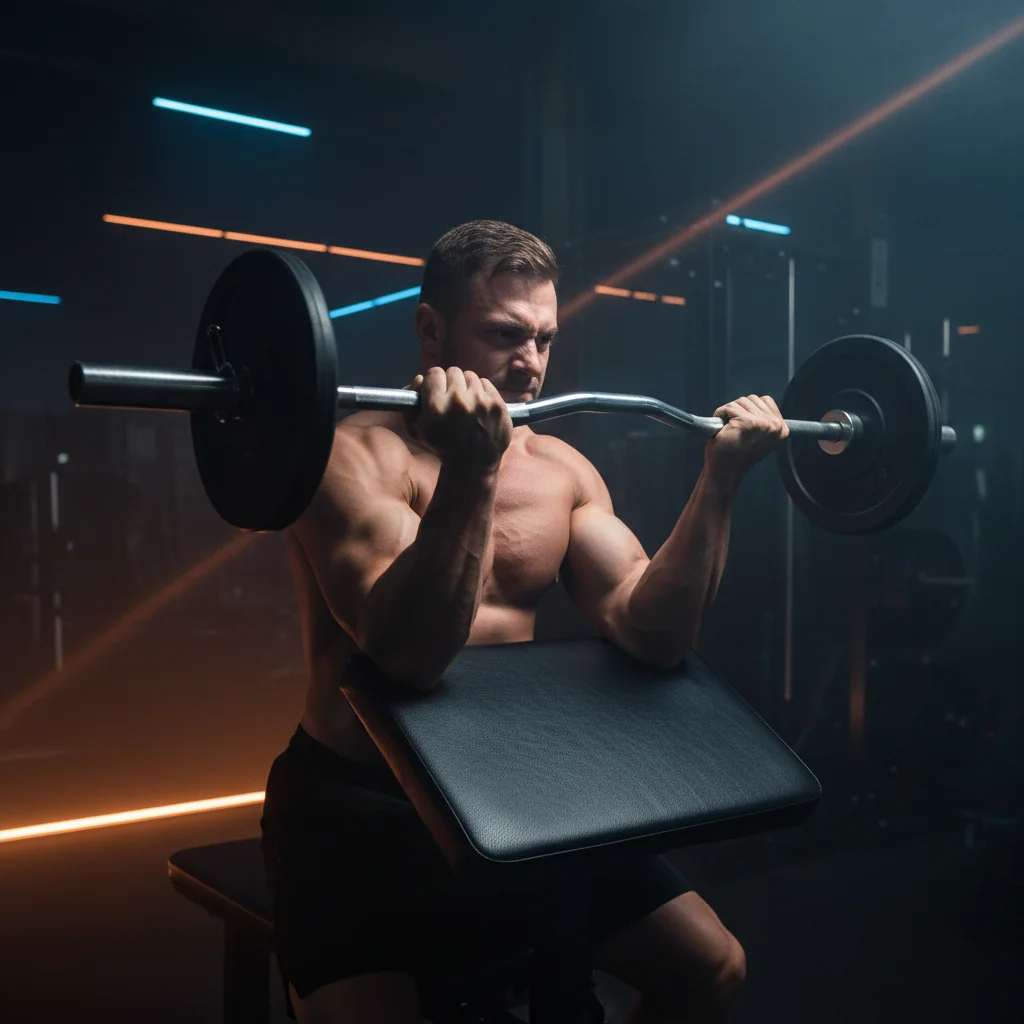
The preacher curl is performed with your upper arms resting on an angled pad. Whether you're seated or standing, the pad locks your elbows in position and eliminates any possibility of cheating. Your arms are positioned in front of your body, which changes which part of the biceps works hardest.
You can do preacher curls with a barbell, an EZ bar, dumbbells, or a cable machine. What actually makes a preacher curl a preacher curl isn't the weight — it's the pad. That pad is what separates it from every other curl.
What Is a Barbell Curl?
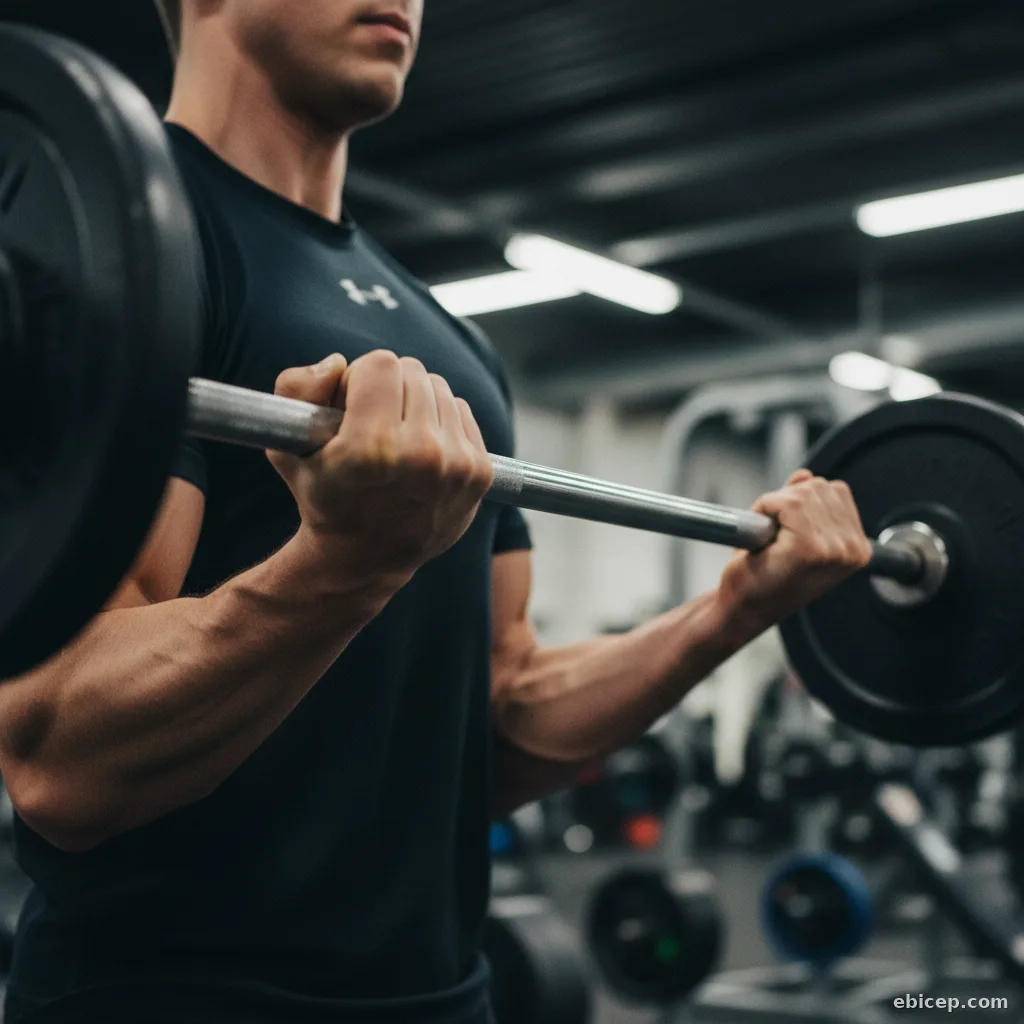
The barbell curl is the classic standing curl — feet planted, barbell in both hands with an underhand grip, curl the weight up by bending at the elbows. It's the exercise most people picture when someone says "bicep curl."
Standing barbell curls allow heavier loading than almost any other curl variation because your entire body can stabilize the weight. They also allow a small amount of body English — which is both their strength (you can handle more weight) and their weakness (you can cheat without realizing it).
Key Differences Between Preacher Curl and Barbell Curl
Muscle Engagement
**Preacher curl** — arms in front of your body. This position shortens the long head of the biceps and places more demand on the short head. The short head is responsible for bicep width when viewed from the front. The brachialis also contributes heavily because the pad position makes it a strong elbow flexor in this angle.
**Barbell curl** — arms at your sides. This is a more neutral position where both the long head and short head share the load fairly evenly. The long head (responsible for the bicep peak) works through its full range of motion, and the barbell allows maximum supination under load. This position also recruits the brachioradialis and forearm muscles as stabilizers more than the preacher curl does.
**What this means for your training:** Preacher curls emphasize the short head and build width. Barbell curls work both heads evenly and build overall mass in the biceps. They're complementary, not interchangeable.
Isolation vs Overall Load
**Preacher curl** — strict isolation. The pad removes all momentum. You can't swing, shrug, lean, or use your legs. Whatever weight goes up is 100% bicep effort. This makes preacher curls extremely effective for muscle engagement but limits how much weight you can use. Most lifters use 20-30% less weight on preacher curls compared to standing barbell curls.
**Barbell curl** — heavier loading with some assistance. Standing barbell curls let you lift more weight because your body can subtly assist. A slight lean, a small hip drive, some front deltoid involvement — these aren't necessarily bad, but they mean the biceps aren't handling 100% of the load. The trade-off is more total weight on the bar, which creates more mechanical tension.
Coach's Note: That 20-30% weight drop from barbell curls to preacher curls? That's not a weakness. That's an honesty check. It tells you exactly how much of your "barbell curl strength" is actually momentum and body English. Close that gap over time, and your biceps will grow — regardless of which exercise you focus on.
Range of Motion
**Preacher curl** — the stretched position at the bottom is more extreme because the pad holds your arms forward while gravity pulls the weight down. This creates a deep stretch on the biceps under load — one of the strongest growth signals research has identified. However, this stretch also puts more stress on the distal bicep tendon, which is why form at the bottom of a preacher curl matters so much. Never fully lock out. Always maintain a slight bend.
**Barbell curl** — full range of motion from arms extended at your sides to full flexion. The stretch isn't as intense as a preacher curl, but the movement is more natural for the shoulder joint. Less tendon stress at the bottom means you can train heavier and more frequently without the same risk of injury.
Risk of Injury
**Preacher curl** — higher risk at the bottom of the movement. The stretched position under load can strain the distal bicep tendon, especially if you lock out your elbows or bounce out of the bottom. Using too much weight is the most common cause of preacher curl injuries. The fix: maintain a slight elbow bend at the bottom and lower the weight under control for 3 seconds.
**Barbell curl** — lower acute risk, but chronic issues can develop. The most common barbell curl injury is forearm or wrist strain from the fixed supinated grip position. Lifters who go too heavy also tend to use excessive back extension (leaning backward), which stresses the lower back over time. An EZ bar solves the wrist issue. Strict form solves the back issue.
Which Exercise Is Better for Muscle Growth?
Neither wins outright — and that's the honest answer.
**Preacher curls build shape.** The short head emphasis and the deep stretch at the bottom create a specific growth stimulus that builds bicep width and adds shape to the inner arm. The strict isolation also ensures every rep counts — there's no hiding behind momentum.
**Barbell curls build mass.** The heavier loading creates more mechanical tension across both heads. The standing position allows progressive overload more easily — you can add weight to a barbell in 2.5-lb increments, which is harder with preacher curls where form breaks down faster under heavier loads.
**The best approach combines both.** Use barbell curls early in your workout when you're fresh and can handle the most weight. Use preacher curls later for strict isolation work after the heavy lifting is done. This sequence gives you the benefits of both: heavy loading for mass, strict isolation for shape and muscle engagement.
Which Exercise Is Better for Strength Gains?
The barbell curl wins for raw strength development. The standing position allows more weight, more progressive overload, and recruits more stabilizer muscles. If your goal is to curl the heaviest weight possible with good form, standing barbell curls are the more effective exercise.
Preacher curls build strength too — but in a narrower range. You'll get stronger at the preacher curl movement specifically, but the gains don't transfer as broadly because the fixed position removes the stabilization component that builds overall functional strength.
How to Program Both Exercises Together
Option 1: Same Workout (Most Common)
**1. Barbell Curl** — 3 sets x 6-8 reps (heavy, first exercise)
**2. Preacher Curl** — 3 sets x 10-12 reps (moderate, second exercise)
This is the classic pairing. Heavy barbell curls first for maximum tension, followed by preacher curls for strict isolation. Total: 6 sets of direct bicep work — plenty for one session.
Option 2: Different Days (Push/Pull Split)
**Pull Day A:** Barbell Curl — 3 sets x 8-10 reps + Hammer Curl — 3 sets x 10-12 reps
**Pull Day B:** Preacher Curl — 3 sets x 10-12 reps + Incline Curl — 3 sets x 10-12 reps
This separates the exercises across training days, which lets you bring full energy to each one. Day A covers heavy bilateral work plus brachialis. Day B covers strict isolation plus long head stretch.
Option 3: Block Training (Advanced)
Spend 4-6 weeks focusing on barbell curls as your primary bicep exercise, then switch to 4-6 weeks of preacher curls as the primary. This approach works well for advanced lifters who need novelty to keep progressing.
Dumbbell vs Barbell for Preacher Curls
If you have access to a preacher bench, you'll also need to choose between dumbbells and a barbell for the exercise.
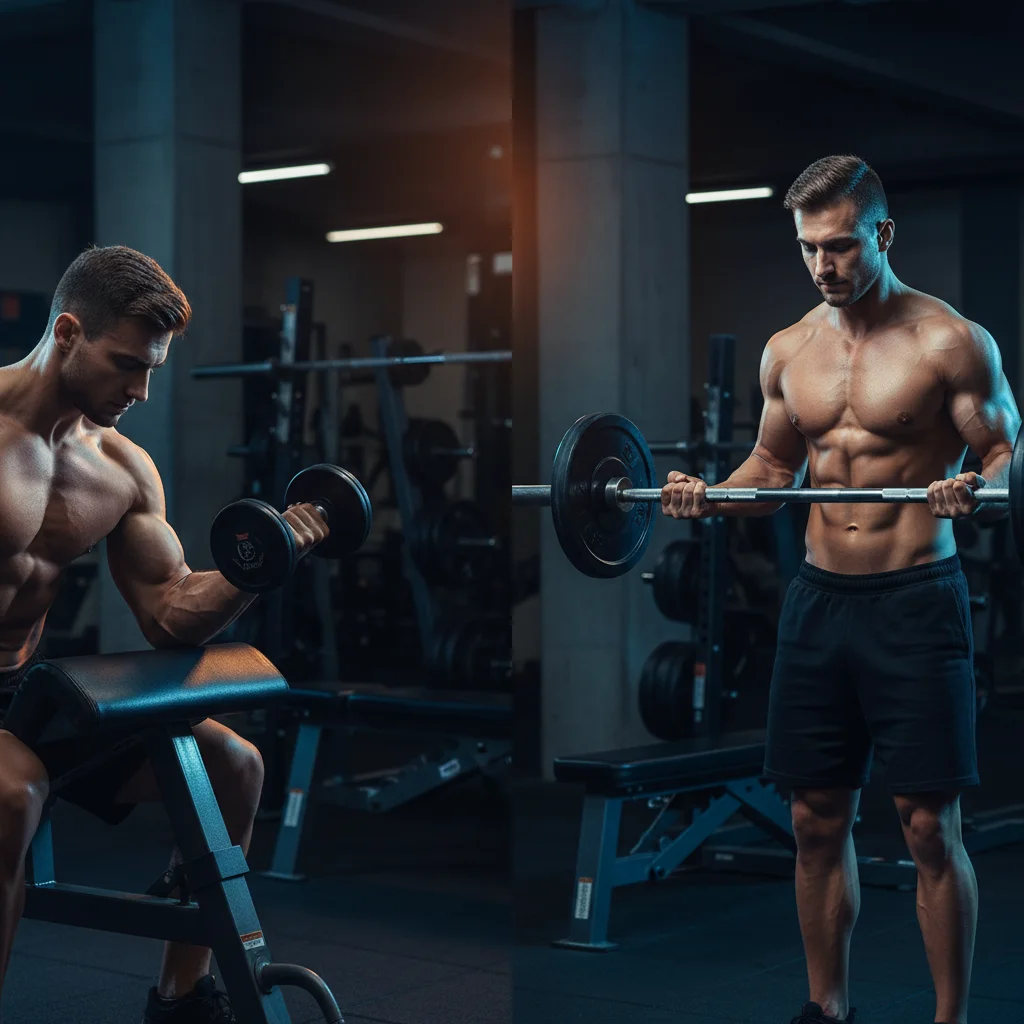
**Dumbbell preacher curls** allow each arm to work independently, fixing strength imbalances. They also permit full wrist supination at the top of the curl, which increases bicep peak contraction. Downside: harder to load progressively since dumbbell jumps are usually 5 lbs (2.5 lbs per arm for barbell is possible).
**Barbell preacher curls** allow heavier bilateral loading and are easier to progress over time. An EZ bar is the most common choice because the angled grip reduces wrist strain in the vulnerable stretched position. Downside: your stronger arm can compensate for the weaker one.
**The honest answer:** Alternate between them. Use the barbell when you want to push weight, dumbbells when you want to address imbalances or improve the contraction.
Frequently Asked Questions
Are preacher curls better than regular bicep curls?
Not better — different. Preacher curls provide stricter isolation and emphasize the short head. Regular bicep curls allow heavier loading and work both heads evenly. The best bicep programs include both. If you can only pick one, the standing barbell curl is more versatile. If your form tends to be sloppy, the preacher curl enforces the discipline you need.
Should I do preacher curls or barbell curls first?
Do barbell curls first. They allow heavier weight and benefit from being done while you're fresh. Preacher curls work better as a second exercise because the strict isolation doesn't require the same neural drive as heavy standing curls. Heavy compound-style work first, strict isolation after.
Can I do both preacher curls and barbell curls in the same workout?
Yes — and that's actually the ideal setup for most lifters. Three sets of barbell curls followed by three sets of preacher curls covers heavy loading and strict isolation in one session. Six total sets is enough bicep volume for a productive workout without overtraining.
Which curl is best for the bicep peak?
Neither the preacher curl nor the standard barbell curl is ideal for peak development. The bicep peak is primarily built by the long head, which responds best to exercises that stretch it — like incline dumbbell curls and Bayesian curls. Preacher curls emphasize the short head (width), and barbell curls work both heads evenly.
Preacher curl vs barbell curl — which is harder?
Preacher curls feel harder at a lighter weight because the pad removes all compensation patterns. You're weaker on the preacher bench — not because the exercise is inherently harder, but because you can't cheat. With strict form on both, the preacher curl is more demanding per pound of weight lifted.
The Bottom Line
The preacher curl vs barbell curl debate has a simple answer: use both. Barbell curls give you heavy loading, bilateral strength, and overall mass. Preacher curls give you strict isolation, short head emphasis, and a deep stretch under load. Together, they cover the two most important growth mechanisms — mechanical tension and muscle isolation. Put the barbell curl first in your workout for heavy work, follow it with preacher curls for strict finishing sets, and stop arguing about which one is better. The real answer is that neither builds bigger biceps alone as well as both do together.