You have one dumbbell. Maybe it's all you own. Maybe the gym is packed and everything else is taken. Maybe you travel with a single adjustable dumbbell and that's your entire gym. Whatever the reason — one dumbbell is enough to build real biceps.
Single-arm dumbbell exercises have an advantage that paired work doesn't: they force each arm to handle the full load independently. No dominant arm compensating. No cheating. Just one arm, one dumbbell, and nowhere to hide.
Here are the best single-dumbbell bicep exercises plus a complete workout you can do with nothing but one dumbbell and a flat surface to sit on.
Best Single-Arm Dumbbell Bicep Exercises
1. Single-Arm Dumbbell Curl
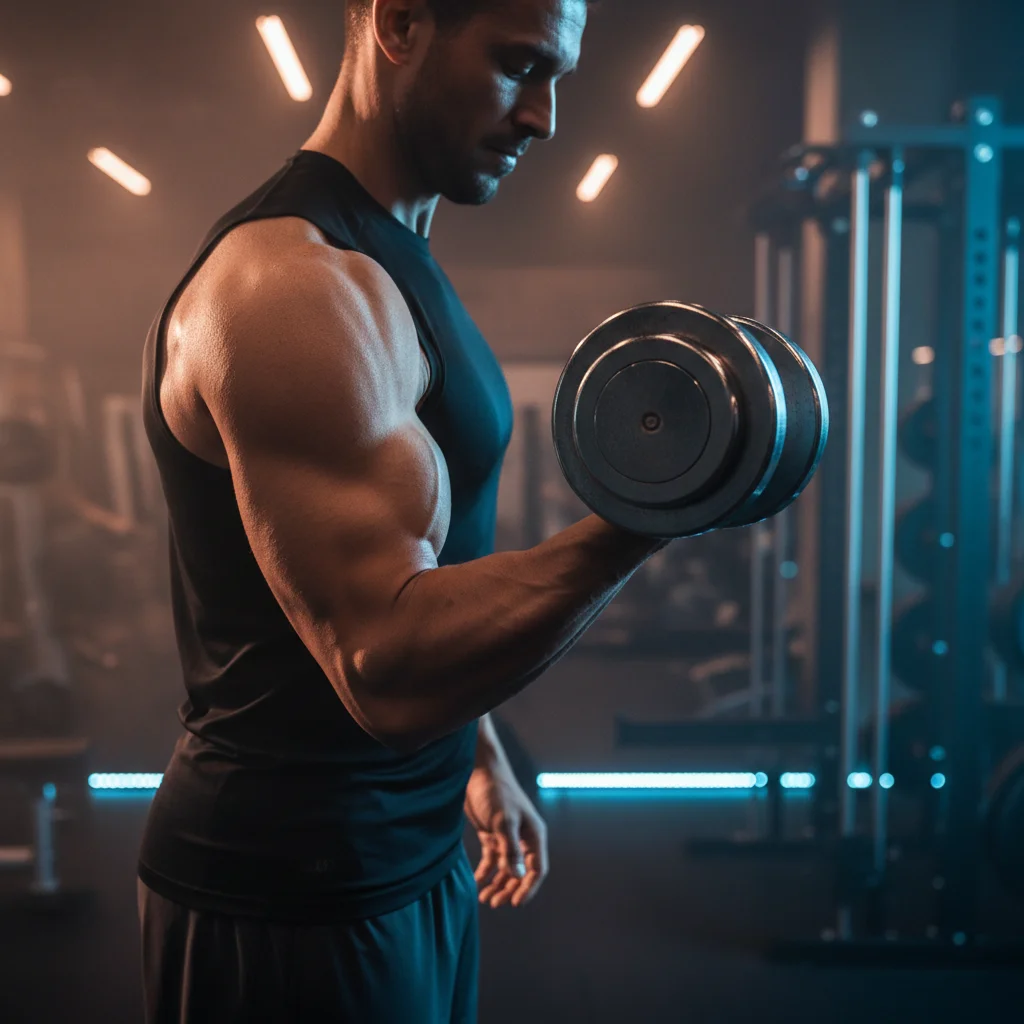
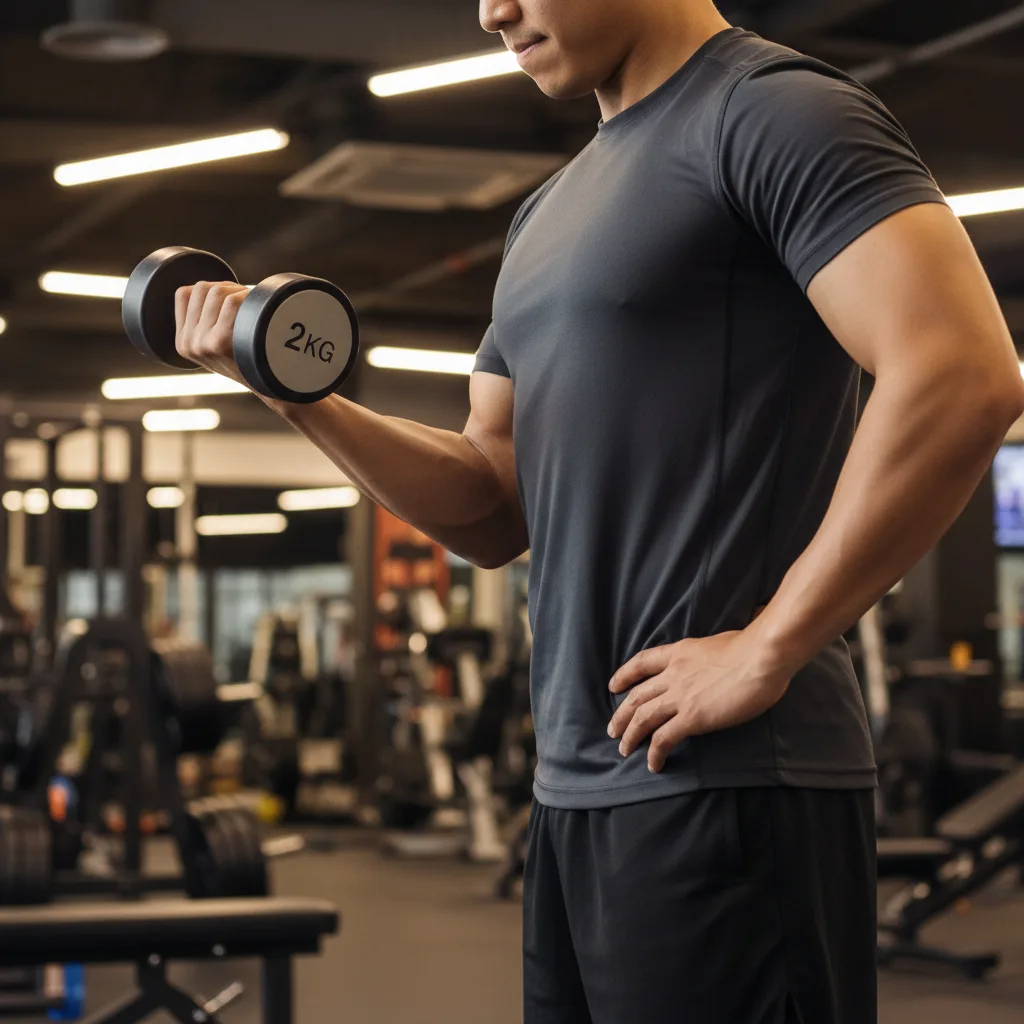
The foundation. Stand with the dumbbell in one hand, palm facing forward. Curl it up by flexing at the elbow, squeeze at the top, and lower under control. Do all reps on one arm, then switch.
The single-arm version exposes imbalances immediately. If your left arm struggles with a weight your right arm handles easily, you've found a weakness worth fixing. Working one arm at a time also lets you brace your core harder and focus entirely on the working bicep.
3 sets of 10-12 reps per arm.
2. Single-Arm Hammer Curl
Same movement, different grip. Hold the dumbbell with a neutral grip — palm facing your body — and curl without rotating your wrist. This shifts emphasis to the brachialis and brachioradialis, building arm thickness that standard curls miss.
With one dumbbell, you can also do cross-body hammer curls — curling across your torso toward the opposite shoulder. This hits the brachialis even harder and adds a forearm rotation component.
3 sets of 10-12 reps per arm.
3. Concentration Curl
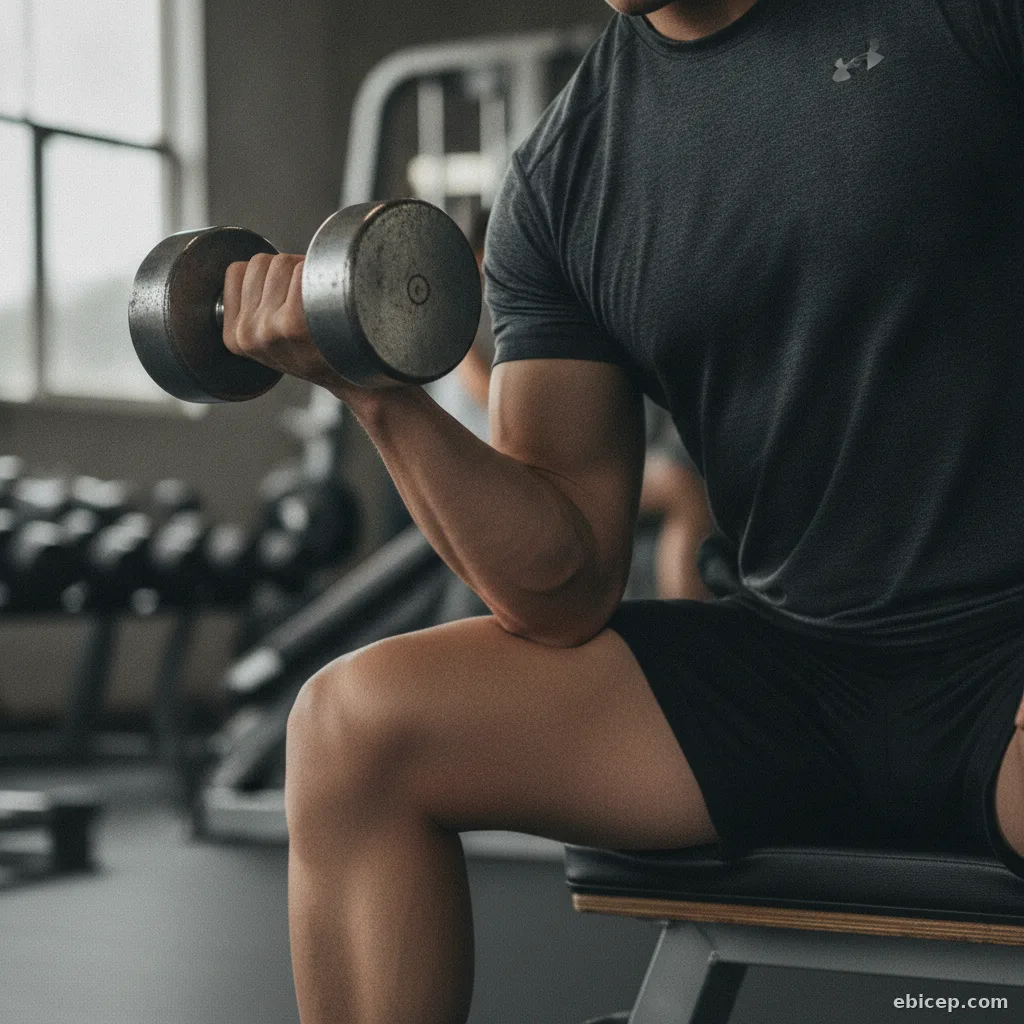
Sit on a bench or chair, lean forward, and brace your elbow against your inner thigh. Curl the dumbbell up with one arm, squeezing your bicep hard at the top. This is the purest bicep isolation exercise — there's absolutely no way to use momentum because your arm is locked in place.
Concentration curls are one of the best exercises for building mind-muscle connection. When you only have one dumbbell, they become your go-to isolation finisher.
3 sets of 12-15 reps per arm.
4. Incline Dumbbell Curl (Single-Arm)
Set an incline bench to 45 degrees — or prop yourself up on a couch armrest at home. Sit back and let your arm hang behind your body. Curl the single dumbbell up with one arm at a time.
The incline position stretches the long head of the biceps at the bottom of each rep, which is the part responsible for bicep peak. This is one of the best exercises for targeting the long head, and it works just as well with one dumbbell as it does with two.
3 sets of 10-12 reps per arm.
5. Seated Dumbbell Curl
Sit on the edge of a bench with the dumbbell in one hand. Curl it up with strict form — no leaning, no rocking, just the bicep doing the work. Sitting removes your ability to use hip drive or body English, which makes the curl significantly harder with the same weight.
If you only have one dumbbell and it feels light for standing curls, seated curls make it feel heavier without adding plates.
3 sets of 10-12 reps per arm.
6. Single-Arm Dumbbell Preacher Curl
Use the back of a couch, an incline bench, or even the arm of a sturdy chair as your preacher pad. Drape your arm over the surface and curl the dumbbell up. The preacher position eliminates all momentum and emphasizes the short head of the biceps, especially in the bottom half of the range of motion.
No preacher bench? Stack some pillows on a table and drape your arm over them. It's not pretty, but it works.
3 sets of 10-12 reps per arm.
Coach's Note: When training one arm at a time, always start with your weaker arm. If your left bicep is smaller or weaker, do left first when you're fresh. Then match the same reps on the right — even if you could do more. This prevents the imbalance from getting worse.
The Complete One-Dumbbell Bicep Workout
Here's a structured workout using one dumbbell. Takes about 20 minutes.
Single-arm dumbbell curls: 3 sets of 10-12 reps per arm
Single-arm hammer curls: 3 sets of 10-12 reps per arm
Concentration curls: 3 sets of 12-15 reps per arm
Seated curls or incline curls: 2 sets of 10-12 reps per arm
Rest 45-60 seconds between arms. Rest 60-90 seconds between exercises. Do this 1-2 times per week.
Total volume: 11 sets per arm. That's enough to drive muscle growth without overtraining.
Benefits of Single-Dumbbell Training
Fixes muscle imbalances. Most people have one arm stronger than the other. When you curl with a barbell or two dumbbells simultaneously, the strong arm compensates. Single-arm work forces each bicep to handle the load independently, which evens things out over time.
Better mind-muscle connection. When you're only focused on one arm, you can concentrate entirely on the contraction. That mental focus translates to better muscle activation and, over time, better growth.
More time under tension per arm. While one arm works, the other rests. But because you're doing all reps on one side before switching, the working arm gets an extended set with zero interruption. That continuous tension is valuable for hypertrophy.
Minimal equipment needed. One dumbbell. A chair or bench. That's everything. You can build a complete bicep workout for less than $20 worth of equipment. If you already own adjustable dumbbells, just use one of them.
Travel-friendly. A single adjustable dumbbell fits in a suitcase. Most hotel gyms have at least one dumbbell rack. You never have an excuse to skip arm training.
How to Progress With One Dumbbell
Progressive overload with a single dumbbell requires some creativity:
Add reps. If you can do 12 reps with clean form, push to 15 before increasing weight.
Slow the tempo. A 4-second negative turns a light dumbbell into a heavy challenge. Your muscles don't know how much weight you're holding — they only know how hard they're working.
Add a pause. Hold the peak contraction for 2-3 seconds on every rep. The squeeze eliminates momentum and increases time under tension at the hardest point of the curl.
Switch to a harder variation. If standing curls feel easy, switch to concentration curls or incline curls — both are significantly harder with the same weight.
Increase weight. If you have an adjustable dumbbell, dial it up by 2.5-5 lbs. If you have a fixed dumbbell, progress through the other methods above until you can buy the next size up.
Frequently Asked Questions
Can one dumbbell build bicep muscle?
Yes. Single-arm dumbbell exercises provide enough resistance and isolation to stimulate muscle growth, especially when combined with progressive overload (more reps, slower tempo, harder variations). Many lifters actually get better results training one arm at a time because the isolation is stricter.
What are the best single-dumbbell bicep exercises?
Single-arm curls, hammer curls, concentration curls, incline curls, seated curls, and preacher curls. These six exercises cover every angle and head of the bicep using just one dumbbell.
How heavy should my single dumbbell be?
Heavy enough that reps 8-12 are challenging with strict form. For most men, that's 15-25 lbs. For most women, 8-15 lbs. If you can only afford one weight, pick one you can curl for about 10 strict reps — you'll grow into it by adding reps and slowing tempo.
Is it better to curl one arm at a time?
For fixing imbalances and improving mind-muscle connection, yes. For overall time efficiency, bilateral (two-arm) curls are faster. Both approaches build muscle effectively. If you notice one arm is weaker or smaller, single-arm work is the best way to correct it.
Can I build a full arm workout with one dumbbell?
Absolutely. Combine the bicep exercises above with single-arm overhead tricep extensions, single-arm kickbacks, and single-arm lateral raises. One dumbbell covers biceps, triceps, shoulders, and even some forearm work through grip.
What We Recommend
Bowflex SelectTech 552 Adjustable Dumbbells
If you're training with a single dumbbell, an adjustable one makes the most sense. The Bowflex 552 goes from 5 to 52.5 lbs in 2.5 lb increments — meaning one dumbbell covers every exercise in this workout at every progression stage. You can even buy a single unit instead of the pair if budget is tight.
The Bottom Line
One dumbbell is all you need for a complete bicep workout. Single-arm curls, hammer curls, concentration curls, and an incline or seated variation cover every head and angle. Start with your weaker arm, match reps on both sides, and progress through tempo, pauses, and harder variations before jumping to a heavier weight. The best workout is the one you can actually do with what you have — and one dumbbell is more than enough.