Everyone trains their biceps. Not enough people train the muscle sitting right underneath them. The brachialis is a thick, flat muscle between the biceps and the triceps — and when it's developed, it pushes the biceps up from below and adds width to your upper arm that regular curls alone can't build.
If your arms look decent from the front but flat from the side, the brachialis is almost certainly the missing piece. Here are the best exercises to train it, why it matters for arm size, and how to program brachialis work into your training.
What Is the Brachialis Muscle?
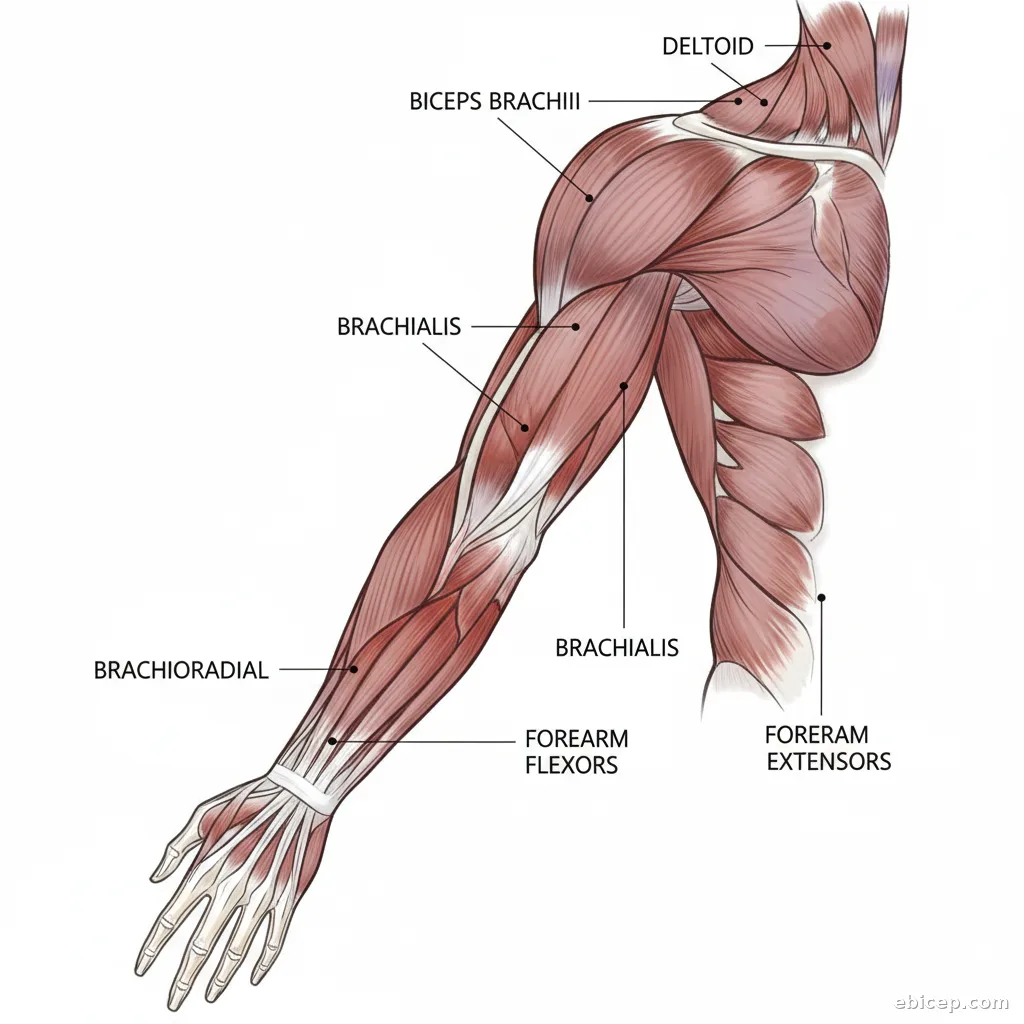
The brachialis is a pure elbow flexor. It originates on the lower half of the humerus (upper arm bone) and inserts on the ulna (forearm bone). Unlike the biceps, it has no role in supination — it doesn't care which way your palm faces. It just bends the arm.
That's important for training because it means the brachialis works hardest when the biceps can't dominate the movement. Any curl with a neutral grip (palms facing each other) or a pronated grip (palms facing down) reduces biceps involvement and forces the brachialis to pick up the slack.
The brachialis sits underneath the biceps on the outer side of the upper arm. When you flex your arm and look at it from the side, the brachialis is what creates that thick ridge between the biceps and triceps. A well-developed brachialis literally pushes the biceps upward, making the entire arm look bigger and wider.
Best Brachialis Exercises
1. Hammer Curls
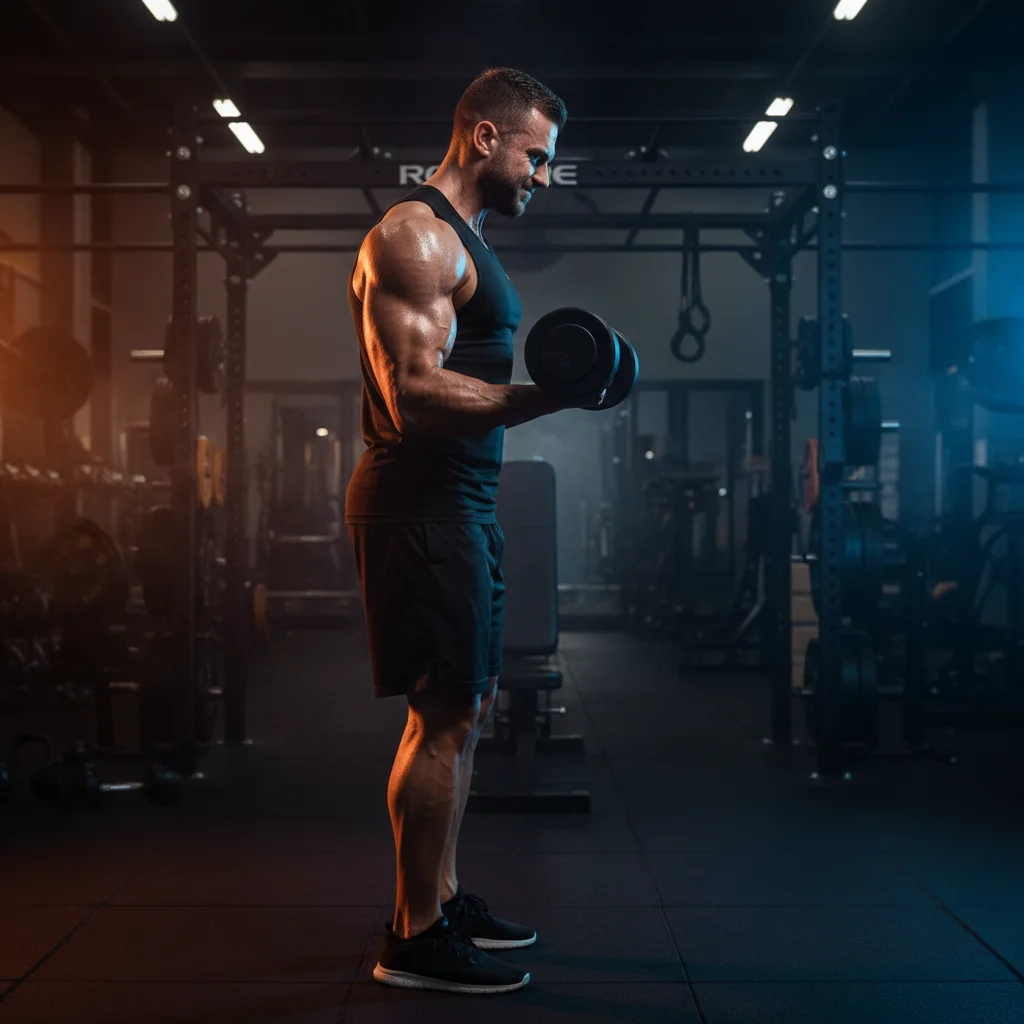
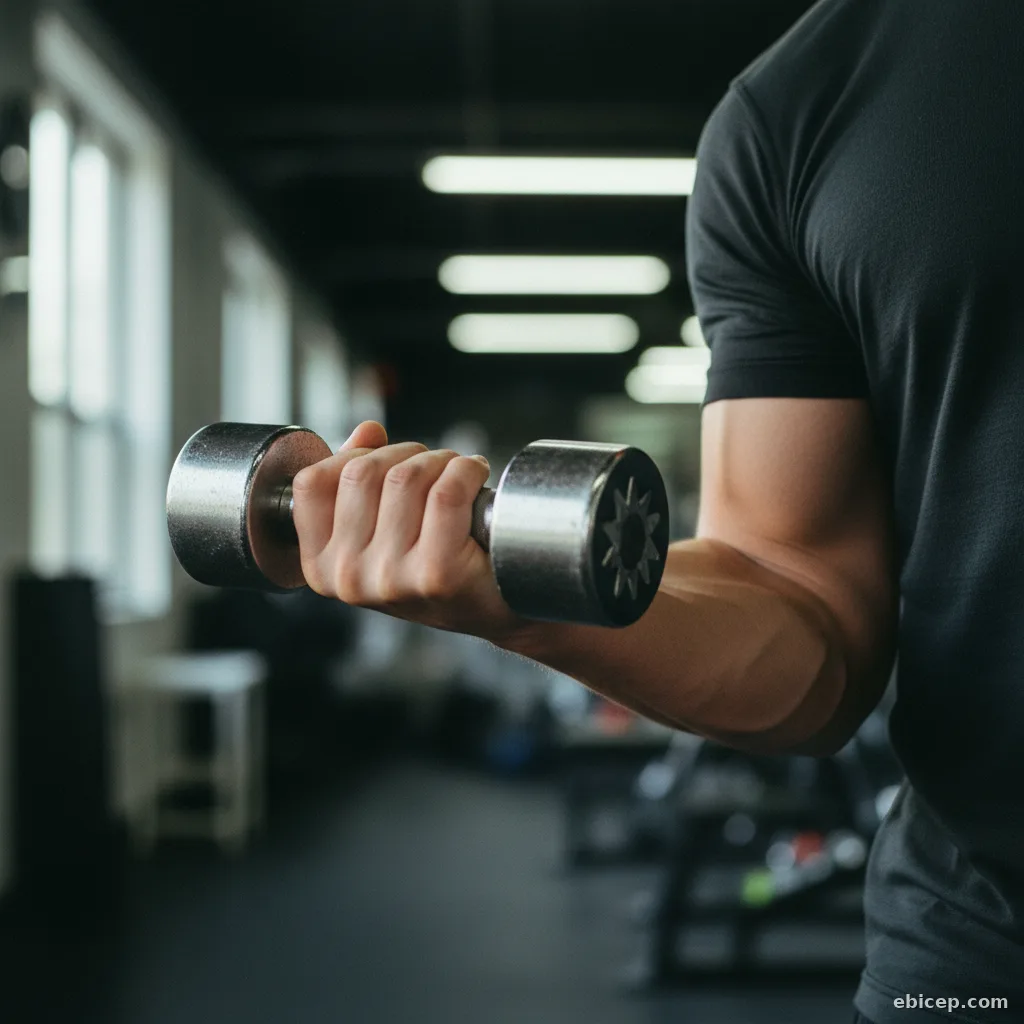
The go-to brachialis builder. Hold a dumbbell in each hand with a neutral grip — palms facing your body — and curl. The neutral grip reduces biceps brachii activation and shifts more work to the brachialis and brachioradialis.
Hammer curls are the exercise most lifters already know for brachialis training, and for good reason — they're simple, effective, and you can load them relatively heavy compared to other brachialis exercises.
3-4 sets of 8-12 reps. Use a controlled tempo — no swinging.
2. Reverse Curls
Grab a barbell or EZ bar with an overhand (pronated) grip — palms facing down. Curl the bar up while keeping your wrists straight. This grip position dramatically reduces biceps involvement, making the brachialis and forearm extensors do most of the work.
Reverse curls are harder than they look. You'll use significantly less weight than standard curls. That's normal.
3 sets of 10-15 reps. Use an EZ bar if straight bar bothers your wrists.
3. Zottman Curls
The best of both worlds. Curl the dumbbells up with a supinated grip (palms up) — working the biceps on the way up. At the top, rotate your wrists to a pronated grip (palms down) and lower slowly — working the brachialis and forearms on the way down.
Zottman curls are one of the most efficient arm exercises because they target different muscles in each phase of the rep. The eccentric (lowering) phase with a pronated grip is where the brachialis gets hammered.
3 sets of 8-10 reps. Focus on a slow 3-4 second negative.
4. Cross-Body Hammer Curls
Instead of curling straight up, curl the dumbbell across your body toward your opposite shoulder. This angle shifts even more emphasis onto the brachialis compared to standard hammer curls. The cross-body path also works the brachioradialis harder.
3 sets of 10-12 reps per arm. Alternate arms or do all reps on one side before switching.
5. Pronated Grip Cable Curls
Attach a straight bar to a low cable and grip it overhand. Curl with palms facing down — the same grip as reverse curls but with cable resistance, which provides constant tension throughout the range of motion. The cable version is smoother on the elbow joint than barbell reverse curls.
3 sets of 12-15 reps. Great as a finisher at the end of an arm workout.
6. Incline Hammer Curls
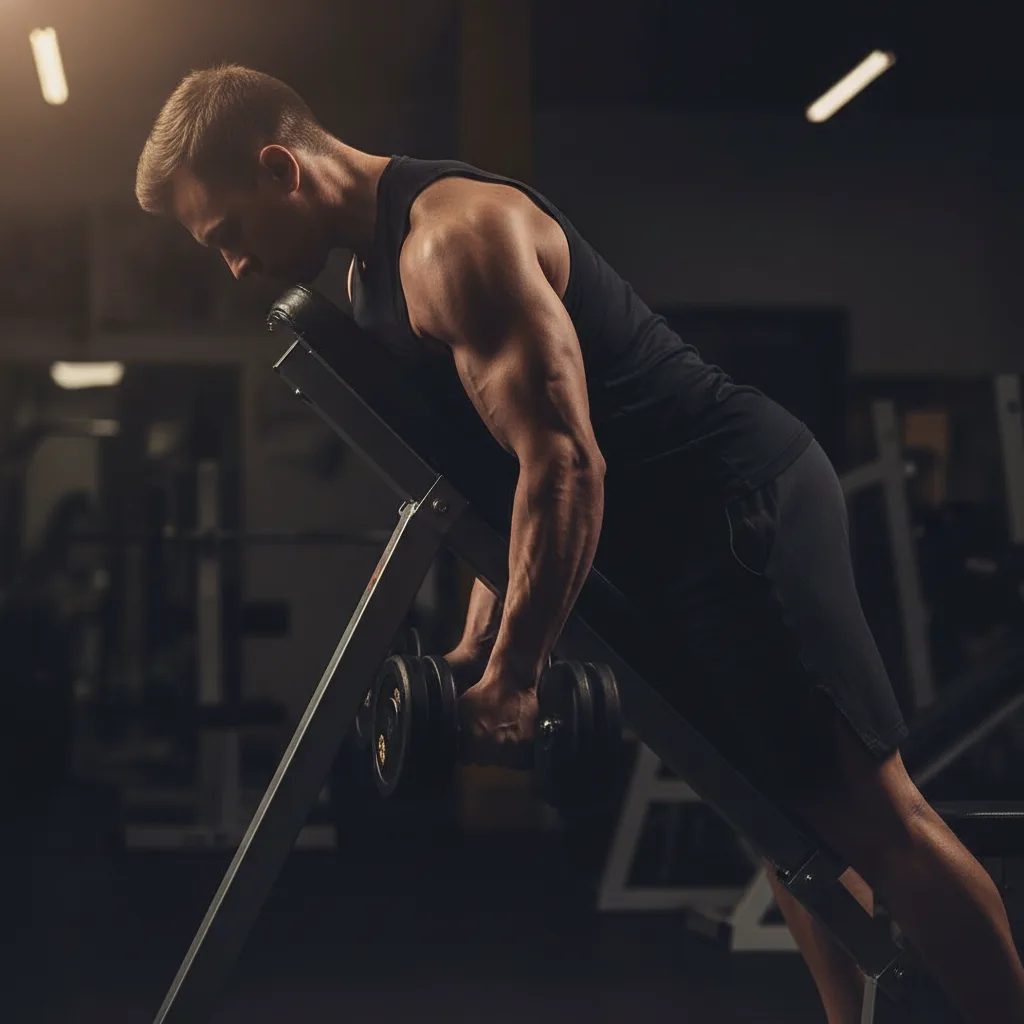
Set an incline bench to 45 degrees, sit back, and do hammer curls with your arms hanging behind your body. This combines the brachialis emphasis of a neutral grip with the long-head stretch of an incline curl. You get both width and peak work in one exercise.
3 sets of 10-12 reps. Use lighter weight than standing hammer curls — the incline makes it significantly harder.
7. Neutral-Grip Pull-Ups
Grab a pull-up bar with a neutral grip (palms facing each other) using parallel handles. Pull yourself up. The neutral grip recruits the brachialis more than standard chin-ups, and you're pulling your entire body weight — which is more load than most people ever curl with dumbbells.
3 sets of max reps. If you can do more than 12, add weight with a belt or backpack.
Coach's Note: The brachialis responds well to higher reps and slower tempos. Unlike the biceps, which can handle heavier loads, the brachialis seems to grow better with controlled, moderate-weight work. If you're used to ego-curling heavy hammer curls, try cutting the weight by 20% and adding a 3-second pause at the bottom of each rep. The difference in how your arms feel after a few weeks is noticeable.
Brachialis Muscle Anatomy
Understanding the brachialis anatomy explains why specific grips target it better than others.
The biceps brachii has two functions: elbow flexion and forearm supination. When your palms face up (supinated), the biceps is in its strongest position and dominates the curl. When you switch to a neutral or pronated grip, you take the supination advantage away from the biceps, and the brachialis — which only does elbow flexion regardless of grip — becomes the primary mover.
The brachialis is actually a stronger elbow flexor than the biceps in terms of raw force production. It generates more pulling power across the elbow joint. The reason the biceps gets all the attention is simple — it's visible. The brachialis hides underneath.
Benefits of Training the Brachialis
Wider arms. A developed brachialis adds width to the upper arm that biceps training alone doesn't provide. From the side, a thick brachialis fills the gap between the biceps and triceps, making your arm look more three-dimensional.
Stronger curls. The brachialis assists on every curl variation. Strengthening it directly improves your performance on barbell curls, cable curls, and every other elbow flexion movement.
Better arm balance. Most lifters have overdeveloped biceps relative to their brachialis and forearms. Training the brachialis directly creates better visual proportion and reduces the muscle imbalances that can lead to elbow tendinitis.
Pushes the biceps up. When the brachialis grows, it literally pushes the biceps brachii upward and outward. This makes the biceps look bigger without actually being bigger — it's an optical boost from the muscle underneath.
How to Program Brachialis Exercises
You don't need a dedicated brachialis day. Add 2-3 sets of brachialis-focused work to your existing arm day or pull day.
Option 1: Replace one bicep exercise. Swap one set of standard curls for hammer curls or reverse curls. This is the simplest approach and doesn't add any extra volume.
Option 2: Add a brachialis finisher. After your normal bicep training, do 2-3 sets of reverse curls or Zottman curls to finish off the brachialis. The muscle is already pre-fatigued from assisting on regular curls, so it doesn't take much direct work to push it further.
Option 3: Dedicated arm circuit. Superset standard curls with hammer curls — one set biceps-dominant, one set brachialis-dominant. Three rounds, minimal rest. Efficient and brutal.
Frequency: 1-2 times per week is plenty. The brachialis already gets indirect work from every pulling and curling exercise you do.
Frequently Asked Questions
Why won't my brachialis grow?
You're probably training it with the wrong grip. Standard bicep curls with a supinated grip don't target the brachialis effectively. Switch to neutral grip (hammer curls) or pronated grip (reverse curls) to isolate the brachialis. Also try slowing down your tempo — the brachialis responds well to controlled, higher-rep work.
Is the brachialis stronger than the biceps?
In terms of raw elbow flexion force, yes. The brachialis generates more pulling power across the elbow joint than the biceps brachii. The biceps gets the attention because it's the visible muscle, but the brachialis does a lot of the heavy lifting underneath.
Does the brachialis make your arms look bigger?
Yes. A developed brachialis pushes the biceps upward and adds width to the upper arm from the side. It creates the thick, three-dimensional look that biceps training alone can't achieve. It's one of the fastest ways to make arms look noticeably bigger.
What's the difference between the brachialis and biceps?
The biceps brachii has two heads, crosses two joints (shoulder and elbow), and handles both elbow flexion and forearm supination. The brachialis is a single muscle that only crosses the elbow joint and only does elbow flexion — it doesn't care about wrist rotation. Standard curls favor the biceps. Neutral and pronated grip curls favor the brachialis.
Can I train the brachialis at home?
Absolutely. Hammer curls with dumbbells, cross-body hammer curls, and Zottman curls all target the brachialis and only require a pair of adjustable dumbbells. Neutral-grip pull-ups on a doorway bar are also excellent. No cable machine or gym needed.
What We Recommend
Bowflex SelectTech 552 Adjustable Dumbbells
Every brachialis exercise on this list can be done with a pair of adjustable dumbbells. The Bowflex 552 goes from 5 to 52.5 lbs in 2.5 lb increments — perfect for hammer curls, Zottman curls, and cross-body curls where precise weight selection matters for keeping form strict.
The Bottom Line
The brachialis is the most underrated muscle in your arm. It sits underneath the biceps, nobody sees it directly, and most lifters never train it on purpose — but when it's developed, it transforms how your arms look. Hammer curls, reverse curls, and Zottman curls are the three exercises that matter most. Add 2-3 sets of brachialis-focused work to your arm training twice a week, use a controlled tempo with moderate weight, and many lifters notice wider, thicker arms that look completely different from the side.