Push-ups are one of the best bodyweight exercises ever invented. They build your chest, triceps, and shoulders. They strengthen your core. They require zero equipment. But do push-ups work the biceps?
Technically yes. Practically? Not enough to grow them.
If you're doing push-ups hoping for bigger biceps, you need to understand what's actually happening in the movement — and why a few small changes make all the difference between wasting time and actually targeting your arms.
Do Push-Ups Work the Biceps?
The short answer is that push-ups activate the biceps, but only as stabilizers — not as primary movers.
During a standard push-up, your muscles work in a pressing pattern. Your chest pushes your body away from the floor, your triceps extend your elbows, and your front delts assist with shoulder flexion. Your biceps contract just enough to stabilize the elbow joint and control the lowering phase. That's it.
The biceps are an elbow flexion muscle — they bend your arm. Push-ups are an elbow extension movement — they straighten your arm. You're asking the biceps to help with the opposite of what they're designed to do. They'll fire, but they won't get enough activation or tension to trigger meaningful muscle growth.
Here's how to think about it: your biceps during a push-up are like a passenger in a car. They're along for the ride, but they're not driving.
What Muscles Do Push-Ups Actually Work?
Before chasing bicep activation from push-ups, it helps to know what push-ups are genuinely great at building.
Pectoralis major (chest). The primary mover. Your chest handles the bulk of the pressing force, especially in the lower portion of the movement.
Triceps brachii. The secondary mover. Your triceps extend the elbow during every rep. Close-grip and diamond push-ups shift even more work to the triceps.
Anterior deltoid (front shoulder). Assists with the pressing motion. Gets more involved as you elevate your feet or do decline push-ups.
Core muscles. Your abs, obliques, and lower back work isometrically to keep your body in a straight line throughout the movement. This is one of the underrated benefits of push-ups — they're a plank and a press combined.
Biceps brachii. Stabilizes the elbow. Minimal activation compared to the muscles above. Not enough for bicep growth on its own.
Best Push-Up Variations for Bicep Emphasis
Standard push-ups won't build your biceps. But certain push-up variations shift more work toward the biceps by changing hand position, body angle, or movement pattern. None of these replace actual curls, but they increase bicep involvement if push-ups are all you have.
Reverse-Grip Push-Ups (Best Bicep Push-Up)
Turn your hands so your fingers point toward your feet instead of forward. This rotates your forearms into supination — the same position your arms are in during a bicep curl. The result is noticeably more bicep activation throughout the rep.
This is the single best push-up variation for targeting the biceps. It feels awkward at first and puts more stress on the wrists, so start with a few reps and build up.
Close-Grip Push-Ups
Bring your hands closer together — shoulder-width or narrower. This increases tricep involvement but also puts the biceps in a slightly better position to assist. It's not a dramatic shift, but combined with a slow tempo, you'll feel it.
Diamond Push-Ups
Touch your thumbs and index fingers together to form a diamond shape. This is primarily a tricep exercise, but the narrow hand position and increased elbow flexion range give the biceps a slightly bigger role than standard push-ups.
Incline Push-Ups (Hands on Elevated Surface)
Place your hands on a bench, chair, or elevated surface. The changed angle shifts some demand to the biceps as stabilizers. Not a major difference, but combined with reverse grip, it's one of the better bodyweight options.
Slow Negative Push-Ups
Lower yourself for 5-6 seconds on every rep. The extended time under tension during the eccentric phase increases muscle activation across all involved muscles — including the biceps. This doesn't turn push-ups into a bicep exercise, but it extracts more work from every muscle in the chain.
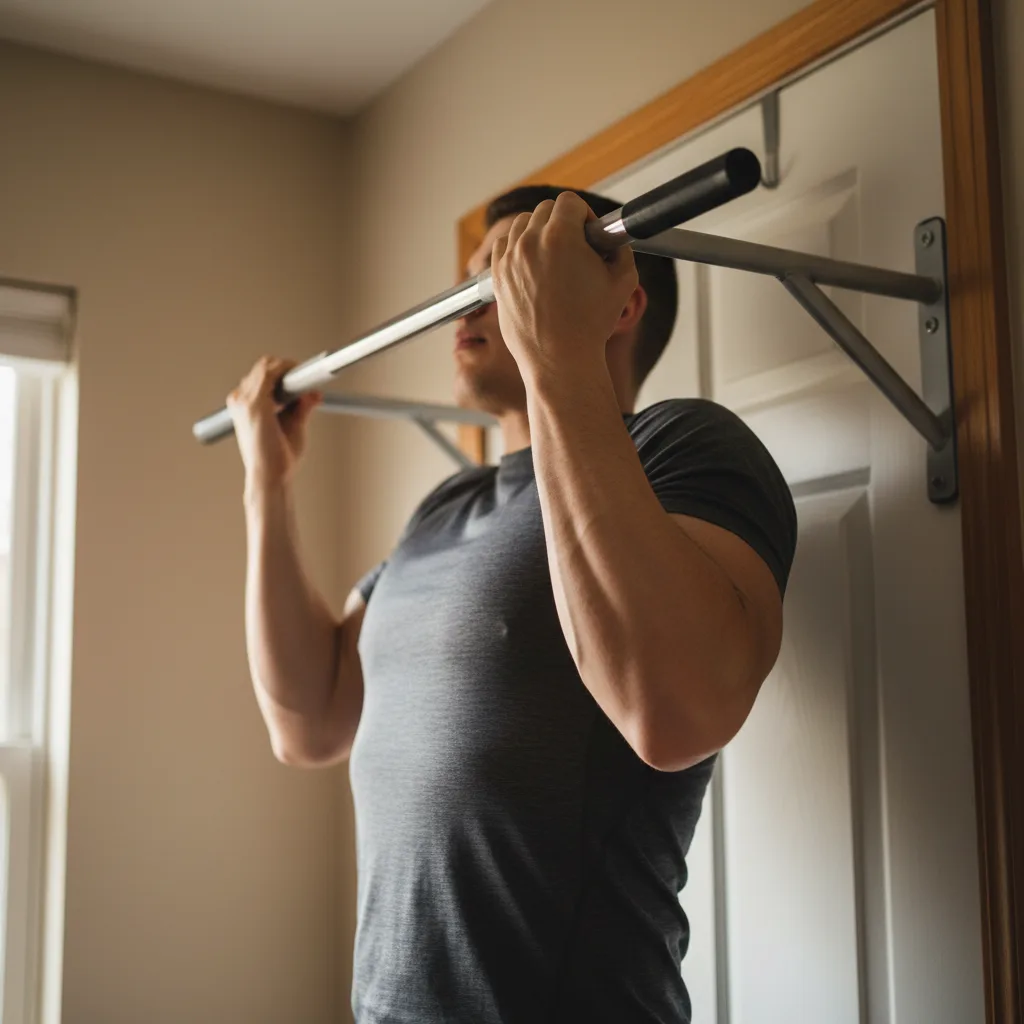
Coach's Note: If your only goal is bigger biceps and you have access to literally nothing — not even a bar to hang from — reverse-grip push-ups are your best option. But if you can find a doorway pull-up bar, a table for inverted rows, or a resistance band, those will build your biceps ten times faster than any push-up variation. Push-ups are a chest and tricep exercise. Accept that, and your programming gets much smarter.
Why Push-Ups Alone Won't Build Big Biceps
Three reasons.
Wrong movement pattern. The biceps flex the elbow. Push-ups extend the elbow. You're training the opposing movement. It's like expecting your quads to grow from hamstring curls — the muscle is involved, but it's not the target.
Not enough tension. For a muscle to grow, it needs to be challenged with meaningful resistance through its primary range of motion. Push-ups put the biceps under minimal tension in a stabilizing role. That's not enough mechanical stimulus for hypertrophy.
No progressive overload path. With curls, you add weight. With chin-ups, you add a weighted vest. With push-ups for biceps, there's no clear way to progressively increase the load on the biceps specifically. You can make push-ups harder overall, but the extra difficulty goes to the chest and triceps — not the biceps.
What to Do Instead (or In Addition)
If you want bigger biceps, you need exercises where the biceps are the primary mover — not a stabilizer.
Best bodyweight option: Chin-ups. Underhand grip, pulling your own body weight. Your biceps are the primary puller. This is the gold standard for building biceps without weights.
Best minimal equipment option: Resistance band curls. A band costs $10 and replicates the curling motion perfectly. Bodyweight bicep exercises are limited — adding a band opens up everything.
Best dumbbell option: Standing dumbbell curls, hammer curls, and incline curls. A pair of adjustable dumbbells covers every curl variation you'll ever need.
The smart approach: Do push-ups for what they're great at — chest, triceps, shoulders, and core. Then add pulling exercises for biceps. That combination builds a complete upper body. Trying to make push-ups do everything is like using a screwdriver as a hammer — it technically works, but there's a better tool.
Frequently Asked Questions
Do push-ups work biceps?
Push-ups activate the biceps as stabilizers, but not enough to build them. The biceps flex the elbow, while push-ups extend the elbow — it's the opposite movement pattern. For bicep growth, you need pulling exercises like chin-ups, curls, or rows where the biceps are the primary mover.
Which push-up is best for biceps?
Reverse-grip push-ups (fingers pointing toward your feet) are the best push-up variation for bicep emphasis. The supinated hand position puts the biceps in a stronger activation position. Even so, the activation is modest compared to actual curl exercises.
Can your biceps grow from push-ups?
Very unlikely with standard push-ups. The bicep activation during push-ups is too low to trigger meaningful hypertrophy. Reverse-grip push-ups increase bicep involvement, but even these are far less effective than chin-ups, inverted rows, or any curl variation for building arm size.
How many push-ups should I do per day?
For chest and tricep development, 3-5 sets of 10-20 reps, 3-4 times per week is effective. But no amount of daily push-ups will build significant bicep mass. If your goal is bigger arms, add pulling exercises to your routine instead of doing more push-ups.
What muscles do push-ups work?
Push-ups primarily work the pectoralis major (chest), triceps brachii, anterior deltoid (front shoulder), and core stabilizers. The biceps, forearms, and serratus anterior play supporting roles but receive minimal growth stimulus.
Are there other bodyweight exercises that target biceps?
Yes. Chin-ups are the best bodyweight bicep builder. Inverted rows with an underhand grip, towel curls, and doorframe curls also target the biceps directly. For a complete list, check our guide to bodyweight bicep exercises.
The Bottom Line
Push-ups are an outstanding exercise — just not for biceps. They build your chest, triceps, shoulders, and core better than almost any other bodyweight movement. But expecting them to grow your biceps is asking the wrong tool to do the wrong job. If you want bigger arms, add chin-ups, curls, or rows to your routine. Use push-ups for pressing strength and curls for bicep size. That's the combination that actually works.