Training biceps and triceps together is one of the most efficient ways to build bigger arms. They're opposing muscle groups — one bends the elbow, the other straightens it — which means while one works, the other recovers. That makes supersets possible, keeps your workout dense, and gives both muscle groups equal attention in a single session.
Here's a complete bicep and tricep workout you can do at the gym with dumbbells, a cable machine, and a bench. It takes about 40 minutes and covers every head of both muscles.
Why Train Biceps and Triceps Together?
They're antagonist pairs. When your biceps contract during a curl, your triceps relax — and vice versa. Training them back to back means one muscle recovers while the other works, which keeps rest periods short and your workout efficient.
Equal development. Most lifters over-train one and neglect the other. A dedicated bicep and tricep workout ensures both get the same volume and intensity. This matters because the triceps make up roughly two-thirds of your upper arm mass. If you want bigger arms, the triceps need at least as much work as the biceps.
Better pump. Working opposing muscle groups in the same session creates blood flow to the entire arm. The result is a massive pump that isn't just cosmetic — increased blood flow delivers more nutrients to the working muscles during training.
Efficient programming. Instead of scattering arm work across multiple days, one focused session handles everything. This frees up your other training days for compound movements and larger muscle groups.
The Complete Bicep and Tricep Workout
This workout alternates between bicep and tricep exercises — one set biceps, one set triceps. Rest 60-90 seconds between supersets.
Superset 1: Barbell Curls + Tricep Dips
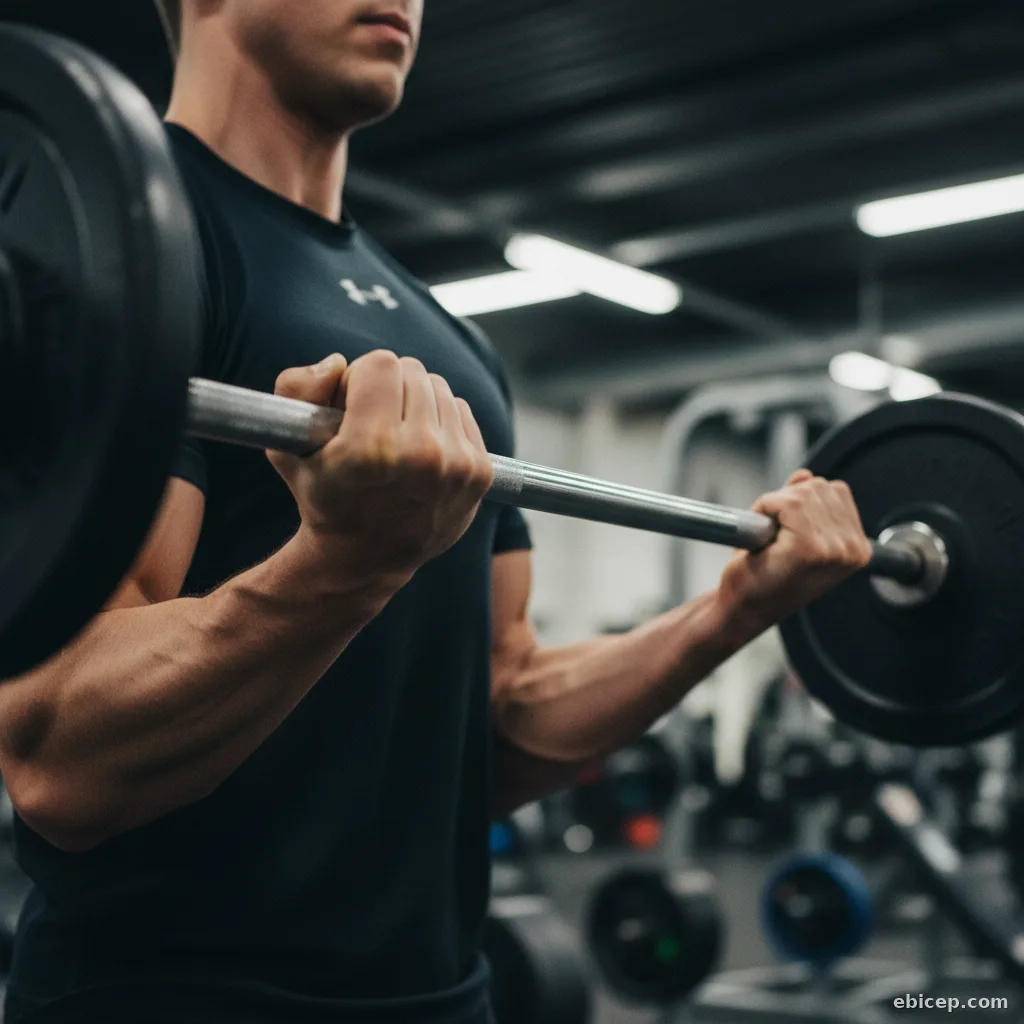
Barbell curls: 3 sets of 8-10 reps
Your heavy bicep exercise. Underhand grip, shoulder-width apart. Strict form — no swinging. This is where you load the biceps with the most weight they'll see all workout.
Tricep dips: 3 sets of 8-12 reps
Use parallel bars or the edge of a bench. Keep your torso upright to emphasize the triceps (leaning forward shifts work to the chest). Lower until your upper arms are parallel to the floor, then press back up. If bodyweight is too easy, add a dumbbell between your legs.
Superset 2: Incline Dumbbell Curls + Overhead Tricep Extensions
Incline dumbbell curls: 3 sets of 10-12 reps
Set the bench to 45 degrees, sit back, and curl with your arms hanging behind your body. This stretches the long head of the biceps — the head responsible for peak.
Dumbbell overhead tricep extensions: 3 sets of 10-12 reps
Hold one dumbbell overhead with both hands. Lower it behind your head by bending at the elbows, then extend back up. This targets the long head of the triceps, which is the biggest of the three tricep heads and responds best to overhead work.
Superset 3: Hammer Curls + Rope Tricep Pushdowns
Hammer curls: 3 sets of 10-12 reps
Neutral grip — palms facing each other. Targets the brachialis and brachioradialis, which add thickness to the arm. These complement the standard curls by hitting different muscles than the first two exercises.
Rope tricep pushdowns: 3 sets of 12-15 reps
Cable machine, rope attachment. Push down and split the rope at the bottom for a peak contraction. This targets the lateral head of the triceps — the head that creates the horseshoe shape visible from the side.
Finisher: Concentration Curls + Tricep Kickbacks
Concentration curls: 2 sets of 12-15 reps per arm
Pure isolation. Sit on a bench, brace your elbow against your inner thigh, and curl one arm at a time. Squeeze at the top. This is about the contraction, not the weight.
Tricep kickbacks: 2 sets of 12-15 reps per arm
Lean forward with one hand on a bench, hold a light dumbbell, and extend your arm straight back behind you. The contraction at full extension is intense with a lighter weight. Don't try to go heavy — kickbacks are a feel exercise.
Coach's Note: Alternate which muscle group goes first. If you always start with biceps, your triceps get the fatigued-second treatment every session. Flip the order every other workout — start with tricep dips one week, barbell curls the next. Both muscle groups deserve the fresh-energy advantage.
Best Bicep Exercises for This Workout
If you want to swap exercises based on equipment availability, here are the best options for each slot:
Heavy compound curl: Barbell curls, EZ bar curls, or cable curls
Stretch-focused curl: Incline dumbbell curls or Bayesian curls
Brachialis-focused curl: Hammer curls, cross-body hammer curls, or reverse curls
Isolation finisher: Concentration curls, spider curls, or preacher curls
Best Tricep Exercises for This Workout
Heavy compound press: Tricep dips, close-grip bench press, or diamond push-ups
Long head stretch: Overhead dumbbell extensions, lying tricep extensions (skull crushers), or overhead cable extensions
Lateral head isolation: Rope pushdowns, straight-bar pushdowns, or single-arm cable pushdowns
Finisher: Tricep kickbacks or band pushdowns
Should You Hit Biceps or Triceps First?
It depends on your weakness.
Start with biceps if: Your biceps lag behind your triceps in development, or your primary goal is bicep peak and size. The muscle you train first gets the benefit of your full energy and focus.
Start with triceps if: You want bigger overall arm mass. The triceps are the bigger muscle group and respond well to being trained heavy when fresh. Most lifters who want thicker arms should prioritize triceps.
Alternate if: You're balanced and want to maintain that balance. This is the smartest long-term approach — flip the order every session.
How Often Should You Do This Workout?
Once per week is enough if you're also doing compound pulling and pressing movements on other days. Your biceps get work during rows, pulldowns, and chin-ups. Your triceps get work during bench press, overhead press, and dips. Direct arm training once a week on top of that is plenty of volume.
Twice per week is the maximum for dedicated arm days. If you go this route, use different exercises in each session — heavy compounds in one, isolation and higher reps in the other. Don't repeat the exact same workout twice in a week.
Bicep and Tricep Workout for Beginners
If you're new to strength training, simplify the workout above. Do just the first two supersets — barbell curls with dips, and incline curls with overhead extensions. That's 4 exercises, 12 total sets, and enough to grow both muscle groups as a beginner.
Add the third superset and finishers after 2-3 months when your body adapts and you can handle more volume without excessive soreness.
For a complete beginner starting point, check our beginner bicep workout.
Frequently Asked Questions
Can I train biceps and triceps together?
Yes — they're antagonist muscle groups, which makes them ideal training partners. While one works, the other recovers. This allows supersets with minimal rest and a more efficient workout.
Is 3 bicep and 3 tricep exercises enough?
For most lifters, yes. Three exercises per muscle group at 3 sets each gives you 9 sets per muscle — which is well within the recommended 9-15 weekly sets for arm growth. Quality of execution matters more than quantity of exercises.
Should I hit biceps or triceps first?
Train your weaker muscle group first when you have more energy. If both are equally developed, alternate which one goes first each session. There's no universal rule — just don't always train the same muscle first.
How do I build bigger biceps and triceps quickly?
Progressive overload with strict form, adequate protein intake, and consistency. There's no shortcut. Train arms 1-2 times per week with compound and isolation exercises, eat enough to support muscle growth, sleep 7-9 hours, and give it 3-6 months. The arms that look like they were built quickly weren't.
Can beginners do this workout?
Yes, with modifications. Start with just the first two supersets (4 exercises total) and lighter weight. Focus on learning proper form before adding volume or intensity. After 2-3 months, add the full workout.
The Bottom Line
A good bicep and tricep workout doesn't need to be complicated. Alternate between the two muscle groups, start with a heavy compound movement for each, follow with stretch and isolation work, and finish with a burnout set. Hit every head of both muscles, control every rep, and do it once or twice a week. That's the formula for arms that actually grow — no tricks, no gimmicks, just consistent work on both sides of the arm.